Shrine or temple
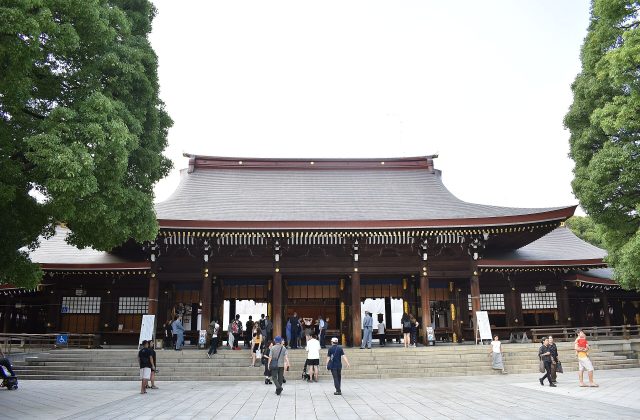
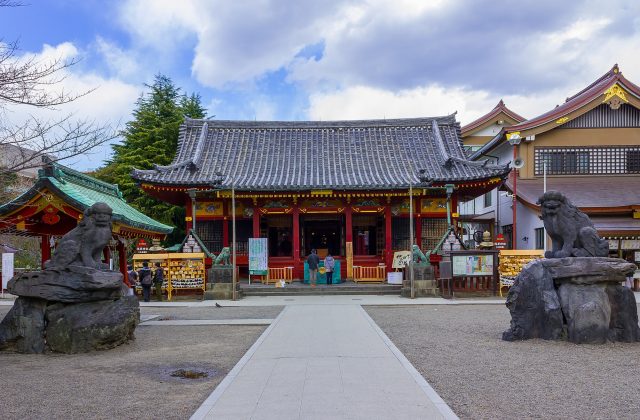
In Japan a shrine, jinja or jingu, belongs to Shinto and honours kami, the spirits of nature, ancestors and deified people, while a temple, tera or ji, is Buddhist. The easiest sign is the gate: a shrine has a torii, two uprights and two crossbars, often painted vermilion, while a temple has a roofed gate, often guarded by fierce wooden kings. The two faiths have been intertwined for centuries, and many temples keep a small shrine in their grounds. Shrines admit everyone, of any faith, and most are free.
The torii and the path
Bow lightly before passing under the first torii, as visitors do at Asakusa Shrine and Kasuga Taisha, and turn to bow again when you leave. The centre of the path is traditionally kept for the kami, so walk slightly to one side; at Nezu Shrine and the Kitaguchi Hongu Fuji Sengen Shrine the notes for visitors ask exactly that. At Ise signs tell you to keep left at the Outer Shrine and right at the Inner Shrine. In the inner precincts keep to the gravel paths.
Fushimi Inari Taisha in Kyoto is where the torii themselves become the attraction: thousands of vermilion gates, donated by businesses and families, form tunnels up Mount Inari. Before 8 am or after dark they are almost empty, while between about 10 am and 4 pm the lower section is very crowded.
Purifying at the basin
Near the entrance stands the chozuya, a stone basin with wooden ladles. Take a ladle in the right hand and rinse the left hand, change hands and rinse the right, then pour a little water into your cupped left hand and rinse your mouth, spitting discreetly beside the basin, never into it. Finally tilt the ladle upright so the remaining water runs down the handle, and put it back. The sequence is shown on signs at Meiji Shrine and many others. Never drink straight from the ladle.
How to pray
At the offering hall, drop a coin into the wooden box, ring the bell if there is a rope, then bow twice, clap twice, hold your hands together for a moment and bow once more. This is the form used at Meiji Shrine and most shrines in Japan; Izumo Taisha is the best-known exception, where worshippers clap four times. A five-yen coin is the traditional offering, because its name, go-en, sounds like the word for a good connection. Visitors may pray or simply watch, and both are accepted.
Dress, shoes and photography
There is no dress code at shrines; neat clothes, and hats off before the main hall, are enough at Ise, Meiji Shrine and Sumiyoshi Taisha. Shoes stay on in the grounds and come off only if you enter a hall, such as the main sanctuary at Nikko Toshogu or the evening kagura performance at Takachiho Shrine. Photography is fine in the grounds but usually not inside the halls: Meiji Shrine forbids it inside the main hall, and at Ise it is not allowed on the steps of the main sanctuaries. Give way to wedding processions, which cross Meiji Shrine on most weekends.
Charms, fortunes and fees
Shrine offices sell omamori amulets for health, safe travel, study or love, ema wooden plaques on which to write a wish and hang it up, and omikuji fortune slips; a bad fortune is tied to a rack or a tree to leave it behind. Many visitors also collect goshuin, seals written in ink by shrine staff in a special book for a small fee. Most shrines are free, with charges only for gardens or treasure halls, as for the inner garden at Meiji Shrine or the treasure hall at Hakone Shrine; Itsukushima on Miyajima charges JPY 300.
Festivals and timing
Shrines are at their liveliest at New Year, when millions make hatsumode, the first visit of the year, and Meiji Shrine becomes one of the busiest places in Japan, with long queues over the first three days of January. Summer festivals carry portable shrines through the streets, as at Yasaka Shrine in Kyoto during the Gion Matsuri in July. Itsukushima depends on the tide: come at high tide to see the shrine appear to float, and at low tide to walk out to the great torii.
Yasukuni in Tokyo is a memorial shrine to Japan's war dead, including convicted war criminals, and its museum presents the wars in a nationalist light. Visit with restraint, and be aware that dates such as 15 August are politically charged.
Common mistakes
The usual slips are walking through the torii without a pause, drinking from the purification ladle, eating while walking through the grounds and treating a priest or a shrine maiden in white and red as a photographic prop. At Fushimi Inari some visitors climb on the small torii and fox statues for a picture. Ask before photographing a ceremony, keep your voice low near the worship hall and carry your rubbish away with you, as most shrines have no bins.