Meiji Shrine (Meiji Jingu)
Tokyo, Japan
Meiji Jingu is free to enter and there is no ticket to buy for the shrine itself: you simply walk in from Harajuku or…
38 tickets & tours
Shinto Shrine · Tokyo · Japan
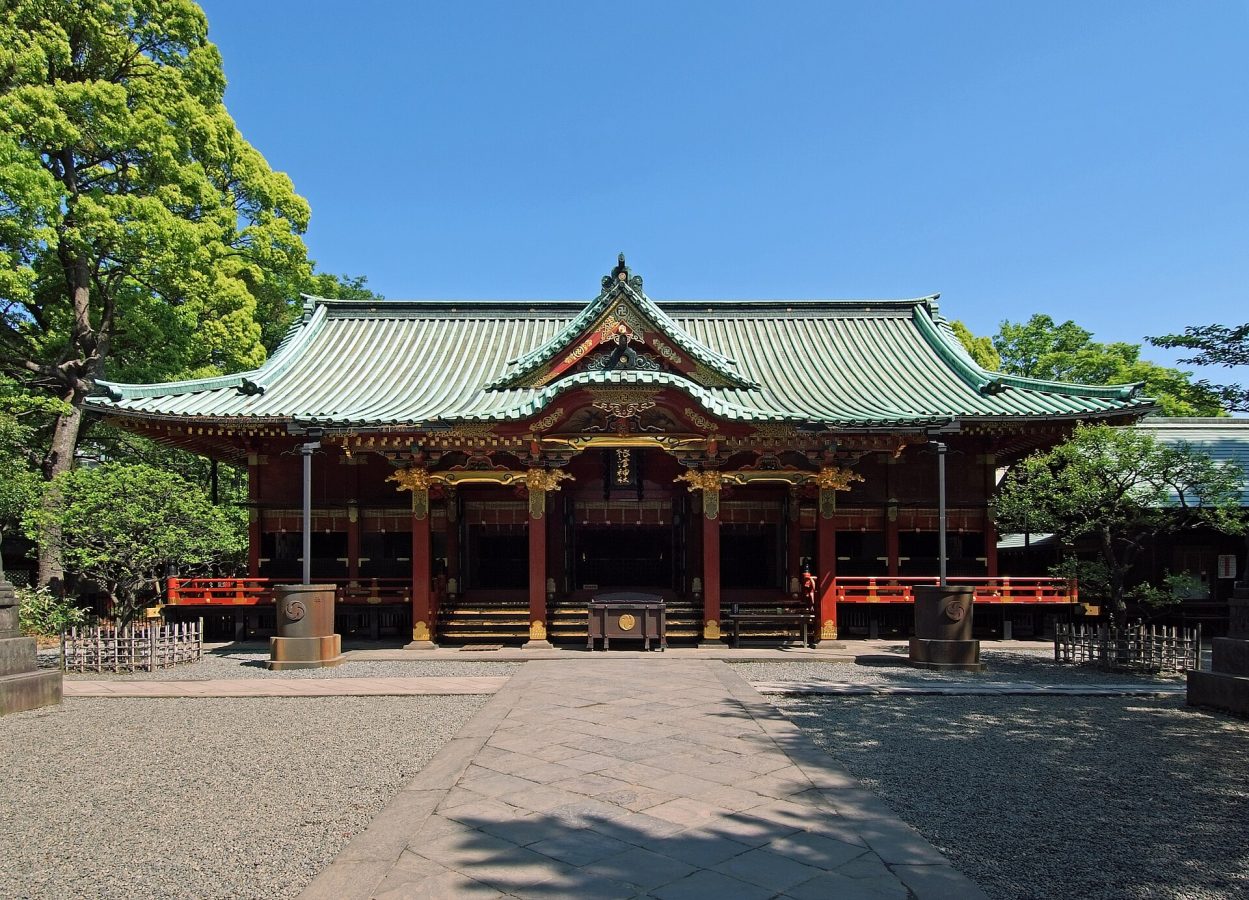
Photo: Wiiii, CC BY-SA 3.0
Nezu Shrine is free to enter and open to anyone who walks in, so there is no ticket to buy; the only charge is a small fee for the azalea garden on the hillside during the spring festival. Most visitors come on their own, by metro, and combine the shrine with a stroll through the surrounding streets. What is offered online are walking tours of the old neighbourhoods of northern Tokyo, known together as Yanaka, Nezu and Sendagi, in which the shrine is one of the main stops. Group walks of two to three hours cover the temple-lined lanes of Yanaka, its cemetery and old shopping street before ending among the vermilion gates here, and some include a tasting of traditional Japanese sweets or street snacks.
Private versions let you set the pace and add other areas, such as nearby Japanese gardens or the Shimokitazawa district on the other side of the city, and a few are designed around photography, with a photographer to shoot you in the torii tunnel. The guide and any tastings are normally included, while transport between distant areas and lunch are extra. If you just want the shrine, go independently; a guided walk earns its fee when you want the history and the small, easily missed corners of the old town explained.
Live dates and prices from GetYourGuide. Free cancellation on most tickets.
Tradition places the shrine's founding in the distant past at Sendagi, a little to the north, but the present buildings date from 1705 and 1706, when the shogun Tokugawa Tsunayoshi moved it here after naming his successor, whose birthplace this was. The complex survived the earthquake of 1923 and the bombing of the Second World War largely intact, which makes it one of the best-preserved groups of Edo-period shrine buildings in Tokyo, and the main structures are listed as Important Cultural Properties. The approach crosses a small bridge over a pond to the two-storey tower gate, guarded by armed archer figures, then passes through the ornate Chinese-style gate set in a long lattice-windowed wall that encloses the inner precinct.
Inside, the worship hall, offering hall and main sanctuary are joined under one sweeping roof in the same style as the Toshogu at Nikko, richly lacquered and carved, though on a more intimate scale. To the left of the main hall a narrow tunnel of vermilion torii winds up the slope to the small Otome Inari shrine, with a platform overlooking the koi pond; it is a smaller, calmer version of the famous gates of Kyoto. Above it, the hillside is planted with thousands of azaleas. Bow at the gate, rinse your hands at the water basin and keep voices low. Nezu station on the Chiyoda Line and Todaimae on the Namboku Line are each about five minutes on foot.
The grounds are open from early morning until early evening, and the shrine office keeps daytime hours; check the official site for current times. Early morning is the best time to have the torii tunnel to yourself, as photographers start arriving by mid-morning, especially at weekends. The Azalea Festival, from early April to early May, is the shrine's high season: some 3,000 bushes of many varieties turn the slope into a bank of pink, red and white, food stalls set up along the approach and the paths become very crowded on sunny weekends.
Arrive at opening time if you want to see the blooms without queuing. The shrine's annual festival in September, with portable shrines carried through the neighbourhood, is the other date worth knowing, and autumn brings coloured leaves to the old ginkgo trees. Allow 45 minutes for the shrine. Combine it with a walk through Yanaka and its cemetery, the Yanaka Ginza shopping street and Ueno Park, all within half an hour on foot.
Yes. GetYourGuide lists 7 tickets and tours for Nezu Shrine, with live dates and prices and free cancellation on most of them.
The grounds are open from early morning until early evening, and the shrine office keeps daytime hours; check the official site for current times.
Allow 45 minutes for the shrine.
Early morning is the best time to have the torii tunnel to yourself, as photographers start arriving by mid-morning, especially at weekends.
Entry to Nezu Shrine: Free; azalea garden fee in spring
No dress code; keep quiet near the worship hall and do not walk through the torii centre line.
Nezu Shrine was established in 1705.
Nezu Shrine is in Tokyo, Japan. The map on this page shows the exact spot.
How to visit a Shinto shrine: torii, water and prayer — How to pass the torii, purify at the water basin, pray, take photos and buy charms at a Shinto shrine in Japan.
Tokyo, Japan
Meiji Jingu is free to enter and there is no ticket to buy for the shrine itself: you simply walk in from Harajuku or…
38 tickets & tours
Tokyo, Japan
There is no ticket for Senso-ji: the temple grounds are free and always open, and the main hall can be entered at no…
31 tickets & tours
Tokyo, Japan
There is nothing to buy for Asakusa Shrine: it stands open and free inside the grounds of Senso-ji, Tokyo's oldest…
6 tickets & tours
Tokyo, Japan
Gotokuji is free to enter and there is nothing to book for the temple itself.
3 tickets & tours
Tokyo, Japan
Yasukuni Shrine, in the Kudan district of central Tokyo just north of the Imperial Palace, is free to enter, and the…
2 tickets & tours
Tokyo, Japan
Hie Shrine charges no entry fee and no ticket for it is sold online.
No online ticket