Senso-ji
Tokyo, Japan
There is no ticket for Senso-ji: the temple grounds are free and always open, and the main hall can be entered at no…
31 tickets & tours
Shinto Shrine · Tokyo · Japan
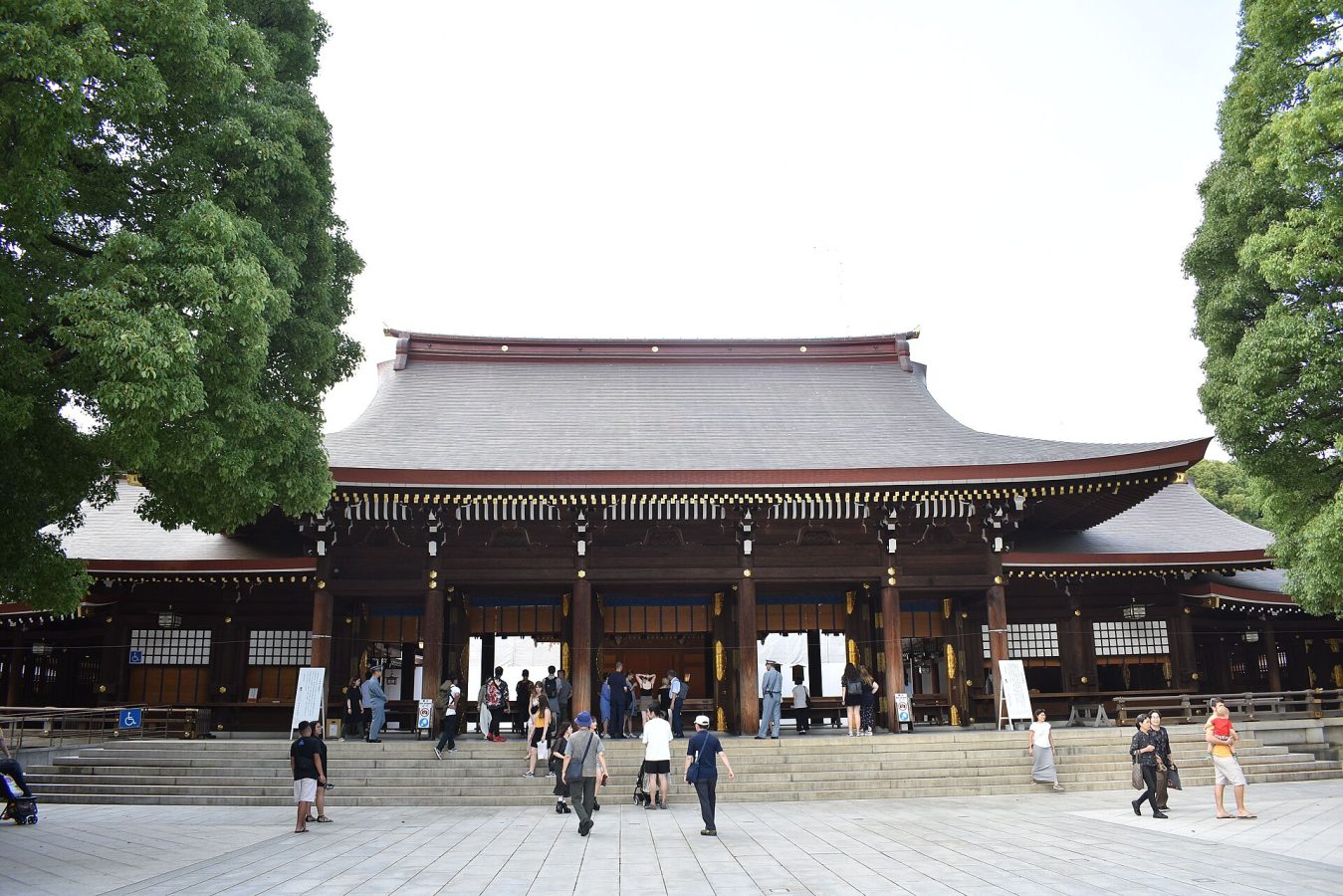
Photo: Tokuzo in Edomura, CC BY-SA 4.0
Meiji Jingu is free to enter and there is no ticket to buy for the shrine itself: you simply walk in from Harajuku or Yoyogi and follow the gravel path through the forest. A small fee is charged for the inner garden on the south side and for the shrine museum, both of which can be paid on the spot. For most visitors the self-guided visit is all that is needed. Guided options fall into a few groups. Short walking tours of an hour or two explain Shinto ritual and the history of the imperial family, and often continue into the youth fashion streets of Harajuku and Takeshita Street.
Half-day and full-day city tours by bus or on public transport pair the shrine with the Senso-ji temple in Asakusa, the Skytree, Shinjuku Gyoen and the Shibuya crossing, sometimes with lunch. There are early morning walks billed as forest therapy, tours in kimono, family trips that continue to theme parks, and sessions where a guide explains how to write a prayer plaque or draw a fortune. Some airport transfers with long layovers also stop here. On a first visit to Tokyo, a combined city tour with Senso-ji is the sensible way to see the two great religious sites in one day, but if you are staying in Shibuya or Shinjuku, simply walk in early.
Live dates and prices from GetYourGuide. Free cancellation on most tickets.
Meiji Jingu is dedicated to the spirits of Emperor Meiji, who opened Japan to the modern world, and his wife Empress Shoken. Built as a national project after his death, it was dedicated in 1920 on the site of an iris garden the couple had liked. Timber came from Kiso in central Japan and from Taiwan, and the forest around it, now some 70 hectares, was planted with about 100,000 trees donated from all over the country. The original buildings were destroyed in the air raids of 1945 and rebuilt in 1958 in the same plain style of Japanese cypress and green copper. From the south entrance near Harajuku, a broad gravel path leads under tall trees and through a series of huge wooden torii; the largest, made of ancient cypress, is one of the biggest of its kind in Japan.
Along the way, look for the wall of decorated sake barrels offered by brewers and, opposite, a row of wine barrels from Burgundy, a nod to the emperor's taste for Western food. Before the main gate, purify yourself at the water basin: rinse your left hand, then your right, then your mouth. In the courtyard you can buy an ema wooden plaque to write a wish on, and the shrine's fortunes are poems composed by the emperor and empress. The inner garden contains the iris beds and a spring known as Kiyomasa's Well. At the main hall, bow twice, clap twice and bow once more. Photography is fine in the courtyard but not inside the hall, and if a wedding procession passes, give it space. Harajuku and Yoyogi stations and Meiji-jingumae metro station are all a few minutes' walk from the gates.
The shrine opens at sunrise and closes at sunset, so the hours change through the year; check the official site for the current times. Early morning is the best time, when the forest is cool and quiet and priests sweep the gravel; by late morning the paths fill up, especially at weekends. The first three days of January are the busiest of the year, as millions of people come to make the first prayer of the New Year, and the approaches run on a strict one-way system.
In mid-November families bring children dressed in kimono for the Shichi-Go-San blessing, and the iris garden blooms in June. Traditional weddings take place on most weekends, and the autumn grand festival around 3 November, the emperor's birthday, brings performances of court music and dance. Allow about an hour, or an hour and a half with the inner garden. The shrine combines naturally with Yoyogi Park, the shops of Harajuku and Omotesando, and the Shibuya crossing, all within walking distance.
Yes. GetYourGuide lists 38 tickets and tours for Meiji Shrine (Meiji Jingu), with live dates and prices and free cancellation on most of them.
The shrine opens at sunrise and closes at sunset, so the hours change through the year; check the official site for the current times.
Allow about an hour, or an hour and a half with the inner garden.
Early morning is the best time, when the forest is cool and quiet and priests sweep the gravel; by late morning the paths fill up, especially at weekends.
Entry to Meiji Shrine (Meiji Jingu): Free; small fee for the inner garden
No dress code; dress respectfully and remove hats before the main hall.
Meiji Shrine (Meiji Jingu) covers 70 ha.
Meiji Shrine (Meiji Jingu) was established in 1920.
Meiji Shrine (Meiji Jingu) is in Tokyo, Japan. The map on this page shows the exact spot.
How to visit a Shinto shrine: torii, water and prayer — How to pass the torii, purify at the water basin, pray, take photos and buy charms at a Shinto shrine in Japan.
Tokyo, Japan
There is no ticket for Senso-ji: the temple grounds are free and always open, and the main hall can be entered at no…
31 tickets & tours
Tokyo, Japan
Nezu Shrine is free to enter and open to anyone who walks in, so there is no ticket to buy;
7 tickets & tours
Tokyo, Japan
There is nothing to buy for Asakusa Shrine: it stands open and free inside the grounds of Senso-ji, Tokyo's oldest…
6 tickets & tours
Tokyo, Japan
Gotokuji is free to enter and there is nothing to book for the temple itself.
3 tickets & tours
Tokyo, Japan
Yasukuni Shrine, in the Kudan district of central Tokyo just north of the Imperial Palace, is free to enter, and the…
2 tickets & tours
Tokyo, Japan
Hie Shrine charges no entry fee and no ticket for it is sold online.
No online ticket