Yasukuni Shrine
2 km away
Yasukuni Shrine, in the Kudan district of central Tokyo just north of the Imperial Palace, is free to enter, and the…
2 tickets & tours
Shinto Shrine · Tokyo · Japan
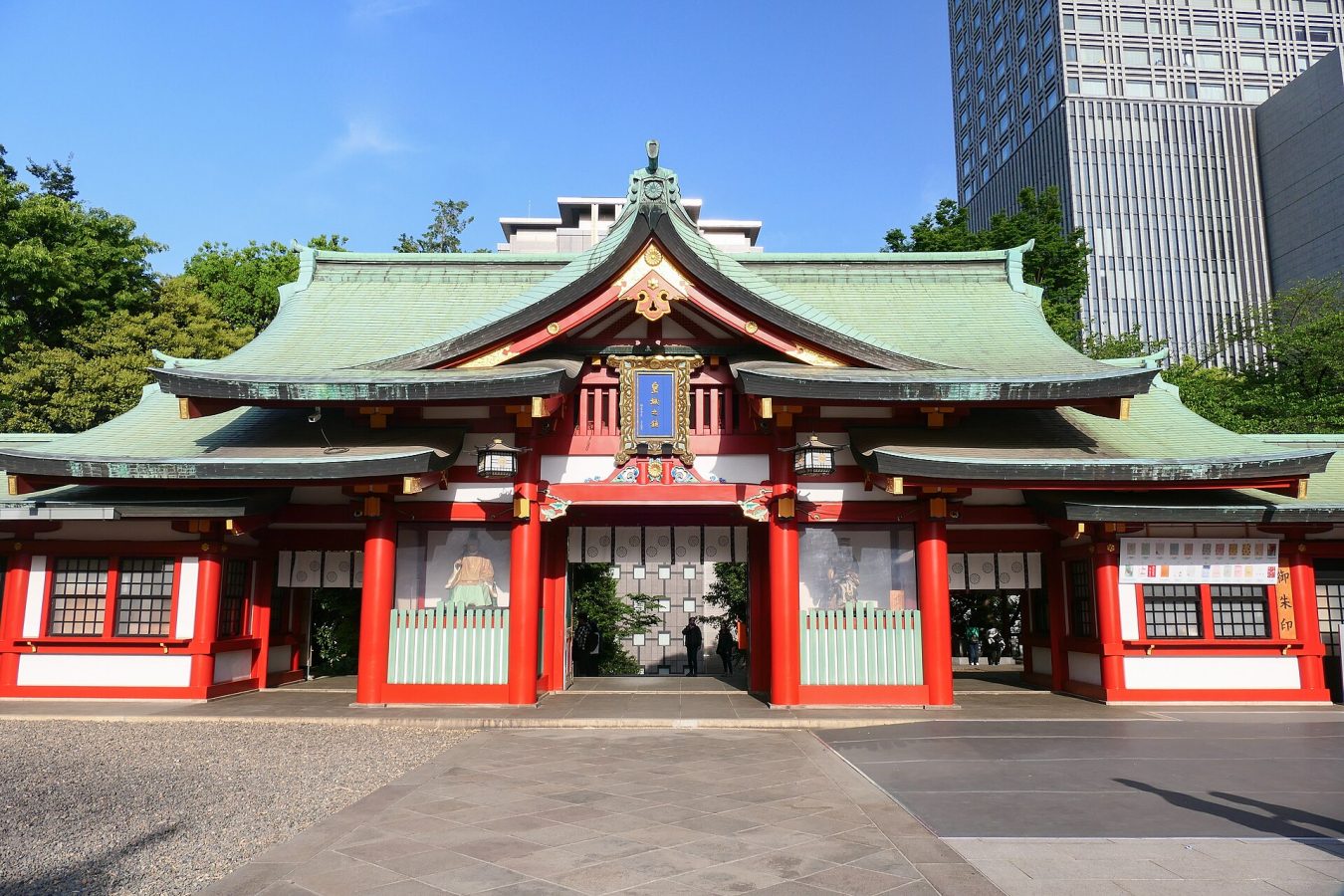
Photo: MaedaAkihiko, CC BY-SA 4.0
Hie Shrine charges no entry fee and no ticket for it is sold online. The grounds are open to everyone, and you simply climb the stairs or ride the escalator up from the street. The only things to pay for are the small offerings and souvenirs sold at the shrine office: protective amulets, written fortunes and the hand-brushed seal stamp in a pilgrim book, each for a few hundred yen. Most visitors come independently, because the shrine sits in central Tokyo within a short walk of several subway stations. It also appears on some Tokyo walking tours of the government district and Akasaka, and on private guided days around the city, where it is usually paired with the Imperial Palace gardens, the National Diet Building or an evening in Akasaka.
Such tours normally include the guide and sometimes public transport passes; meals, amulets and any temple fees elsewhere are extra. The sensible plan is to visit on your own: signage is in English at the main points, and the shrine is compact enough to see well in under an hour. A guide makes sense only if you want the background on Shinto ritual and the old Edo festivals explained, or if you are combining several neighbourhoods in one day. The page lists any GetYourGuide tours whose route passes the shrine.
Live prices from GetYourGuide for tickets and tours that include this temple. Free cancellation on most of them.
Hie Shrine stands on a small wooded hill in Nagatacho, a few minutes from the National Diet and the prime minister's residence, and it has long been seen as a protector of the city. Its origins are disputed: one tradition credits Ota Dokan, the builder of the first Edo Castle, with founding it in 1478. Tokugawa Ieyasu brought it into the castle grounds, and after a great fire in 1657 the shrine was rebuilt on its present site. The wartime bombing of Tokyo destroyed it again, and the buildings you see date from 1958. There are two main ways in. The front approach from the Sanno-bashi side has a large stone torii and escalators that carry you up the hill.
The more photogenic route is the steep western stairway towards Akasaka, lined with a tunnel of bright vermilion torii gates that recalls Fushimi Inari on a smaller scale. Notice the torii of the Sanno type, crowned with a small triangular gable above the upper crossbeam, a mark of the shrine's own tradition.Look for the pair of monkey statues, a mother holding her baby and a father, which stand where most shrines place guardian lions; the monkey is the messenger of the shrine's deity and is linked to easy childbirth and good marriages. The shrine owns a celebrated collection of old swords, one of them a National Treasure, shown occasionally in its treasure hall. Etiquette is standard for a Shinto shrine: rinse your hands at the water basin, bow at the torii, and at the hall bow twice, clap twice and bow once. Do not photograph people during ceremonies. The nearest stations are Tameike-Sanno, Akasaka and Kokkai-gijidomae.
The shrine grounds open early in the morning and close in the late afternoon, around 5 pm, with slightly shorter hours in winter; check the official site for the current times. Early morning on a weekday is the quietest moment, when office workers stop briefly to pray on their way in. Mid-morning at weekends can bring weddings and family ceremonies, which are a pleasure to watch from a respectful distance. Spring and autumn are the most comfortable seasons.
The Sanno Matsuri in mid-June is one of the three great festivals of old Edo; its grand procession through central Tokyo is held in even-numbered years, alternating with the Kanda Matsuri. In November the shrine is busy with Shichi-Go-San, when children of three, five and seven are brought in kimono for blessings, and in the first days of January crowds queue for the New Year visit. Allow 30 to 45 minutes. Combine it with Akasaka, the Imperial Palace East Gardens or a walk through the government district.
2 km away
Yasukuni Shrine, in the Kudan district of central Tokyo just north of the Imperial Palace, is free to enter, and the…
2 tickets & tours
4 km away
Meiji Jingu is free to enter and there is no ticket to buy for the shrine itself: you simply walk in from Harajuku or…
38 tickets & tours
5 km away
Nezu Shrine is free to enter and open to anyone who walks in, so there is no ticket to buy;
7 tickets & tours
Yes. GetYourGuide sells tickets and guided tours whose route includes Hie Shrine (Hie Jinja); live prices are shown on this page.
Entry to Hie Shrine (Hie Jinja): Free
The grounds are open to everyone, and you simply climb the stairs or ride the escalator up from the street.
Allow 30 to 45 minutes.
Early morning on a weekday is the quietest moment, when office workers stop briefly to pray on their way in.
No dress code; dress neatly and be quiet near the main hall.
Hie Shrine (Hie Jinja) was established in 1478.
Hie Shrine (Hie Jinja) is in Tokyo, Japan. The map on this page shows the exact spot.
How to visit a Shinto shrine: torii, water and prayer — How to pass the torii, purify at the water basin, pray, take photos and buy charms at a Shinto shrine in Japan.
Tokyo, Japan
Meiji Jingu is free to enter and there is no ticket to buy for the shrine itself: you simply walk in from Harajuku or…
38 tickets & tours
Tokyo, Japan
There is no ticket for Senso-ji: the temple grounds are free and always open, and the main hall can be entered at no…
31 tickets & tours
Tokyo, Japan
Nezu Shrine is free to enter and open to anyone who walks in, so there is no ticket to buy;
7 tickets & tours
Tokyo, Japan
There is nothing to buy for Asakusa Shrine: it stands open and free inside the grounds of Senso-ji, Tokyo's oldest…
6 tickets & tours
Tokyo, Japan
Gotokuji is free to enter and there is nothing to book for the temple itself.
3 tickets & tours
Tokyo, Japan
Yasukuni Shrine, in the Kudan district of central Tokyo just north of the Imperial Palace, is free to enter, and the…
2 tickets & tours