
Kiyomizu-dera
Kyoto, Japan
Kiyomizu-dera does not sell timed tickets, and there is nothing to book for an independent visit: the grounds are open…
40 tickets & tours
Shinto Shrine · Kyoto · Japan
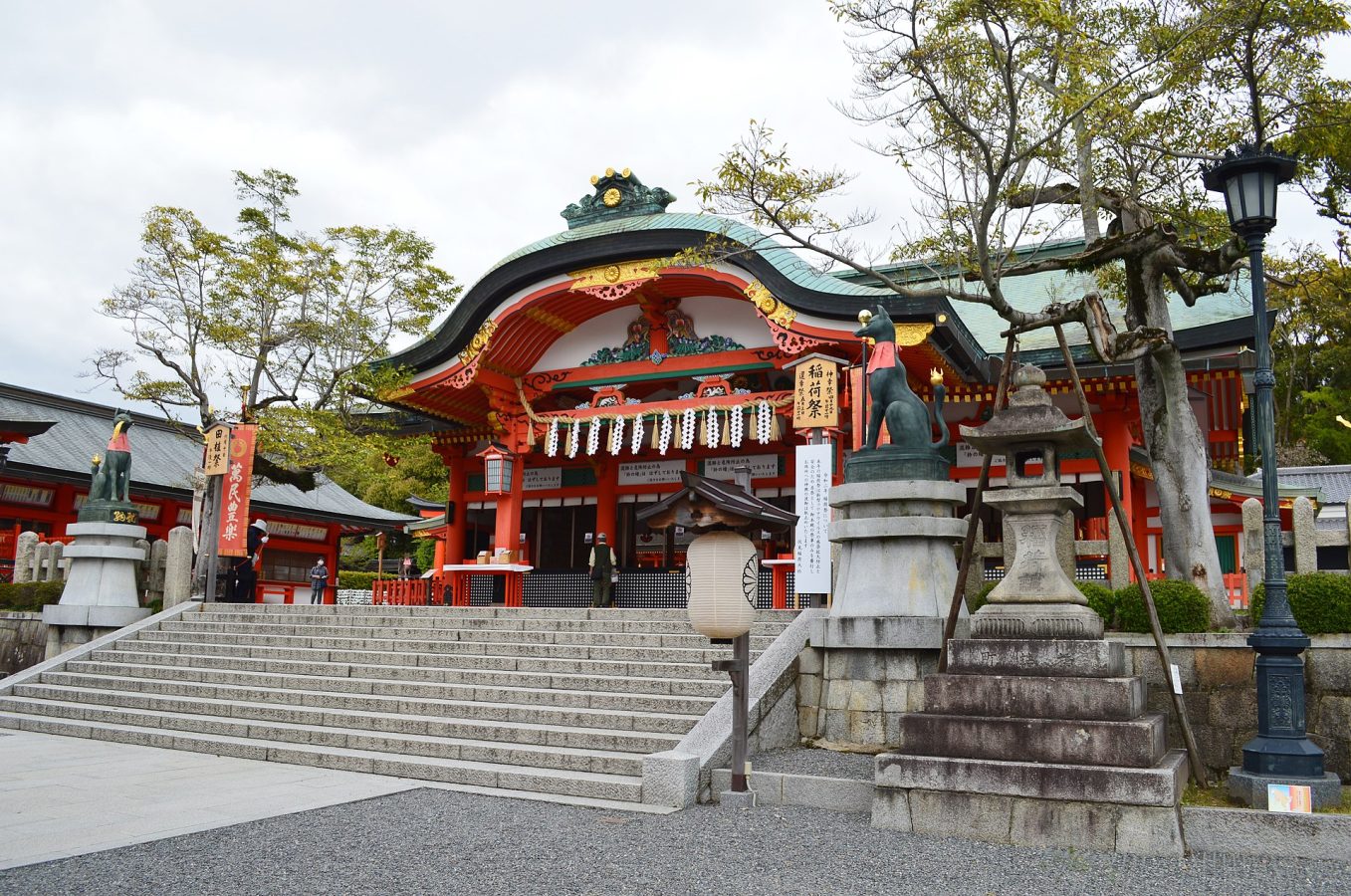
There is nothing to buy to enter Fushimi Inari: the grounds and the mountain trails are open free of charge at all hours, and the shrine sits right outside Inari station on the JR Nara line, two stops from Kyoto station, or a short walk from Fushimi-Inari station on the Keihan line. Many visitors therefore come on their own and need no booking at all. What is sold online falls into a few groups. Guided walks of one to three hours take a small group up through the gate tunnels and explain the Inari cult, the fox messengers and the votive gates, which is worth it if you want to understand what you are walking through rather than simply photograph it.
Early-morning and evening walks use the quiet hours, and evening versions take you up the lantern-lit paths after the crowds have left. Half-day and full-day city tours combine the shrine with Kiyomizu-dera and Gion, or with Tofuku-ji and the tea town of Uji, and there are coach tours from Osaka that add Nara and Arashiyama; these include transport and a guide but rarely give you time to go beyond the lower gates. Other options include photo sessions, kimono rental combined with a walk, and food tours of the shopping street below the shrine. None of these include any entry fee, because there is none.
Live dates and prices from GetYourGuide. Free cancellation on most tickets.
Fushimi Inari is the head shrine of Inari, the kami of rice, harvests and, by extension, of business and prosperity, and some 30,000 branch shrines across Japan trace their spirit back to it. Tradition dates its foundation to 711, when the Hata clan, immigrants from the Korean peninsula, enshrined the deity on the mountain. The present main hall, built in the nagare-zukuri style with its long, sweeping front roof, dates from 1499 and is listed as an Important Cultural Property. From the station you pass under the great vermilion torii and the two-storey tower gate, guarded by stone foxes holding keys and jewels in their mouths, to the main hall and the cluster of halls around it.
Behind them begins the Senbon Torii, two parallel tunnels of tightly packed gates, and from there the paths climb the wooded slopes of Mount Inari, 233 m high. Each of the thousands of gates was donated by a company or an individual, whose name and date are painted on the back pillar. Along the way are clusters of small shrines, stone altars heaped with miniature torii, teahouses and the Yotsutsuji crossroads, about halfway up, which has a broad view over Kyoto. The full loop to the summit and back is about 4 km and takes around two to three hours with stops; most people turn round at Yotsutsuji. At the halls, bow, toss a coin, ring the bell and clap twice before praying. Photography is allowed on the paths but not inside the halls, and blocking the narrow tunnels for long shots is frowned upon.
The shrine grounds and mountain paths never close, although the offices that sell charms and amulets keep daytime hours. Arrive before 8 am, or come after dark, and the gate tunnels are almost empty; between about 10 am and 4 pm the lower section is very crowded, especially at weekends. The evening walk is atmospheric but take a torch for the upper paths, which are only patchily lit. Spring and autumn are the most comfortable seasons for the climb;
summer is hot and humid and the steps are tiring. The first days of January bring millions of worshippers for the New Year visit, when the shrine is at its busiest in the whole country. The Inari Festival in spring and the Motomiya Festival in July, with lantern-lit grounds, are worth planning around. Allow an hour for the lower shrine and two to three for the summit loop. Tofuku-ji is a 15-minute walk north, and Kiyomizu-dera and Gion are a short train and bus ride away.
Yes. GetYourGuide lists 38 tickets and tours for Fushimi Inari Taisha, with live dates and prices and free cancellation on most of them.
Entry to Fushimi Inari Taisha: Free
There is nothing to buy to enter Fushimi Inari: the grounds and the mountain trails are open free of charge at all hours, and the shrine sits right outside Inari station on the JR Nara line, two stops from Kyoto station, or a short walk from Fushimi-Inari station on the Keihan line.
Allow an hour for the lower shrine and two to three for the summit loop.
Photography is allowed on the paths but not inside the halls, and blocking the narrow tunnels for long shots is frowned upon.
No dress code; dress modestly and wear good shoes for the climb.
Fushimi Inari Taisha was established in 711.
Fushimi Inari Taisha is in Kyoto, Japan. The map on this page shows the exact spot.
How to visit a Shinto shrine: torii, water and prayer — How to pass the torii, purify at the water basin, pray, take photos and buy charms at a Shinto shrine in Japan.
Kyoto, Japan
Kiyomizu-dera does not sell timed tickets, and there is nothing to book for an independent visit: the grounds are open…
40 tickets & tours
Kyoto, Japan
Kinkaku-ji is simple to visit on your own: you pay at the gate on arrival, and the ticket, a paper talisman printed…
19 tickets & tours
Kyoto, Japan
Ryoan-ji sells its own entry ticket at the gate, and for most visitors that is all that is needed.
3 tickets & tours
Kyoto, Japan
Entry to the courtyard of Heian Jingu is free, and there is nothing to book.
2 tickets & tours
Kyoto, Japan
Kifune Shrine has no admission fee and nothing to reserve.
2 tickets & tours
Kyoto, Japan
Kitano Tenmangu needs no ticket. The gates open to anyone from early morning, there is no admission charge for the main…
2 tickets & tours


