
Kiyomizu-dera
Kyoto, Japan
Kiyomizu-dera does not sell timed tickets, and there is nothing to book for an independent visit: the grounds are open…
40 tickets & tours
Shinto Shrine · Kyoto · Japan
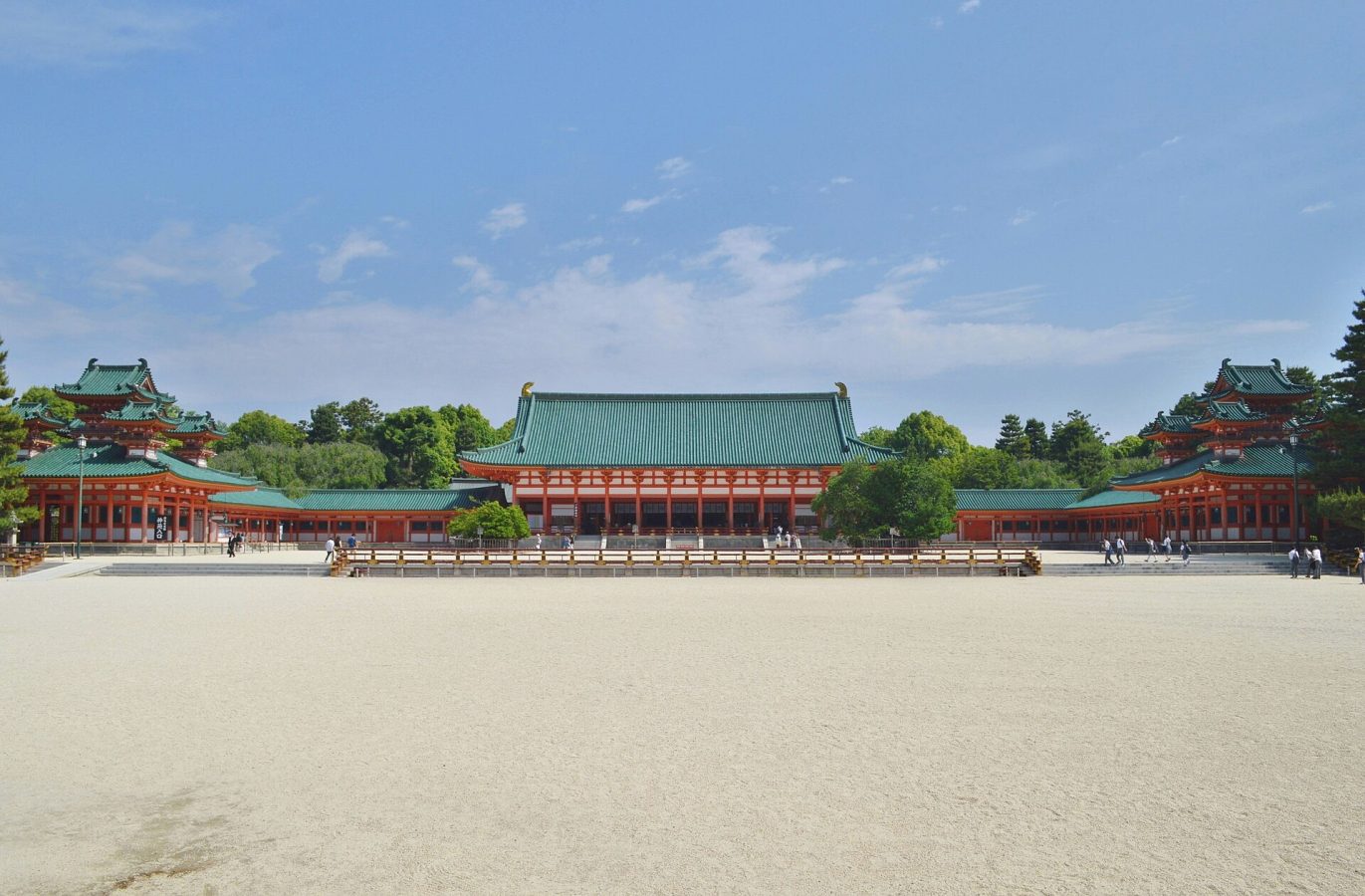
Entry to the courtyard of Heian Jingu is free, and there is nothing to book. The one paid area is the Shin-en garden behind the main halls, which has its own ticket window at the entrance on the left side of the courtyard; the fee is modest and paid in cash or by card on the spot. Check the official site for the current price, which changes from time to time. The tours on offer are experiences in the Okazaki area rather than tickets for the shrine. One type is a rickshaw ride, where a runner in traditional dress pulls you through the quiet streets around the shrine and the nearby Zen temple of Nanzenji, stopping for photographs and stories;
the price depends on the length of the ride, from a short loop to an hour or more. Another is a guided walk around Okazaki that explains the correct way to pray at a Shinto shrine and includes photographs taken by the guide. Garden entry is normally not included in either. For most visitors Heian Jingu is an easy independent stop: the shrine lies on flat ground among museums and parks, a short walk from the subway, and the signs are clear. A rickshaw is a pleasant indulgence for a couple or a family, while a walking guide is worth it mainly if you want to understand Shinto practice in some depth.
Live dates and prices from GetYourGuide. Free cancellation on most tickets.
Heian Jingu is a young shrine by Kyoto standards. It was built in 1895 for the 1,100th anniversary of the founding of Heian-kyo, the city that became Kyoto, and its halls reproduce, at about five-eighths scale, the state hall of the old imperial palace, designed by the architect Ito Chuta. When the exposition that year closed, the buildings were kept as a shrine to Emperor Kanmu, who moved the capital here in 794; Emperor Komei, the last to reign entirely from Kyoto, was added in 1940. Several halls burned in 1976 and were rebuilt with public donations. The approach is announced from far away by a huge red torii spanning the avenue, one of the largest in Japan.
The shrine proper begins at the Otenmon, a two-storey vermilion gate, which opens onto a broad courtyard of white gravel. Facing you is the Daigokuden, the main hall, with green-tiled roofs and vermilion pillars, flanked by two corner towers known as the White Tiger and Blue Dragon. Behind the halls, the Shin-en garden, created by the master gardener Ogawa Jihei, wraps around the buildings in a series of ponds; look for the stepping stones across the water and the covered wooden bridge with a pavilion on top. Purify your hands and mouth at the water basin before entering, bow once at the torii, and at the offering hall throw a coin, bow twice, clap twice and bow again. Higashiyama station on the Tozai subway line is about ten minutes on foot.
The courtyard opens early in the morning and closes in the late afternoon or early evening, earlier in winter; the garden keeps shorter hours. Visit soon after opening for the emptiest view of the gravel courtyard, or late in the day when the vermilion halls glow in the low light. Spring is the high season: the weeping cherries in the garden flower in early to mid-April and are among the finest in Kyoto. Irises fill the ponds in June, and the autumn colour peaks in late November.
The great event is the Jidai Matsuri on 22 October, a procession of some 2,000 people in costumes from every era of Kyoto's history that ends at the shrine. Torchlit Noh performances are staged in the courtyard in early June, and the first days of January bring large crowds for the New Year visit. Allow 30 minutes for the courtyard and an hour with the garden. Combine it with Nanzenji, the Philosopher's Path and the museums of Okazaki Park.
Yes. GetYourGuide lists 2 tickets and tours for Heian Shrine (Heian Jingu), with live dates and prices and free cancellation on most of them.
Allow 30 minutes for the courtyard and an hour with the garden.
Entry to Heian Shrine (Heian Jingu): Free; garden extra
No dress code; dress tidily and avoid eating in the main courtyard.
Heian Shrine (Heian Jingu) was established in 1895.
Heian Shrine (Heian Jingu) is in Kyoto, Japan. The map on this page shows the exact spot.
How to visit a Shinto shrine: torii, water and prayer — How to pass the torii, purify at the water basin, pray, take photos and buy charms at a Shinto shrine in Japan.
Kyoto, Japan
Kiyomizu-dera does not sell timed tickets, and there is nothing to book for an independent visit: the grounds are open…
40 tickets & tours
Kyoto, Japan
There is nothing to buy to enter Fushimi Inari: the grounds and the mountain trails are open free of charge at all…
38 tickets & tours
Kyoto, Japan
Kinkaku-ji is simple to visit on your own: you pay at the gate on arrival, and the ticket, a paper talisman printed…
19 tickets & tours
Kyoto, Japan
Ryoan-ji sells its own entry ticket at the gate, and for most visitors that is all that is needed.
3 tickets & tours
Kyoto, Japan
Kifune Shrine has no admission fee and nothing to reserve.
2 tickets & tours
Kyoto, Japan
Kitano Tenmangu needs no ticket. The gates open to anyone from early morning, there is no admission charge for the main…
2 tickets & tours


