Perfume Pagoda (Chua Huong)
Hanoi, Vietnam
The Perfume Pagoda is not a single building but a pilgrimage route through the limestone hills of Huong Son, about 60…
28 tickets & tours
Buddhist Temple · Hanoi · Vietnam

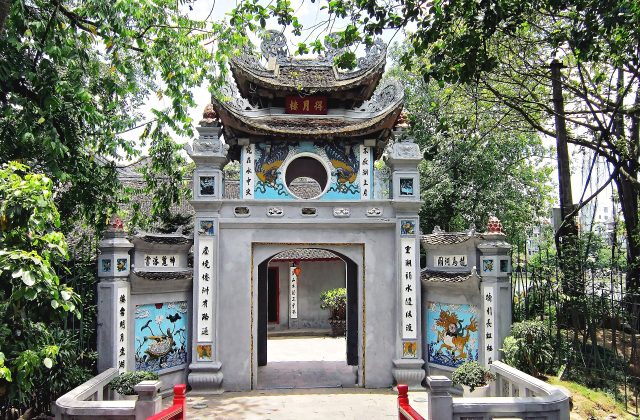
Photo: Thang Nguyen, CC BY-SA 2.0
Tran Quoc is an active Buddhist pagoda and entry is free; you walk in from the causeway at the gate, and donations for the upkeep of the temple are welcome. No ticket is needed or sold, and there is no booking system. The only practical requirement is clothing, since the monks turn away visitors in shorts or sleeveless tops. Several kinds of outing that include the pagoda are sold online from Hanoi. The simplest is a guided walking tour of the Ba Dinh district, in which a local guide links the pagoda with the Ho Chi Minh Mausoleum area, the One Pillar Pagoda and the lakes, explaining Vietnamese Buddhism and the history of the city as you go.
Another kind combines a visit here with Ngu Xa, the old bronze-casting village on the shore of Truc Bach lake nearby, sometimes by cyclo or electric car. A third pairs the pagoda with a cooking class in a garden villa, where a market visit and a meal follow the sightseeing. Guide and activities are included; transport between sites usually is, but drinks and tips are often extra. If you only want to see the pagoda, go on your own by taxi or on foot from the Old Quarter. The guided walks are worth it if you would like the symbols and rituals explained, since the signs on site are mostly in Vietnamese.
Live dates and prices from GetYourGuide. Free cancellation on most tickets.
Tran Quoc is considered the oldest Buddhist temple in Hanoi. Tradition dates its foundation to the 6th century, under Ly Nam De, when it stood on the bank of the Red River; when the river ate into its site, the temple was moved in 1615 to a small islet in West Lake, where it stands today, linked to the shore by a short causeway. The present halls are largely the result of a major restoration in 1815, and the temple has carried several names over the centuries before settling on Tran Quoc, which means guarding the nation. The landmark is the tall red brick stupa in the garden, eleven tiers high and crowned with a lotus, with white statues of Amitabha Buddha set in arched niches on every tier. It was added in the late 1990s and is surrounded by older funerary towers of monks.
Behind it lie the main sanctuary, with gilded statues of the Buddha and bodhisattvas, and a reception hall. Look for the Bodhi tree, grown from a cutting of the tree at Bodh Gaya and given by the Indian president Rajendra Prasad during his visit in 1959, and for the old stone tablets that record the temple's history. Dress conservatively, take off your hat in the halls and your shoes if you step inside the sanctuary, and move quietly around the worshippers burning incense. Photograph the stupa freely, but not people at prayer without asking. Do not step on the raised thresholds of the halls. The pagoda is on Thanh Nien road, between West Lake and Truc Bach lake, about 3 km north of Hoan Kiem lake.
The pagoda opens early in the morning and closes in the late afternoon, usually with a break around lunchtime when the monks rest; hours are not posted consistently, so arrive in the morning to be safe. Early morning is the best time, when the monks chant, the lake is calm and the light falls softly on the stupa. The pagoda is also known for sunsets over West Lake, enjoyed from the causeway outside after the gates close. The first and the fifteenth day of each lunar month bring many worshippers with offerings, and the weeks around Tet, the lunar new year in late January or February, are the busiest of all.
Buddha's birthday in spring and the Vu Lan festival in the seventh lunar month, around August, are also major occasions. Hanoi is most pleasant from October to April; summers are hot and humid, with heavy afternoon storms. Allow 30 to 45 minutes. Combine the visit with Quan Thanh temple and Truc Bach lake nearby, the Ho Chi Minh Mausoleum complex, or an evening walk or cycle ride around West Lake.
Yes. GetYourGuide lists 3 tickets and tours for Tran Quoc Pagoda, with live dates and prices and free cancellation on most of them.
Allow 30 to 45 minutes.
Early morning is the best time, when the monks chant, the lake is calm and the light falls softly on the stupa.
Entry to Tran Quoc Pagoda: Free
Shoulders and knees covered; wraps are lent at the gate if needed.
Tran Quoc Pagoda was established in 544.
Tran Quoc Pagoda is in Hanoi, Vietnam. The map on this page shows the exact spot.
How to visit a Buddhist temple: shoes, dress and manners — Shoes, dress, feet, photos and offerings in Buddhist temples, from the wats of Thailand and Sri Lanka to the Zen temples of Japan.
Hanoi, Vietnam
The Perfume Pagoda is not a single building but a pilgrimage route through the limestone hills of Huong Son, about 60…
28 tickets & tours
Hanoi, Vietnam
Most visitors simply buy a ticket at the main gate on Quoc Tu Giam Street and walk in;
11 tickets & tours
Hanoi, Vietnam
Tay Phuong Pagoda is an active Buddhist temple and charges no admission in the ordinary way;
1 ticket or tour
Hanoi, Vietnam
No ticket is sold for Bach Ma Temple, and none is needed: the doors open onto the street during the day, entry is free,…
No online ticket
Hanoi, Vietnam
There is nothing to book in advance for Ngoc Son Temple.
No online ticket
Hanoi, Vietnam
Entry to the One Pillar Pagoda is free, and no ticket for the pagoda alone is sold online.
No online ticket