Perfume Pagoda (Chua Huong)
Hanoi, Vietnam
The Perfume Pagoda is not a single building but a pilgrimage route through the limestone hills of Huong Son, about 60…
28 tickets & tours
Chinese Temple · Hanoi · Vietnam
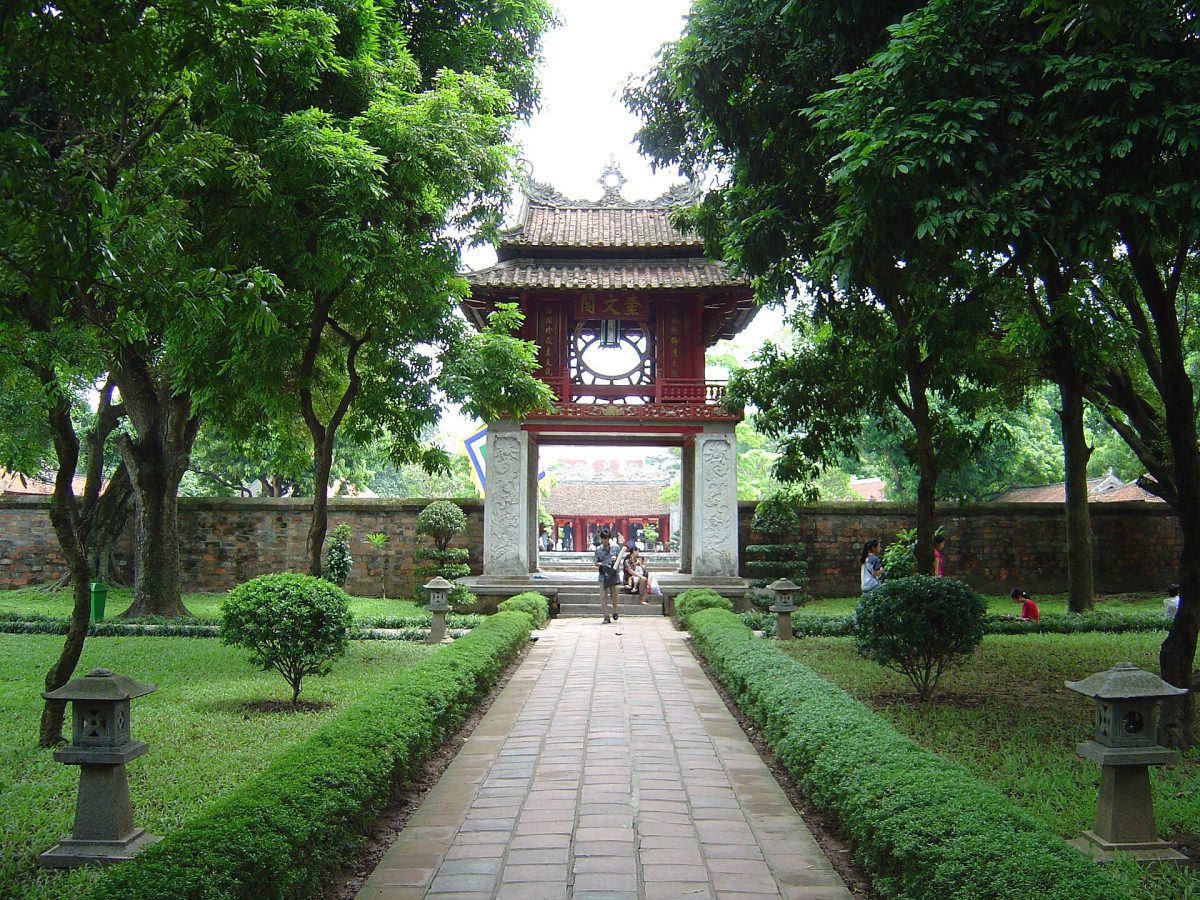
Photo: The original uploader was Chuoibk at English Wikipedia., CC BY-SA 3.0
Most visitors simply buy a ticket at the main gate on Quoc Tu Giam Street and walk in; the fee is modest, there are no timed slots and no reason to book ahead. Audio guides and local guides can be arranged on site, and the information panels in English are good enough for a self-guided visit of an hour or so. The paid tours fall into a few groups. The most common is a half-day or full-day city tour of Hanoi in which the temple is one stop among several, usually alongside the Ho Chi Minh Mausoleum area, the One Pillar Pagoda, Hoa Lo Prison or Hoan Kiem Lake, with a guide, a vehicle and entry tickets included and lunch sometimes added.
Some combine the temple with a craft village outside the city, such as the incense-making village of Quang Phu Cau, or with the Fine Arts Museum across the road. Others are more playful: a motorbike or scooter ride that also takes in the narrow train street, or a guided talk focused on the old imperial examinations. In the evenings a separate night programme opens parts of the complex with lighting and a projection show, which needs its own ticket and is worth booking ahead in the busy season. Note that some products in search results with the word literature in them have nothing to do with Hanoi.
Live dates and prices from GetYourGuide. Free cancellation on most tickets.
The temple was founded in 1070 under Emperor Ly Thanh Tong to honour Confucius, and six years later the Imperial Academy, the first university in Vietnam, opened beside it to train mandarins and princes. It taught for seven centuries, until the Nguyen emperors moved the academy to Hue at the start of the 1800s. Much of what stands now has been rebuilt several times, most recently with a large restoration in 2000, but the plan is old and modelled on the Confucian temple at Qufu in China. The complex is a long walled rectangle divided into five courtyards, entered in sequence through a series of gates. The first two are gardens of lawns and old trees.
The third opens with the Constellation of Literature pavilion, Khue Van Cac, a small two-storey gate tower that has become the symbol of Hanoi, and around the Well of Heavenly Clarity stand the stelae of doctors: 82 carved stone tablets, each on the back of a stone tortoise, recording the names of those who passed the royal examinations between 1442 and 1779. These stelae are listed in UNESCO's Memory of the World register. The fourth courtyard holds the sanctuary with the altar of Confucius and his disciples, and the fifth the reconstructed academy building with its bell and drum towers. The stelae are roped off; do not touch them or the tortoises. Students come before exams to pray for good marks, and graduates in gowns pose for photos in the courtyards, so expect to share the space. The temple is about 2 km west of Hoan Kiem Lake, a short taxi ride or a 25-minute walk from the Old Quarter.
The temple is open daily from early morning until late afternoon, with slightly longer hours in summer, and an evening programme on selected nights. Check current times if you plan to go after dark. Come at opening time to enjoy the courtyards before the coach groups arrive, usually from mid-morning. Graduation season, roughly from April to June, fills the place with students in caps and gowns, which is lively but crowded. The pleasantest weather in Hanoi is from October to December and again in March and April;
summer is hot and humid, with heavy rain. In the days before Tet, the lunar new year in late January or February, calligraphers set up outside the walls and write characters for good fortune, a tradition worth seeing; on the first days of Tet itself the temple is packed with families. Allow an hour to 90 minutes. Combine the visit with the Fine Arts Museum opposite, the One Pillar Pagoda and the Ho Chi Minh Mausoleum area, all within walking distance.
Yes. GetYourGuide lists 11 tickets and tours for Temple of Literature (Van Mieu), with live dates and prices and free cancellation on most of them.
The temple is open daily from early morning until late afternoon, with slightly longer hours in summer, and an evening programme on selected nights.
Allow an hour to 90 minutes.
Entry to Temple of Literature (Van Mieu): Small fee at the gate
Shoulders and knees covered inside the sanctuary halls; hats off before the altars.
Temple of Literature (Van Mieu) covers 5.4 ha.
Temple of Literature (Van Mieu) was established in 1070.
Temple of Literature (Van Mieu) is in Hanoi, Vietnam. The map on this page shows the exact spot.
How to visit a Chinese temple: incense, gods and manners — How to behave in Taoist, Confucian and folk temples in China, Taiwan, Hong Kong and South-East Asia: incense, thresholds and fortunes.
Hanoi, Vietnam
The Perfume Pagoda is not a single building but a pilgrimage route through the limestone hills of Huong Son, about 60…
28 tickets & tours
Hanoi, Vietnam
Tran Quoc is an active Buddhist pagoda and entry is free;
3 tickets & tours
Hanoi, Vietnam
Tay Phuong Pagoda is an active Buddhist temple and charges no admission in the ordinary way;
1 ticket or tour
Hanoi, Vietnam
No ticket is sold for Bach Ma Temple, and none is needed: the doors open onto the street during the day, entry is free,…
No online ticket
Hanoi, Vietnam
There is nothing to book in advance for Ngoc Son Temple.
No online ticket
Hanoi, Vietnam
Entry to the One Pillar Pagoda is free, and no ticket for the pagoda alone is sold online.
No online ticket