Temple of Literature (Van Mieu)
Hanoi, Vietnam
Most visitors simply buy a ticket at the main gate on Quoc Tu Giam Street and walk in;
11 tickets & tours
Buddhist Temple · Hanoi · Vietnam

Photo: Jack French from San Francisco, USA, CC BY 2.0
The Perfume Pagoda is not a single building but a pilgrimage route through the limestone hills of Huong Son, about 60 km southwest of central Hanoi, and getting there is most of the planning. Independent travellers can take a bus or a hired car to Ben Duc wharf, buy the site ticket and a boat ticket there, and then add the cable car if they do not want to climb. For most foreign visitors, though, a day trip from Hanoi is simpler. The standard product is a full-day tour with a guide, hotel pick-up in the Old Quarter, the rowing boat along the Yen stream, lunch at a local restaurant and the walk or cable car up to the cave.
Small-group versions cap numbers at around a dozen, and private tours let you set the pace and the departure time. Some itineraries stop on the way at Quang Phu Cau, a village where incense sticks are made and dried in bright bundles by the roadside, or add a craft workshop. A few longer packages fold the pagoda into a multi-day northern Vietnam trip with Halong Bay. Before booking, check whether the entry ticket, the boat and the cable car are all included, since they are paid separately at the site, and whether lunch is vegetarian-friendly. A private car is worth the extra cost during the spring festival, when the shared buses are slow and the wharf is crowded.
Live dates and prices from GetYourGuide. Free cancellation on most tickets.
Pilgrims call the journey here going to the Huong, and it unfolds in stages. From Ben Duc wharf a woman, usually, rows you about an hour along the Yen stream between rice fields and karst peaks. The first stop is the Den Trinh shrine, where pilgrims announce themselves to the guardian spirit before going on; its gate is flanked by kneeling stone elephants. The boat then lands near Thien Tru, the Outer Pagoda, with its bell tower, three-jewel hall and a large statue of Quan Am, the Vietnamese form of the bodhisattva of compassion. The bell tower and gateway were destroyed in the wars of the twentieth century and rebuilt in the 1980s and 1990s, but the setting at the foot of the cliffs is old.
Small shrines such as Giai Oan, with its spring and pool, sit along the path. The goal is Huong Tich, a cave on the mountainside that holds the Inner Pagoda. A long flight of steps leads down into its mouth, carved with eighteenth-century characters praising it as the finest cave in the south. Inside, among stalactites that pilgrims touch for blessings of wealth and children, stand stone statues of the Buddha and Quan Am. You can climb the stone path, about an hour each way and slippery after rain, or ride the cable car up and walk down. Be ready for stalls, incense smoke and vendors along the path. Keep to the side when pilgrims are praying and do not climb on the statues.
The site is open all year from early morning to late afternoon, though the boats and cable car work to daylight hours. The great pilgrimage season begins on the sixth day of the first lunar month, shortly after Tet, and runs into the third lunar month, roughly February to April. The opening weeks bring huge crowds of Vietnamese pilgrims, queues for boats and the cable car, and a lively, crowded atmosphere that is an experience in itself but not a calm one.
If you want quiet, come outside the festival, ideally in autumn from September to November, when the weather is dry and mild. Summer is hot and wet, and floods can occasionally disrupt the boats. Whatever the season, set out early to beat the day-trip coaches and avoid weekends. The visit takes a full day from Hanoi: about two hours each way by road, an hour on the boat each way and two or three hours on the mountain. Combine it with the incense village on the way back.
Yes. GetYourGuide lists 28 tickets and tours for Perfume Pagoda (Chua Huong), with live dates and prices and free cancellation on most of them.
The site is open all year from early morning to late afternoon, though the boats and cable car work to daylight hours.
Entry to Perfume Pagoda (Chua Huong): Entry fee plus boat fare
Shoulders and knees covered in the shrines; wear shoes with grip for the wet steps.
Perfume Pagoda (Chua Huong) was established in 1400.
Perfume Pagoda (Chua Huong) is in Hanoi, Vietnam. The map on this page shows the exact spot.
How to visit a Buddhist temple: shoes, dress and manners — Shoes, dress, feet, photos and offerings in Buddhist temples, from the wats of Thailand and Sri Lanka to the Zen temples of Japan.
Hanoi, Vietnam
Most visitors simply buy a ticket at the main gate on Quoc Tu Giam Street and walk in;
11 tickets & tours
Hanoi, Vietnam
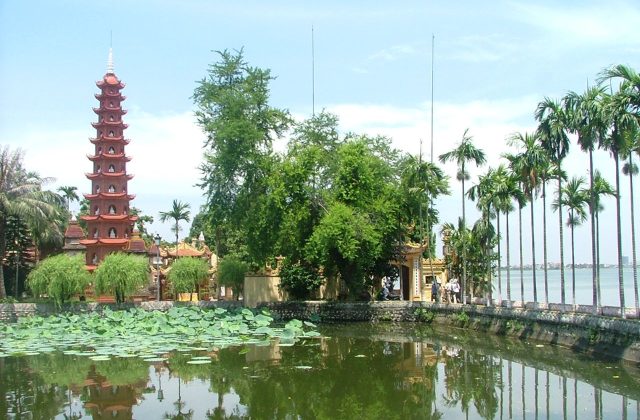
Tran Quoc is an active Buddhist pagoda and entry is free;
3 tickets & tours
Hanoi, Vietnam
Tay Phuong Pagoda is an active Buddhist temple and charges no admission in the ordinary way;
1 ticket or tour
Hanoi, Vietnam
No ticket is sold for Bach Ma Temple, and none is needed: the doors open onto the street during the day, entry is free,…
No online ticket
Hanoi, Vietnam
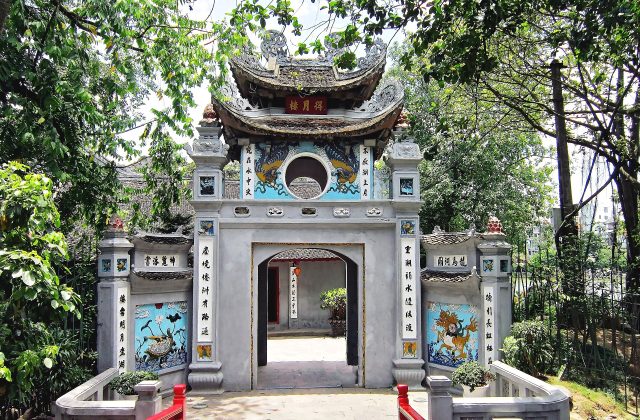
There is nothing to book in advance for Ngoc Son Temple.
No online ticket
Hanoi, Vietnam
Entry to the One Pillar Pagoda is free, and no ticket for the pagoda alone is sold online.
No online ticket