Perfume Pagoda (Chua Huong)
Hanoi, Vietnam
The Perfume Pagoda is not a single building but a pilgrimage route through the limestone hills of Huong Son, about 60…
28 tickets & tours
Buddhist Temple · Hanoi · Vietnam

Photo: Original uploader was Liftold at vi.wikipedia, CC BY-SA 3.0
Tay Phuong Pagoda is an active Buddhist temple and charges no admission in the ordinary way; visitors leave a donation if they wish. There is no ticket to book, and the only practical question is how to cover the distance from Hanoi. The pagoda lies about 40 km west of the city centre, in the rural Thach That district of greater Hanoi, so a car or motorbike is the usual way to get there; public buses run in the general direction but leave you with a long final stretch. The most common organised option is a full-day trip from Hanoi to the western outskirts that joins several sights in one loop.
It typically takes in the ancient village of Duong Lam, with its laterite-walled houses and communal hall, the Thay Pagoda with its lake and water-puppet pavilion, and Tay Phuong on its hilltop. Such tours normally include a private car or small minibus, an English-speaking guide and a set lunch, sometimes in a village house; donations and drinks are extra. Booking this kind of day out makes sense because the three places are spread across the countryside and poorly linked by public transport. Independent travellers can hire a car and driver for the day from Hanoi, which allows a slower pace and an earlier start, or ride a motorbike if they are comfortable with Vietnamese traffic.
Live dates and prices from GetYourGuide. Free cancellation on most tickets.
The pagoda sits on top of a low hill, and the visit begins with the climb: a long flight of laterite steps, about 240 of them, shaded in places by old trees, with small shrines and viewpoints over the rice fields on the way up. At the summit stand three parallel halls, one behind the other, built of dark ironwood with walls of red laterite and low, double-tiered roofs whose corners sweep upwards. The buildings in their present form date mainly from the Tay Son period at the end of the eighteenth century, although tradition places the temple's origins many centuries earlier, and they are among the finest surviving examples of northern Vietnamese pagoda architecture.
Look up at the carved roof brackets and gable ends, decorated with dragons, phoenixes and flowers. The real treasure is inside. The halls hold more than sixty lacquered wooden statues, and the most celebrated are the eighteen arhats, carved from jackfruit wood, each with a distinct and startlingly lifelike face and pose: one gaunt and meditating, another laughing, another tense with argument. They are regarded as masterpieces of Vietnamese sculpture and the pagoda is protected as a special national site. Take your time with them, as they are easy to rush past in the dim light. Dress modestly, remove shoes where indicated, keep your voice down and avoid pointing your feet at the altars. Ask before photographing worshippers, and do not touch the statues.
The pagoda is open during daylight hours every day; the halls may close for a lunch break, so a morning visit is the safest. The best season is autumn, from September to November, when the weather is dry and mild and the surrounding rice fields turn gold. Spring is also pleasant, and it is the main pilgrimage season: in the weeks after Tet, the lunar new year, local festivals fill the pagodas of the region with worshippers, incense and music, which is atmospheric but very busy, especially on weekends.
Summer is hot, humid and wet, which makes the climb hard work, and northern winters are grey and cool. The first and fifteenth days of each lunar month bring more local worshippers. Weekday mornings outside the festival season are the quietest. Allow about an hour and a half for the climb and the halls. With Duong Lam village and the Thay Pagoda the day out from Hanoi fills seven to nine hours.
Yes. GetYourGuide lists one ticket or tour for Tay Phuong Pagoda, with live dates and prices and free cancellation on most of them.
The pagoda is open during daylight hours every day; the halls may close for a lunch break, so a morning visit is the safest.
Allow about an hour and a half for the climb and the halls.
The best season is autumn, from September to November, when the weather is dry and mild and the surrounding rice fields turn gold.
Shoulders and knees covered; remove shoes before entering the shrine halls.
Entry to Tay Phuong Pagoda: Free; donations welcome
Tay Phuong Pagoda was established in 1700.
Tay Phuong Pagoda is in Hanoi, Vietnam. The map on this page shows the exact spot.
How to visit a Buddhist temple: shoes, dress and manners — Shoes, dress, feet, photos and offerings in Buddhist temples, from the wats of Thailand and Sri Lanka to the Zen temples of Japan.
Hanoi, Vietnam
The Perfume Pagoda is not a single building but a pilgrimage route through the limestone hills of Huong Son, about 60…
28 tickets & tours
Hanoi, Vietnam
Most visitors simply buy a ticket at the main gate on Quoc Tu Giam Street and walk in;
11 tickets & tours
Hanoi, Vietnam
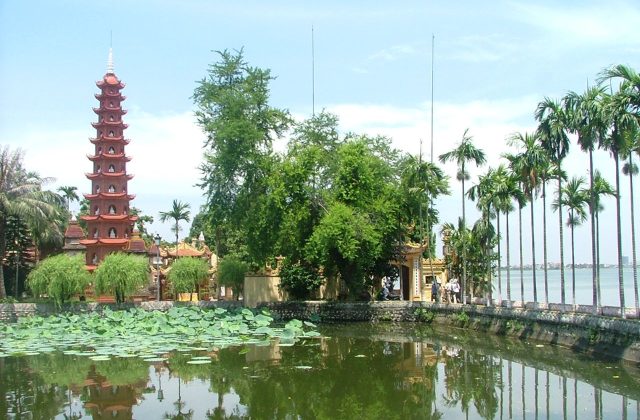
Tran Quoc is an active Buddhist pagoda and entry is free;
3 tickets & tours
Hanoi, Vietnam
No ticket is sold for Bach Ma Temple, and none is needed: the doors open onto the street during the day, entry is free,…
No online ticket
Hanoi, Vietnam
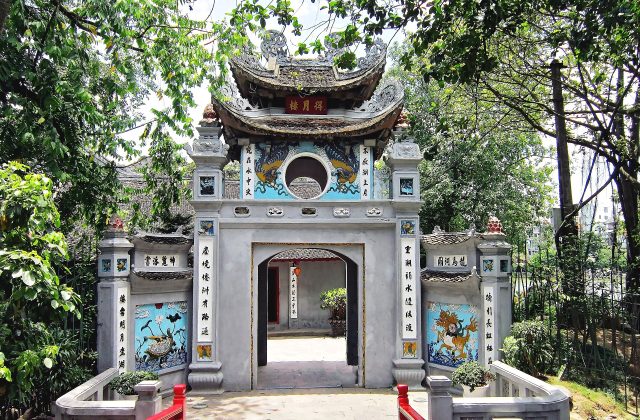
There is nothing to book in advance for Ngoc Son Temple.
No online ticket
Hanoi, Vietnam
Entry to the One Pillar Pagoda is free, and no ticket for the pagoda alone is sold online.
No online ticket