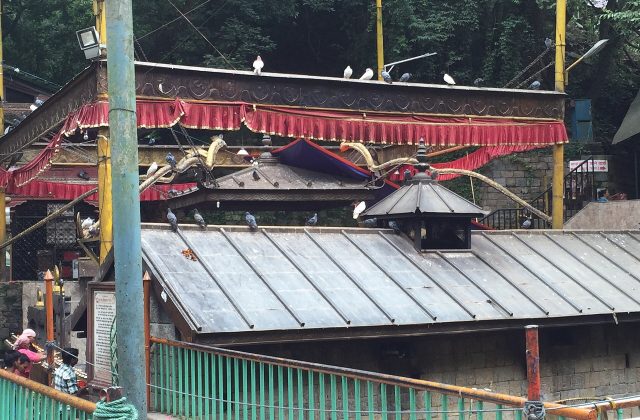
Swayambhunath (Monkey Temple)
Kathmandu, Nepal
Swayambhunath needs no advance ticket. Foreign visitors pay a modest fee at a booth on the way up, local worshippers go…
13 tickets & tours
Hindu Temple · Kathmandu · Nepal

Photo: Chainwit., CC BY-SA 4.0
Foreign visitors buy a ticket at the counters on the approach to Pashupatinath, which covers the precinct around the temple and the riverside ghats; Hindus enter free, and only Hindus may go into the courtyard of the main temple. The site lies in the east of Kathmandu, about 5 km from Thamel, and a taxi takes 20 to 30 minutes in normal traffic. Most organised products fall into two groups. The first are evening outings built around the aarti, the daily fire ceremony performed by priests on the steps of the Bagmati river at dusk; they usually last three to four hours, include a guide, hotel transfers and sometimes dinner, and the entry ticket may be extra.
The second are daytime sightseeing tours that combine Pashupatinath with the great stupa of Boudhanath, a short walk or drive away, or with all the valley's main heritage sites, including Patan and Bhaktapur, in a long day. Other options include walks focusing on Hindu rites of life and death, visits that add the nearby Guhyeshwari temple, and longer pilgrimage itineraries that link Pashupatinath with Muktinath. A guide is especially useful here, because much of what happens on the ghats, from cremations to the sadhus and the rituals for the dead, needs explaining and some respect in how you approach it.
Live dates and prices from GetYourGuide. Free cancellation on most tickets.
Pashupatinath is the holiest Shiva shrine in Nepal, dedicated to the god as Pashupati, lord of animals, and draws pilgrims from across Nepal and India. Its origins are lost in legend and the site has been sacred for well over a thousand years, while the present main temple, a two-tiered pagoda with gilded roofs and silver-plated doors, dates from the end of the 17th century. It forms part of the Kathmandu Valley UNESCO World Heritage Site. Non-Hindus can see the main temple only through the gates or from the terraces across the river, where you glimpse the golden back of the great bull Nandi facing the sanctum. Most of the visit is spent along the Bagmati, a tributary of the Ganges.
On the temple bank are the Arya Ghat, used for royal and important funerals, and the open-air cremation platforms where bodies are burnt on wooden pyres and the ashes swept into the water. Cross the footbridge to the eastern bank and climb the stone terraces lined with small Shiva lingam shrines, which give the best view of the whole scene, and continue up into the woods, where monkeys roam and there are smaller temples and the old ashrams of ascetics. Behave as you would at a funeral: stay at a distance from mourning families, keep quiet, and never photograph a cremation close up or without thinking. Sadhus with painted faces may pose for photographs but will expect a tip. Remove shoes and leather items if you enter any shrine.
The precinct is open from early morning until late evening, while the main temple keeps its own hours of worship, with closures in the middle of the day. The two best times are the early morning, when worshippers arrive with offerings and the light over the river is soft, and dusk, when the aarti begins on the riverbank at around 6 pm and lasts about an hour, with lamps, bells and chanting. October to April is the best season, with dry, clear weather, though winter evenings are cold.
The great festival is Maha Shivaratri in February or March, when hundreds of thousands of pilgrims and sadhus gather and the site becomes very crowded; Teej, in August or September, fills the temple with women in red saris. On these days access can be restricted and you should expect long queues. Allow two hours for the ghats and the eastern terraces, longer if you stay for the aarti. Boudhanath, the largest stupa in Nepal, is about 2 km north-east and makes the natural pairing.
Yes. GetYourGuide lists 35 tickets and tours for Pashupatinath Temple, with live dates and prices and free cancellation on most of them.
The precinct is open from early morning until late evening, while the main temple keeps its own hours of worship, with closures in the middle of the day.
Allow two hours for the ghats and the eastern terraces, longer if you stay for the aarti.
October to April is the best season, with dry, clear weather, though winter evenings are cold.
Modest dress; shoes and leather off before entering; main temple open to Hindus only.
Entry to Pashupatinath Temple: NPR 1,000 for foreign visitors
Pashupatinath Temple covers 2.5 km².
Pashupatinath Temple was established in 400.
Pashupatinath Temple is in Kathmandu, Nepal. The map on this page shows the exact spot.
How to visit a Hindu temple: dress, shoes and access — What to wear, what to leave at the gate and where non-Hindus may go in Hindu temples in India, Nepal, Bali and South-East Asia.
Kathmandu, Nepal
Swayambhunath needs no advance ticket. Foreign visitors pay a modest fee at a booth on the way up, local worshippers go…
13 tickets & tours
Kathmandu, Nepal
There is no ticket for Dakshinkali: entry to the temple grounds is free, and Hindu worshippers pay only for their own…
3 tickets & tours
Kathmandu, Nepal
No ticket for Boudhanath alone is sold online. Foreign visitors pay a heritage fee of a few hundred rupees at the…
No online ticket