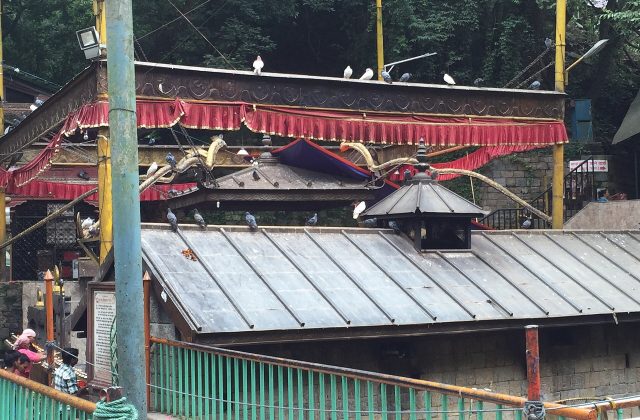
Pashupatinath Temple
Kathmandu, Nepal
Foreign visitors buy a ticket at the counters on the approach to Pashupatinath, which covers the precinct around the…
35 tickets & tours
Buddhist Temple · Kathmandu · Nepal

Photo: Vyacheslav Argenberg, CC BY 4.0
Swayambhunath needs no advance ticket. Foreign visitors pay a modest fee at a booth on the way up, local worshippers go in free, and the stupa platform is open from before dawn until after dark. What is sold online is the company of a guide and the logistics of getting across Kathmandu, which is worth having if this is your first day in the valley. The shortest option is a guided walk that starts in Thamel and climbs to the stupa on foot, a good way to understand how close the hill sits to the old city. Half-day city tours usually pair the stupa with Kathmandu Durbar Square or the National Museum, while full-day heritage tours add Patan and Bhaktapur, or Kirtipur, and include a private car, a licensed guide and sometimes lunch;
entrance fees at each site are often paid separately, so check before booking. Several operators run late-afternoon and after-dark visits, timed for the lamps and the view over the city lights, and there are combinations with an art gallery, the Chandragiri cable car, a Newar music session or a sound-healing class. Active travellers can join a bicycle loop over the western hills, and photographers have a dedicated walk with a guide who knows the best corners. Independent travellers lose very little by going alone: a taxi or a 40-minute walk from Thamel gets you to the foot of the eastern stairway.
Live dates and prices from GetYourGuide. Free cancellation on most tickets.
The stupa crowns a wooded hill about 3 km west of central Kathmandu, and the classic approach is the long eastern stairway of some 365 stone steps, lined with carved Buddhas, prayer flags and the resident macaques that give the site its nickname. Taxis can instead drop you at the western car park near the Buddha Amideva Park with its three giant golden statues, leaving only a short climb. At the top the white dome rises from a platform crowded with shrines. On the gilded tower above it, the painted eyes of the Buddha look out in all four directions, with the curled sign for unity in place of a nose, and a stack of thirteen rings symbolises the stages towards enlightenment.
A huge gilded vajra at the head of the stairs, butter-lamp houses, Tibetan monasteries and the Hindu shrine of Harati, the goddess who protects children from smallpox, show how Buddhist and Hindu worship share the hill. Pilgrim legend links the hill to a lotus that bloomed on the lake that once filled the valley, and an inscription credits a 5th-century king with early works here, so this is among the oldest sacred sites in Nepal. The 2015 earthquake damaged several shrines, and most have since been rebuilt. Etiquette is relaxed but clear: always walk clockwise around the dome and spin the prayer wheels with your right hand, ask before photographing monks, and do not feed the monkeys, which snatch food and bags. Shoes come off only if you enter a monastery or chapel.
The platform is accessible from early morning until well after sunset, while the small museum and individual chapels keep shorter hours. The best time is at dawn, when Newar and Tibetan devotees circle the stupa, lamps are lit and the valley is often still in mist; late afternoon is the second choice, with golden light on the spire and the city lights coming on below. October to early December brings clear skies and Himalayan views on good days, and February to April is also pleasant.
The monsoon months, June to September, are humid and hazy, although the Buddhist month of Gunla, usually in August, fills the hill with daily processions and music. Buddha Jayanti in April or May and Losar, the Tibetan New Year, draw large crowds of pilgrims. Allow about 90 minutes including the climb. The stupa combines naturally with Kathmandu Durbar Square in the same morning, and with Boudhanath or Patan later in the day.
Yes. GetYourGuide lists 13 tickets and tours for Swayambhunath (Monkey Temple), with live dates and prices and free cancellation on most of them.
Foreign visitors pay a modest fee at a booth on the way up, local worshippers go in free, and the stupa platform is open from before dawn until after dark.
Allow about 90 minutes including the climb.
The best time is at dawn, when Newar and Tibetan devotees circle the stupa, lamps are lit and the valley is often still in mist; late afternoon is the second choice, with golden light on the spire and the city lights coming on below.
Entry to Swayambhunath (Monkey Temple): NPR 200 for foreign visitors
No formal dress code; modest clothing is respectful, and walk clockwise around the stupa.
Swayambhunath (Monkey Temple) was established in 400.
Swayambhunath (Monkey Temple) is in Kathmandu, Nepal. The map on this page shows the exact spot.
How to visit a Buddhist temple: shoes, dress and manners — Shoes, dress, feet, photos and offerings in Buddhist temples, from the wats of Thailand and Sri Lanka to the Zen temples of Japan.
Kathmandu, Nepal
Foreign visitors buy a ticket at the counters on the approach to Pashupatinath, which covers the precinct around the…
35 tickets & tours
Kathmandu, Nepal
There is no ticket for Dakshinkali: entry to the temple grounds is free, and Hindu worshippers pay only for their own…
3 tickets & tours
Kathmandu, Nepal
No ticket for Boudhanath alone is sold online. Foreign visitors pay a heritage fee of a few hundred rupees at the…
No online ticket