Yasukuni Shrine
4 km away
Yasukuni Shrine, in the Kudan district of central Tokyo just north of the Imperial Palace, is free to enter, and the…
2 tickets & tours
Buddhist Temple · Tokyo · Japan
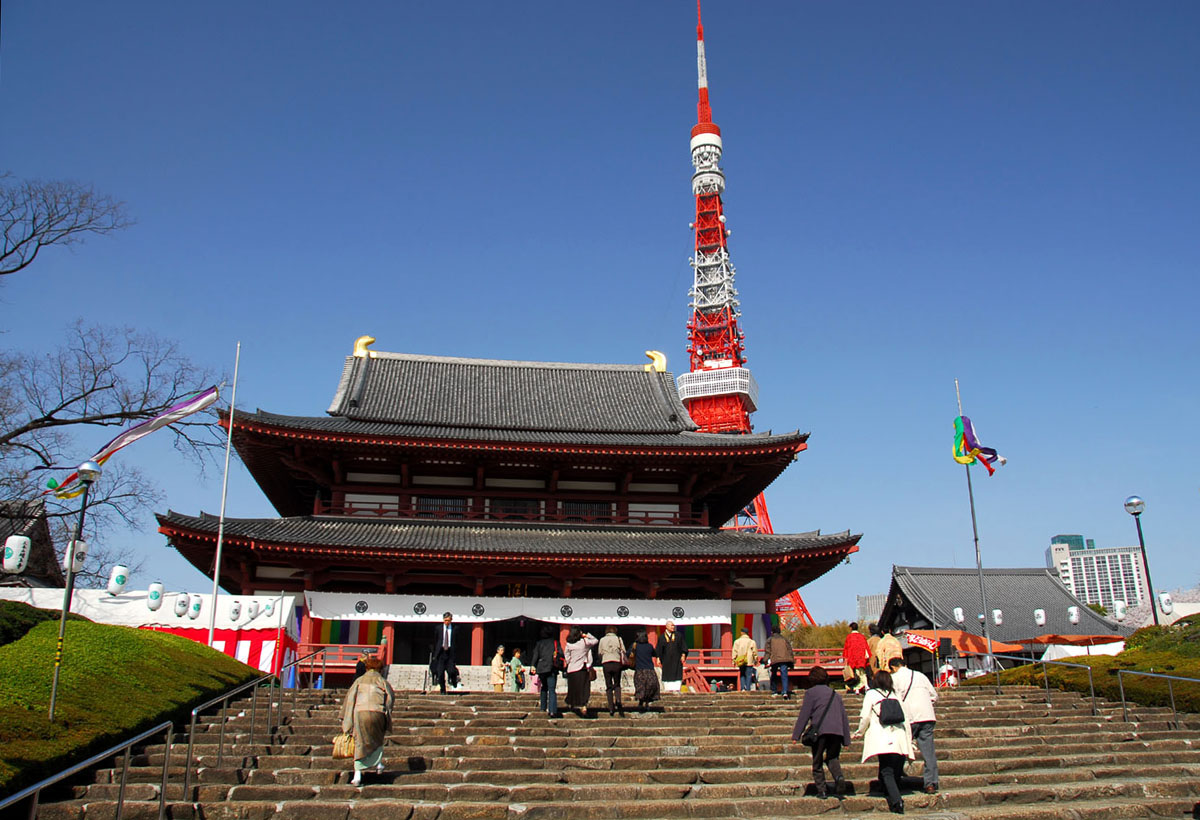
Photo: SElefant, CC BY-SA 3.0
No ticket for Zojo-ji alone is sold online, and none is needed for the main part of a visit. The temple grounds, the great gate, the main hall and the Jizo garden are open to all and free to enter. Two areas charge a modest admission fee at the door: the Tokugawa mausoleum, where six of the shoguns are buried, and the treasure gallery beneath the main hall, which displays painted scrolls and a large model of a lost mausoleum. Check the official site for the current prices and for any combined ticket. Most visitors come independently. The temple lies in Shiba Park in Minato ward, a few minutes on foot from Onarimon and Shibakoen stations on the Mita Line, from Daimon station on the Asakusa and Oedo lines, and from Hamamatsucho station on the JR lines.
Tokyo Tower rises immediately behind it, so the two are almost always visited together. Many half-day and full-day sightseeing tours of central Tokyo include Zojo-ji as a short stop, usually paired with Tokyo Tower and sometimes with the Imperial Palace gardens or Asakusa. These tours typically include transport and a guide but leave only a brief time in the grounds, often without entry to the mausoleum. If you are interested in the Tokugawa history, it is better to come on your own or with a private guide. The page itself lists any GetYourGuide tours whose route passes the temple.
Live prices from GetYourGuide for tickets and tours that include this temple. Free cancellation on most of them.
Zojo-ji traces its origins to a Shingon temple whose abbot, Yuyo Shoso, converted it to the Pure Land school of Jodo-shu in 1393. When Tokugawa Ieyasu made Edo his capital he adopted the temple as his family's, and in 1590 moved it to its present site. At its peak the precinct had more than 120 buildings. Most were lost in fires, in the decline of Buddhism after 1868, and in the air raids of 1945. Enter through the Sangedatsumon, the vermilion two-storey main gate built in 1622. About 21 m tall, it is the oldest wooden building in Tokyo and the only major structure here to survive the war; passing through it is meant to free the visitor from greed, anger and ignorance. Beyond lies the Daiden, the great hall rebuilt in concrete in 1974, where services in the Pure Land tradition are held and visitors may sit quietly at the back.
The treasure gallery underneath it holds paintings by Kano Kazunobu. Beside the main hall the Ankokuden houses the Black Honzon, an image of Amida associated with Ieyasu and believed to bring good fortune. Behind and to the side is the walled mausoleum, where the graves of the shoguns and several of their wives were gathered together after the war. Nearby, the Sentai Kosodate Jizo garden is lined with rows of small stone figures in red knitted caps and bibs, many with pinwheels, placed by parents remembering children who were lost before or soon after birth. Be respectful and do not handle the figures. Photography is generally allowed outdoors; ask before photographing inside the halls.
The grounds are open from early morning until the evening, while the main hall, the mausoleum and the treasure gallery keep shorter daytime hours and the gallery closes on some weekdays; check the official site before going. Early morning is quiet and you may hear the chanting of the morning service. Late afternoon is good for photographs of the gate and the hall with Tokyo Tower lit up behind them. The temple is especially pleasant in late March and early April, when cherry trees bloom in Shiba Park, and in late November when the ginkgos turn yellow.
On New Year's Eve the great bell is rung and crowds come for the first prayers of the year, and Setsubun in early February brings a bean-throwing ceremony. In April a large memorial service to Honen, founder of the Pure Land school, is held. Allow about an hour, or 90 minutes with the mausoleum and gallery. Combine it with Tokyo Tower, a walk through Shiba Park, and the gardens of Kyu Shiba Rikyu near Hamamatsucho.
4 km away
Yasukuni Shrine, in the Kudan district of central Tokyo just north of the Imperial Palace, is free to enter, and the…
2 tickets & tours
5 km away
Meiji Jingu is free to enter and there is no ticket to buy for the shrine itself: you simply walk in from Harajuku or…
38 tickets & tours
7 km away
Nezu Shrine is free to enter and open to anyone who walks in, so there is no ticket to buy;
7 tickets & tours
Yes. GetYourGuide sells tickets and guided tours whose route includes Zojo-ji Temple; live prices are shown on this page.
Entry to Zojo-ji Temple: Grounds free; fees for mausoleum
The temple grounds, the great gate, the main hall and the Jizo garden are open to all and free to enter.
Allow about an hour, or 90 minutes with the mausoleum and gallery.
Early morning is quiet and you may hear the chanting of the morning service.
No strict dress code; remove shoes where indicated and keep quiet during services in the halls.
Zojo-ji Temple was established in 1393.
Zojo-ji Temple is in Tokyo, Japan. The map on this page shows the exact spot.
How to visit a Buddhist temple: shoes, dress and manners — Shoes, dress, feet, photos and offerings in Buddhist temples, from the wats of Thailand and Sri Lanka to the Zen temples of Japan.
Tokyo, Japan
Meiji Jingu is free to enter and there is no ticket to buy for the shrine itself: you simply walk in from Harajuku or…
38 tickets & tours
Tokyo, Japan
There is no ticket for Senso-ji: the temple grounds are free and always open, and the main hall can be entered at no…
31 tickets & tours
Tokyo, Japan
Nezu Shrine is free to enter and open to anyone who walks in, so there is no ticket to buy;
7 tickets & tours
Tokyo, Japan
There is nothing to buy for Asakusa Shrine: it stands open and free inside the grounds of Senso-ji, Tokyo's oldest…
6 tickets & tours
Tokyo, Japan
Gotokuji is free to enter and there is nothing to book for the temple itself.
3 tickets & tours
Tokyo, Japan
Yasukuni Shrine, in the Kudan district of central Tokyo just north of the Imperial Palace, is free to enter, and the…
2 tickets & tours