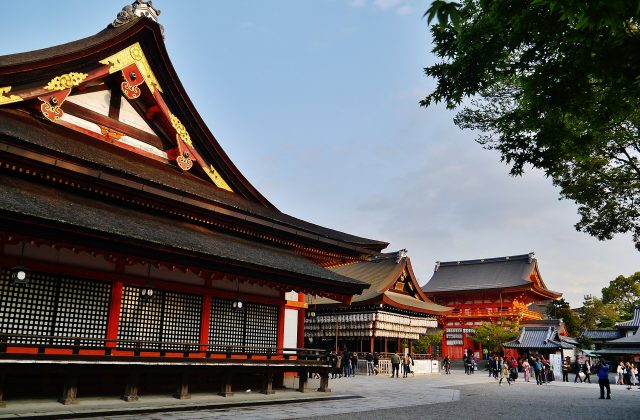
Yasaka Shrine
1 km away
Yasaka Shrine is open to everyone, at all hours and without charge, so there is nothing to buy in order to visit.
2 tickets & tours
Shinto Shrine · Kyoto · Japan
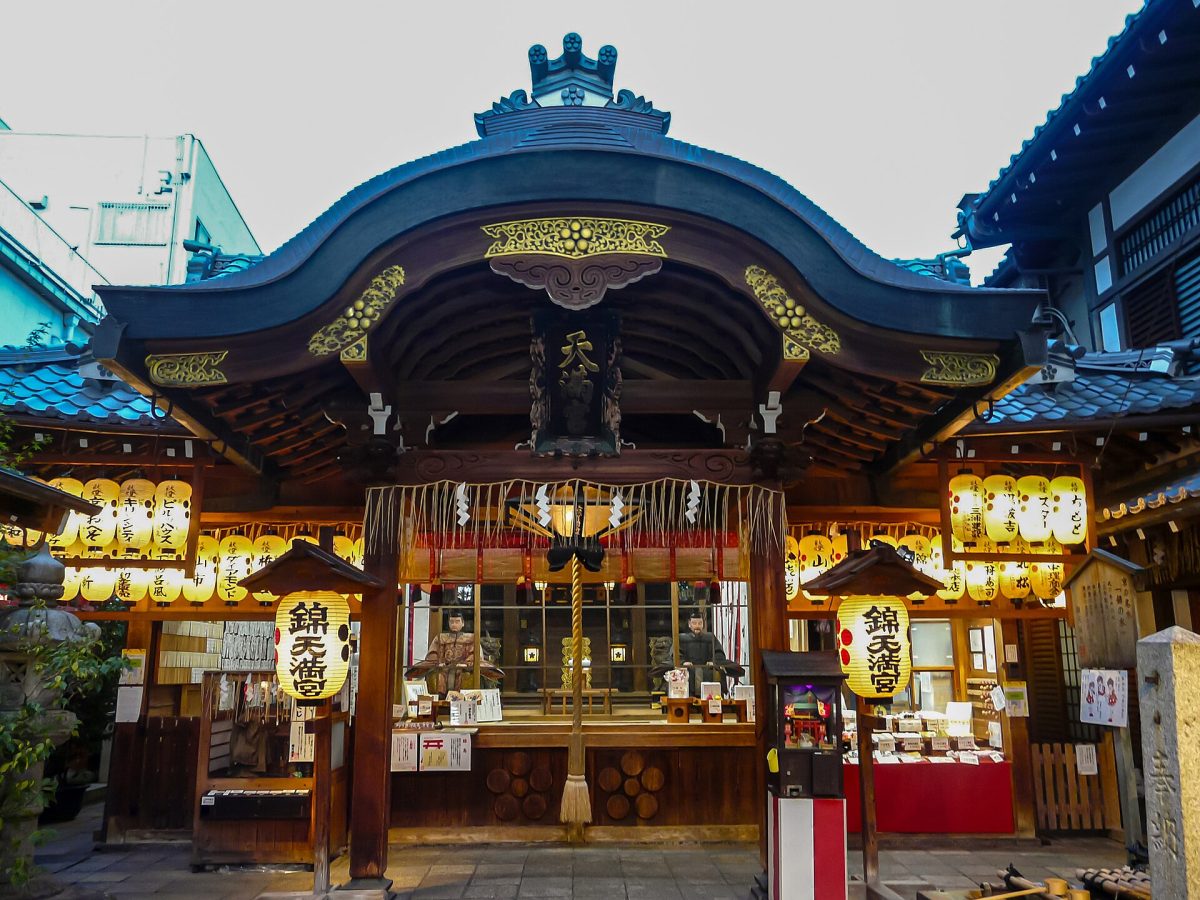
Photo: Naokijp, CC BY-SA 4.0
No ticket is sold for Nishiki Tenmangu, and none is needed. This small Shinto shrine in central Kyoto is free to enter, has no gate booth and keeps long hours, so you can drop in at any time while exploring the shopping streets around it. It stands at the eastern end of Nishiki Market, where the covered food street meets the Shinkyogoku arcade, so the usual way to see it is on foot as part of a walk through downtown Kyoto. From Kawaramachi or Karasuma stations it is five to ten minutes on foot. Many visitors arrive on a guided food tour of Nishiki Market.
These walks typically last two to three hours, include a local guide and a series of tastings, from pickles and tamagoyaki to tofu sweets and fresh seafood, and often finish at or near the shrine. Some combine the market with a cooking class, a sake tasting or an evening walk through Pontocho and Gion. Check whether the tastings are included in the price or bought as you go, and whether drinks are extra. Half-day city tours of Kyoto sometimes pass along the market as well. The page lists any GetYourGuide tours whose route passes the shrine. If you come alone, a few coins for the fortune machine and the offering box are all you need.
Live prices from GetYourGuide for tickets and tours that include this temple. Free cancellation on most of them.
Nishiki Tenmangu is a pocket-sized shrine, but it packs a lot into a narrow plot. The first thing to notice is the stone torii over the street just outside: the buildings on either side were built later, and the ends of the crossbeam now disappear into their walls. The shrine is dedicated to Sugawara no Michizane, the Heian-period scholar and statesman venerated as the patron of learning, which is why students come here before entrance exams. It was founded in 1003 at the former residence of Michizane's father and moved to this spot in 1587, when Toyotomi Hideyoshi reorganised the streets of Kyoto, giving it its place at the head of what became the market. Inside the small courtyard look for the bronze reclining ox, the animal associated with Michizane;
rubbing its head is believed to sharpen the mind. Next to it, a well of fresh spring water draws local people with bottles, and the water is said to have kept the market's fishmongers supplied for centuries. Children and adults alike enjoy the mechanical fortune machines, where a small coin sets a lion dancer moving before it delivers a paper slip. Hundreds of wooden prayer plaques and the glowing lanterns along the eaves complete the scene. Etiquette is the usual for a Shinto shrine: bow at the entrance, rinse your hands at the basin, toss a coin, bow twice, clap twice and bow once more. Photography is welcome, but stand aside so worshippers can reach the hall.
The shrine grounds open early in the morning and stay accessible into the evening, much longer than the market stalls, which generally trade from about 10 am to 5 or 6 pm and in some cases close one day a week. For a calm look at the shrine, come before 10 am, ahead of the crowds that fill Nishiki Market from late morning, or in the evening when the lanterns are lit and the arcade empties. Combining a late-morning shrine visit with a market lunch is the classic plan, but expect a slow shuffle along the food street. Any season works since it is mostly sheltered.
The 25th of each month is the day sacred to Michizane, and the weeks before university entrance exams in January and February bring a steady stream of students. New Year also draws local worshippers. Allow 15 to 20 minutes for the shrine itself. Combine it with Nishiki Market, the Teramachi arcade, the temples along it, an evening stroll through Pontocho and a walk across the Kamo River to Gion and Yasaka Shrine.
1 km away
Yasaka Shrine is open to everyone, at all hours and without charge, so there is nothing to buy in order to visit.
2 tickets & tours
2 km away
Higashi Hongan-ji charges no entry fee and sells no tickets: the great gates open early in the morning and anyone may…
1 ticket or tour
2 km away
Entry to the courtyard of Heian Jingu is free, and there is nothing to book.
2 tickets & tours
Yes. GetYourGuide sells tickets and guided tours whose route includes Nishiki Tenmangu Shrine; live prices are shown on this page.
Allow 15 to 20 minutes for the shrine itself.
Entry to Nishiki Tenmangu Shrine: Free
No dress code.
Nishiki Tenmangu Shrine was established in 1003.
Nishiki Tenmangu Shrine is in Kyoto, Japan. The map on this page shows the exact spot.
How to visit a Shinto shrine: torii, water and prayer — How to pass the torii, purify at the water basin, pray, take photos and buy charms at a Shinto shrine in Japan.
Kyoto, Japan
Kiyomizu-dera does not sell timed tickets, and there is nothing to book for an independent visit: the grounds are open…
40 tickets & tours
Kyoto, Japan
There is nothing to buy to enter Fushimi Inari: the grounds and the mountain trails are open free of charge at all…
38 tickets & tours
Kyoto, Japan
Kinkaku-ji is simple to visit on your own: you pay at the gate on arrival, and the ticket, a paper talisman printed…
19 tickets & tours
Kyoto, Japan
Ryoan-ji sells its own entry ticket at the gate, and for most visitors that is all that is needed.
3 tickets & tours
Kyoto, Japan
Entry to the courtyard of Heian Jingu is free, and there is nothing to book.
2 tickets & tours
Kyoto, Japan
Kifune Shrine has no admission fee and nothing to reserve.
2 tickets & tours


