
Kiyomizu-dera
Kyoto, Japan
Kiyomizu-dera does not sell timed tickets, and there is nothing to book for an independent visit: the grounds are open…
40 tickets & tours
Buddhist Temple · Kyoto · Japan
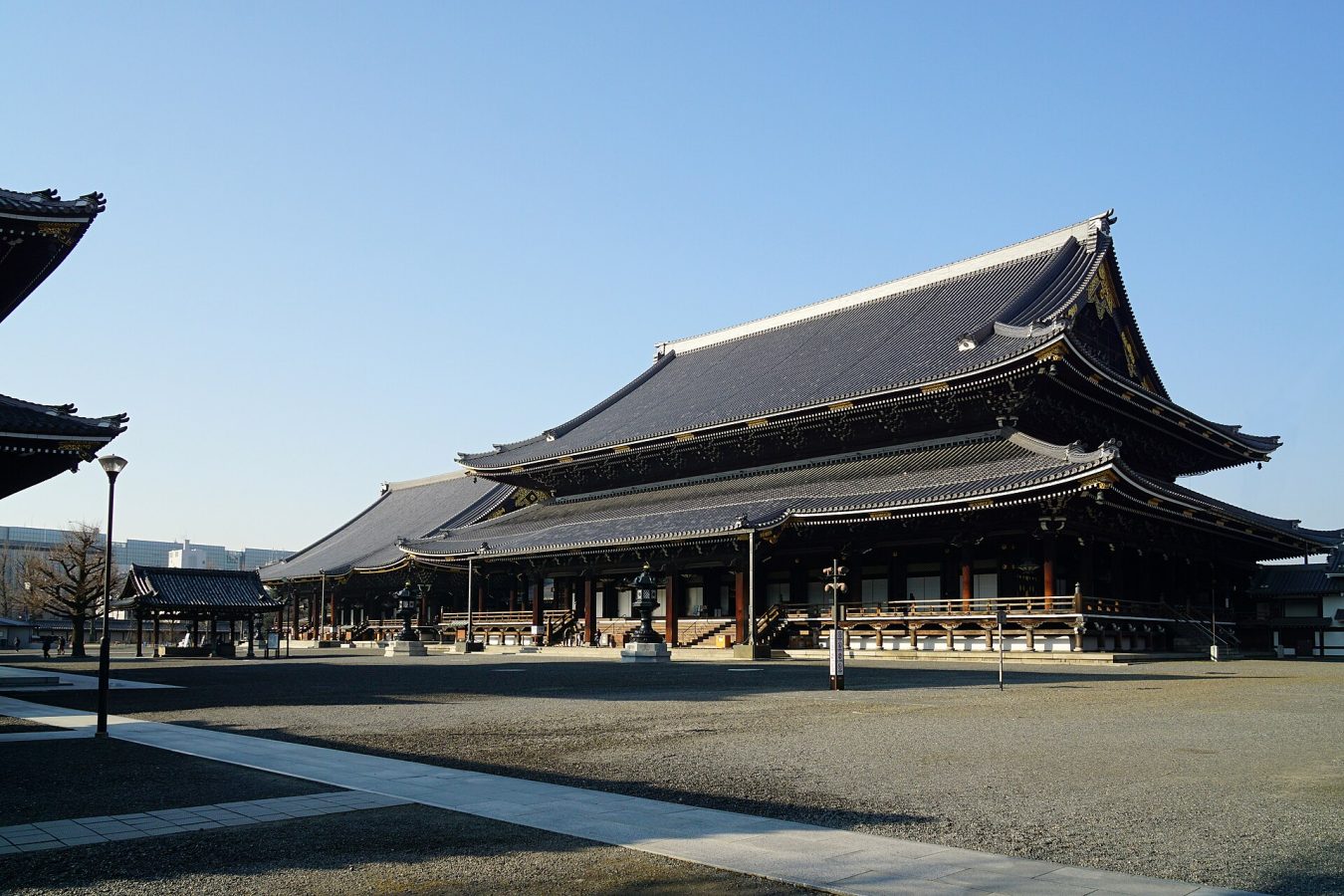
Photo: 663highland, CC BY-SA 4.0
Higashi Hongan-ji charges no entry fee and sells no tickets: the great gates open early in the morning and anyone may walk across the gravel courtyard and into the two main halls. The only paid part of a visit is the temple's separate garden, Shosei-en, a few minutes' walk to the east, where a modest fee is charged at the gate. The bookable option is a guided walk of about an hour and a half devoted entirely to the temple. A guide is useful here because Higashi Hongan-ji is easy to see but hard to read: its rituals, the Pure Land teaching of Shinran, the reason Kyoto has two Hongan-ji temples a few streets apart and the details of the huge halls are not explained on site in much English.
Such walks include the guide only, since there is nothing to pay for entry, and they often finish with a look at the garden or at the sister temple, Nishi Hongan-ji. Most people simply visit independently. The temple stands about a 7-minute walk north of Kyoto Station along Karasuma Street, which makes it one of the easiest major temples in the city to reach and an obvious stop on arrival or before catching a train. City sightseeing buses and general Kyoto tours sometimes pass by, but rarely stop for long.
Live dates and prices from GetYourGuide. Free cancellation on most tickets.
The scale is the first impression. You enter through the Goei-do Gate, one of the largest temple gates in Kyoto, into a wide open courtyard dominated by two halls connected by a covered corridor. The larger, the Founder's Hall, enshrines an image of Shinran, the 13th-century founder of the True Pure Land school, and is one of the largest wooden buildings in the world, about 76 m long and 38 m high. Inside, hundreds of tatami mats spread under a dim golden ceiling, and you are welcome to sit quietly at the back during a service. The smaller Amida Hall to the left holds the image of the Buddha Amida, surrounded by gilded Meiji-era decoration. In the corridor between the halls, look for the coil of thick black rope displayed under glass.
It is made from human hair, donated by women believers in the 1880s and twisted into ropes strong enough to haul the giant timbers for the rebuilding; dozens were made. The temple was founded in 1602, when Tokugawa Ieyasu split the powerful Hongan-ji community in two to weaken it, creating the eastern branch you see here. The halls burned four times in the Edo period, the last in the fighting of 1864, and the present buildings were completed in 1895. Take off your shoes before entering the halls, keep quiet during services and avoid photographing worshippers at prayer. Shosei-en garden, with its pond, islands and teahouses, makes a calm extension to the visit.
The temple opens at around 6 am and closes in the late afternoon, a little earlier in winter; check the official site for the current hours. Morning services are held daily in the Founder's Hall, and arriving early lets you hear the chanting before the day's visitors arrive. Higashi Hongan-ji is rarely crowded, so the time of day matters less than at Kyoto's famous sights.
The ginkgo trees in the courtyard turn bright yellow in late November, which coincides with Ho-onko, the week-long memorial for Shinran held from 21 to 28 November, when the halls fill with believers and services run through the day. Spring brings cherry blossom to the garden, and the halls are pleasantly cool on summer days. Allow 45 minutes for the temple and another 45 for the garden. Combine it with Nishi Hongan-ji, about ten minutes' walk to the west, the view from Kyoto Tower opposite the station, or a walk to the Kamo River and Sanjusangen-do.
Yes. GetYourGuide lists one ticket or tour for Higashi Hongan-ji, with live dates and prices and free cancellation on most of them.
Entry to Higashi Hongan-ji: Free
The temple opens at around 6 am and closes in the late afternoon, a little earlier in winter; check the official site for the current hours.
Allow 45 minutes for the temple and another 45 for the garden.
No dress code; shoes off inside the halls, bags for them are provided.
Higashi Hongan-ji was established in 1602.
Higashi Hongan-ji is in Kyoto, Japan. The map on this page shows the exact spot.
How to visit a Buddhist temple: shoes, dress and manners — Shoes, dress, feet, photos and offerings in Buddhist temples, from the wats of Thailand and Sri Lanka to the Zen temples of Japan.
Kyoto, Japan
Kiyomizu-dera does not sell timed tickets, and there is nothing to book for an independent visit: the grounds are open…
40 tickets & tours
Kyoto, Japan
There is nothing to buy to enter Fushimi Inari: the grounds and the mountain trails are open free of charge at all…
38 tickets & tours
Kyoto, Japan
Kinkaku-ji is simple to visit on your own: you pay at the gate on arrival, and the ticket, a paper talisman printed…
19 tickets & tours
Kyoto, Japan
Ryoan-ji sells its own entry ticket at the gate, and for most visitors that is all that is needed.
3 tickets & tours
Kyoto, Japan
Entry to the courtyard of Heian Jingu is free, and there is nothing to book.
2 tickets & tours
Kyoto, Japan
Kifune Shrine has no admission fee and nothing to reserve.
2 tickets & tours


