
Kiyomizu-dera
Kyoto, Japan
Kiyomizu-dera does not sell timed tickets, and there is nothing to book for an independent visit: the grounds are open…
40 tickets & tours
Shinto Shrine · Kyoto · Japan
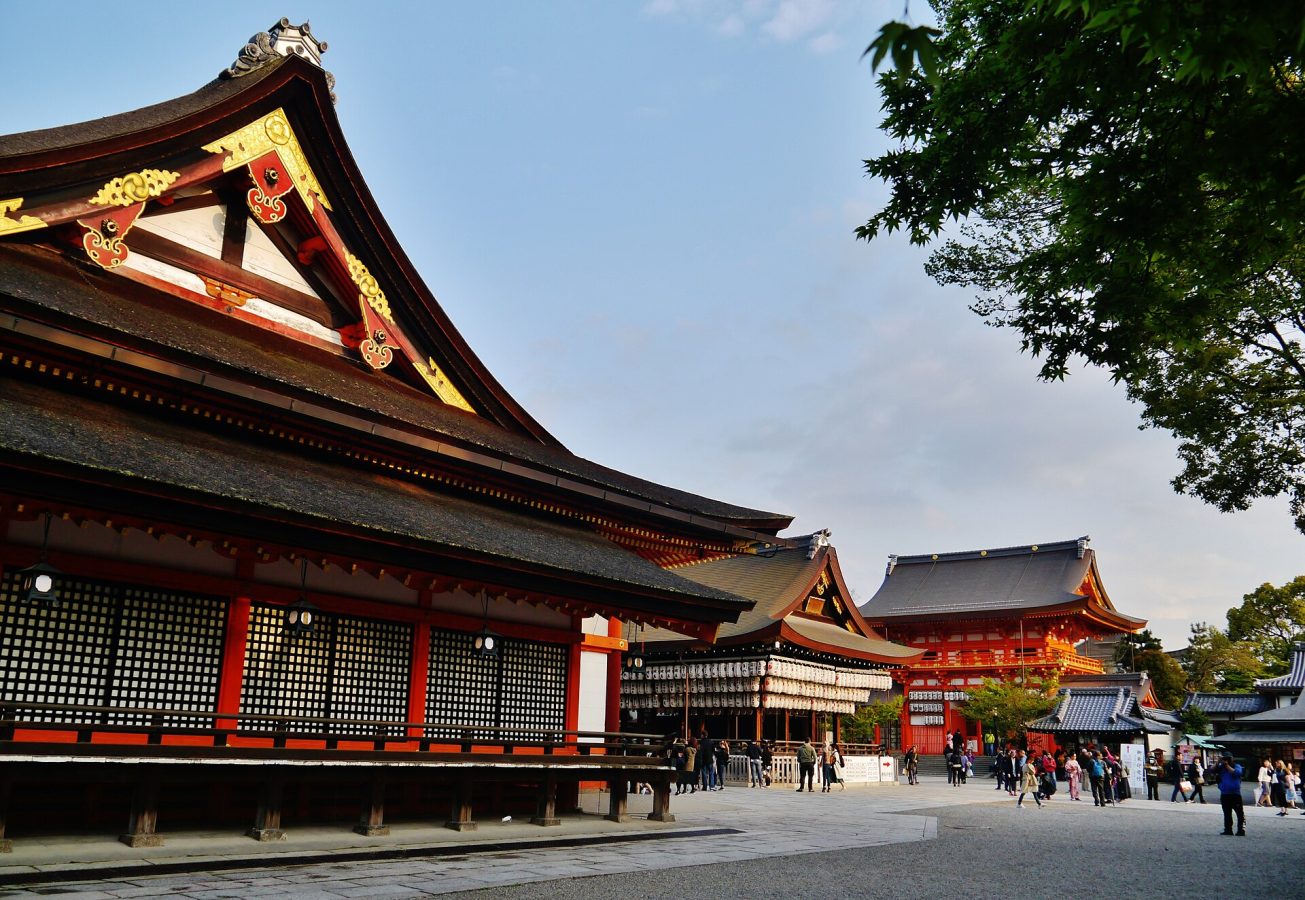
Photo: Zairon, CC BY-SA 4.0
Yasaka Shrine is open to everyone, at all hours and without charge, so there is nothing to buy in order to visit. It stands at the top of Shijo-dori, the main shopping street of central Kyoto, where the avenue meets the Higashiyama hills, and almost every walk through Gion passes through its gates. The guided options are short and simple. A private walk of about an hour with a local guide focuses on the shrine itself, explaining the Shinto rites, the deities and the history of the great festival it hosts each summer, often with a few streets of Gion added. It suits first-time visitors who want to understand what they are seeing rather than simply photographing the vermilion gate.
Most general walking tours of Gion and Higashiyama also include the shrine, usually heading on to Kiyomizu-dera, and some evening tours finish here when the lanterns are lit. Be aware that Osaka has its own, much smaller shrine with a similar name, Namba Yasaka, famous for its stage in the form of a giant lion's head; tours of Osaka that mention a Yasaka shrine go there, not to Kyoto. Independent visitors need no help at all. Gion-Shijo station on the Keihan line and Kyoto-kawaramachi on the Hankyu line are each a ten-minute walk away along Shijo-dori, and several city buses stop right in front of the west gate.
Live dates and prices from GetYourGuide. Free cancellation on most tickets.
The shrine traces its origins to the seventh century, and for most of its history it was known as Gion Shrine and honoured a deity who protected against epidemics. When the Meiji government separated Shinto from Buddhism in the 1860s, it was renamed and dedicated to Susanoo, the storm god, with his consort and their eight children. Most people enter by the bright vermilion west gate at the end of Shijo-dori, though the formal entrance is the stone south gate. Inside, the precinct is compact and busy. The centrepiece is the main hall, rebuilt in 1654, in which the sanctuary and the hall of worship stand under a single sweeping cypress-bark roof; this arrangement is unique to the shrine and gives its name to a whole style.
It was designated a National Treasure in 2020. In front of it stands the open dance stage, hung with hundreds of paper lanterns bearing the names of local businesses that support the shrine, which are lit at dusk and make the most familiar image of the place. Look also for the small subsidiary shrines around the precinct, especially the one dedicated to goddesses of beauty, where visitors dab a little of the spring water on their skin, popular with Kyoto's geiko and maiko. Etiquette is the usual for a Shinto shrine: bow at the gate, rinse your hands and mouth at the water basin, and at the main hall toss a coin, ring the bell, bow twice, clap twice and bow once more. Photography is allowed in the grounds, but not of rituals inside the halls. Behind the shrine, Maruyama Park leads up towards Chion-in and the hillside temples.
The grounds never close, which makes Yasaka one of the few major Kyoto sights you can visit at night. The shrine office and amulet counters keep normal daytime hours. Early morning is serene and almost empty. By late morning the west gate and the street below are packed with visitors, many in hired kimono. The best moment for many people is after dark, when the lanterns on the dance stage are lit and the crowds thin out. The whole month of July belongs to the Gion Matsuri, one of Japan's great festivals, which grew out of rites against epidemics held in the ninth century.
The huge decorated floats parade on 17 and 24 July, and the evenings before the processions, when the floats stand in the streets, are crowded and festive. On New Year's Eve and the first days of January, huge numbers come for the first prayers of the year. In early April the weeping cherry in Maruyama Park, just behind the shrine, draws crowds for night-time blossom viewing. Thirty minutes is enough. Combine the shrine with the lanes of Gion, Chion-in, Kodai-ji and the walk up to Kiyomizu-dera.
Yes. GetYourGuide lists 2 tickets and tours for Yasaka Shrine, with live dates and prices and free cancellation on most of them.
Yasaka Shrine is open to everyone, at all hours and without charge, so there is nothing to buy in order to visit.
Early morning is serene and almost empty.
Photography is allowed in the grounds, but not of rituals inside the halls.
Entry to Yasaka Shrine: Free
No dress code.
Yasaka Shrine was established in 656.
Yasaka Shrine is in Kyoto, Japan. The map on this page shows the exact spot.
How to visit a Shinto shrine: torii, water and prayer — How to pass the torii, purify at the water basin, pray, take photos and buy charms at a Shinto shrine in Japan.
Kyoto, Japan
Kiyomizu-dera does not sell timed tickets, and there is nothing to book for an independent visit: the grounds are open…
40 tickets & tours
Kyoto, Japan
There is nothing to buy to enter Fushimi Inari: the grounds and the mountain trails are open free of charge at all…
38 tickets & tours
Kyoto, Japan
Kinkaku-ji is simple to visit on your own: you pay at the gate on arrival, and the ticket, a paper talisman printed…
19 tickets & tours
Kyoto, Japan
Ryoan-ji sells its own entry ticket at the gate, and for most visitors that is all that is needed.
3 tickets & tours
Kyoto, Japan
Entry to the courtyard of Heian Jingu is free, and there is nothing to book.
2 tickets & tours
Kyoto, Japan
Kifune Shrine has no admission fee and nothing to reserve.
2 tickets & tours


