Todai-ji
Nara, Japan
The precincts of Todai-ji are free to walk around, but the Great Buddha Hall, the museum and some of the other halls…
9 tickets & tours
Buddhist Temple · Nara · Japan
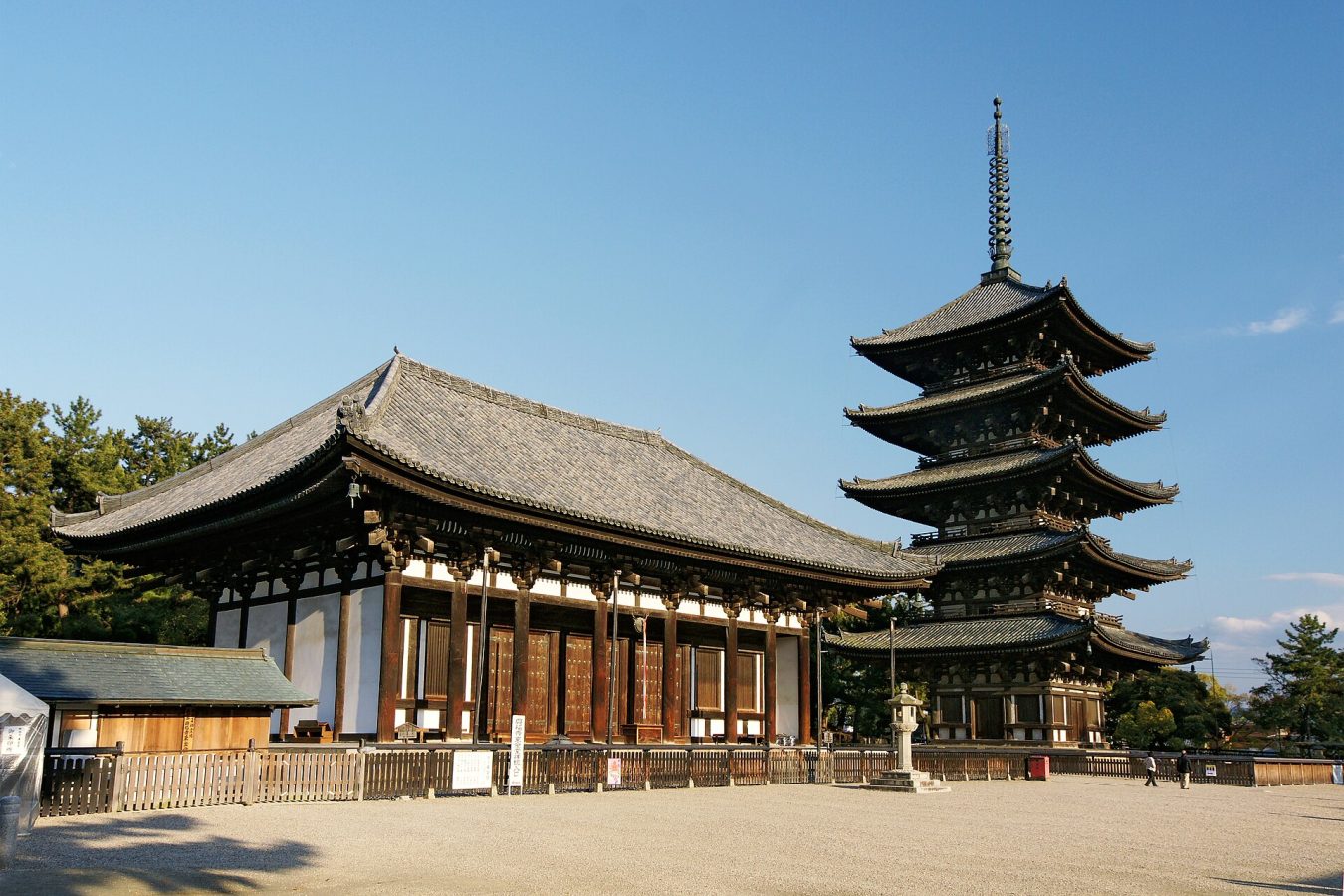
Photo: 663highland, CC BY-SA 4.0
There is no advance ticket for Kofuku-ji. The temple grounds are an open space at the western edge of Nara Park and you can walk through them at any time for free. You pay separately at the door of each building you want to enter: the Eastern Golden Hall, the rebuilt Central Golden Hall and the National Treasure Museum each have their own small fee, and combined tickets for two of them are sold at the counters. The two octagonal halls open only on set days in spring and autumn. Most people visit on foot. Kintetsu Nara station is about five minutes away up the steps by Sarusawa Pond, and JR Nara station is a 15-minute walk.
Kofuku-ji is the natural first stop on a walk through Nara Park towards Todai-ji and Kasuga Taisha, and many day trippers from Kyoto or Osaka follow exactly that line. The bookable alternative is a guided walking tour of Nara that takes in Kofuku-ji and Todai-ji with a local guide, usually over two to three hours. The guide is included, but entry to the halls and museum is normally paid on the day, and transport to Nara is your own. A guide is worth having here more than at most temples: the statues in the museum and halls are the real treasure, and they mean much more once someone has explained the Hosso school and the Fujiwara family behind them.
Live dates and prices from GetYourGuide. Free cancellation on most tickets.
Kofuku-ji was the family temple of the Fujiwara, the clan that dominated the imperial court for centuries. It began elsewhere in 669 and was moved to Nara when the city became the capital in 710. For centuries it was one of the most powerful institutions in Japan, with its own armed monks, and it remains the head temple of the Hosso school. It is part of the UNESCO site of the historic monuments of ancient Nara. Fires and wars destroyed it repeatedly, so what stands today is a scattered group of halls from different centuries on a large open site. The landmark is the five-storey pagoda, about 50 m high and rebuilt in 1426, the second tallest old wooden pagoda in Japan; it is under a long restoration and covered by scaffolding for several years.
Beside it, the Eastern Golden Hall of 1425 holds a seated Yakushi Buddha surrounded by guardian figures. The Central Golden Hall, burnt in 1717, was finally rebuilt in its eighth-century form and reopened in 2018, a bright vermilion building that shows how the whole complex once looked. Do not skip the National Treasure Museum. Its star is the slender, three-faced and six-armed Ashura, a dry-lacquer statue from 734 and one of the best-loved images in Japan, shown with the other figures of the eight guardian classes. The quiet Three-storey Pagoda of the twelfth century stands below the main terrace and is easy to miss. Photography is not allowed inside the halls or the museum. Deer from Nara Park wander through the grounds; they bow for crackers but can nip and butt, so keep food out of sight.
The grounds are always open. The halls and the museum keep daytime hours, typically from 9 am to 5 pm with last entry shortly before closing; check the official site for the current times and for the days when the octagonal halls open. Early morning is the best time, before the tour buses arrive at Todai-ji and the park fills up. The view of the pagoda reflected in Sarusawa Pond is good at dusk, and the buildings are lit on some evenings.
Spring cherry blossom in late March and early April and autumn colour in November are the prettiest seasons, while summer in Nara is hot and humid. In May the temple stages Takigi Noh, open-air Noh theatre performed by firelight, which is worth planning a visit around. Allow 1 to 1.5 hours to see the museum and one or two halls. Kofuku-ji combines naturally with Todai-ji and its Great Buddha, Kasuga Taisha and the old merchant quarter of Naramachi, which lies just to the south; together they make a full day.
Yes. GetYourGuide lists one ticket or tour for Kofuku-ji, with live dates and prices and free cancellation on most of them.
Allow 1 to 1.5 hours to see the museum and one or two halls.
Early morning is the best time, before the tour buses arrive at Todai-ji and the park fills up.
Photography is not allowed inside the halls or the museum.
Entry to Kofuku-ji: Grounds free; halls and museum extra
No dress code; remove hats and keep quiet inside the halls.
Kofuku-ji covers 12 ha.
Kofuku-ji was established in 710.
Kofuku-ji is in Nara, Japan. The map on this page shows the exact spot.
How to visit a Buddhist temple: shoes, dress and manners — Shoes, dress, feet, photos and offerings in Buddhist temples, from the wats of Thailand and Sri Lanka to the Zen temples of Japan.
Nara, Japan
The precincts of Todai-ji are free to walk around, but the Great Buddha Hall, the museum and some of the other halls…
9 tickets & tours
Nara, Japan
Horyuji sells a single admission ticket at the gate that covers the western precinct with the pagoda and the Golden…
3 tickets & tours
Nara, Japan
Kasuga Taisha does not need a ticket booked in advance. The approach, the outer precinct and the lantern-lined paths…
3 tickets & tours
Nara, Japan
There is no online ticket for Hase-dera alone. You pay the entrance fee at the gate at the foot of the long staircase,…
1 ticket or tour