Horyuji Temple
Nara, Japan
Horyuji sells a single admission ticket at the gate that covers the western precinct with the pagoda and the Golden…
3 tickets & tours
Buddhist Temple · Nara · Japan
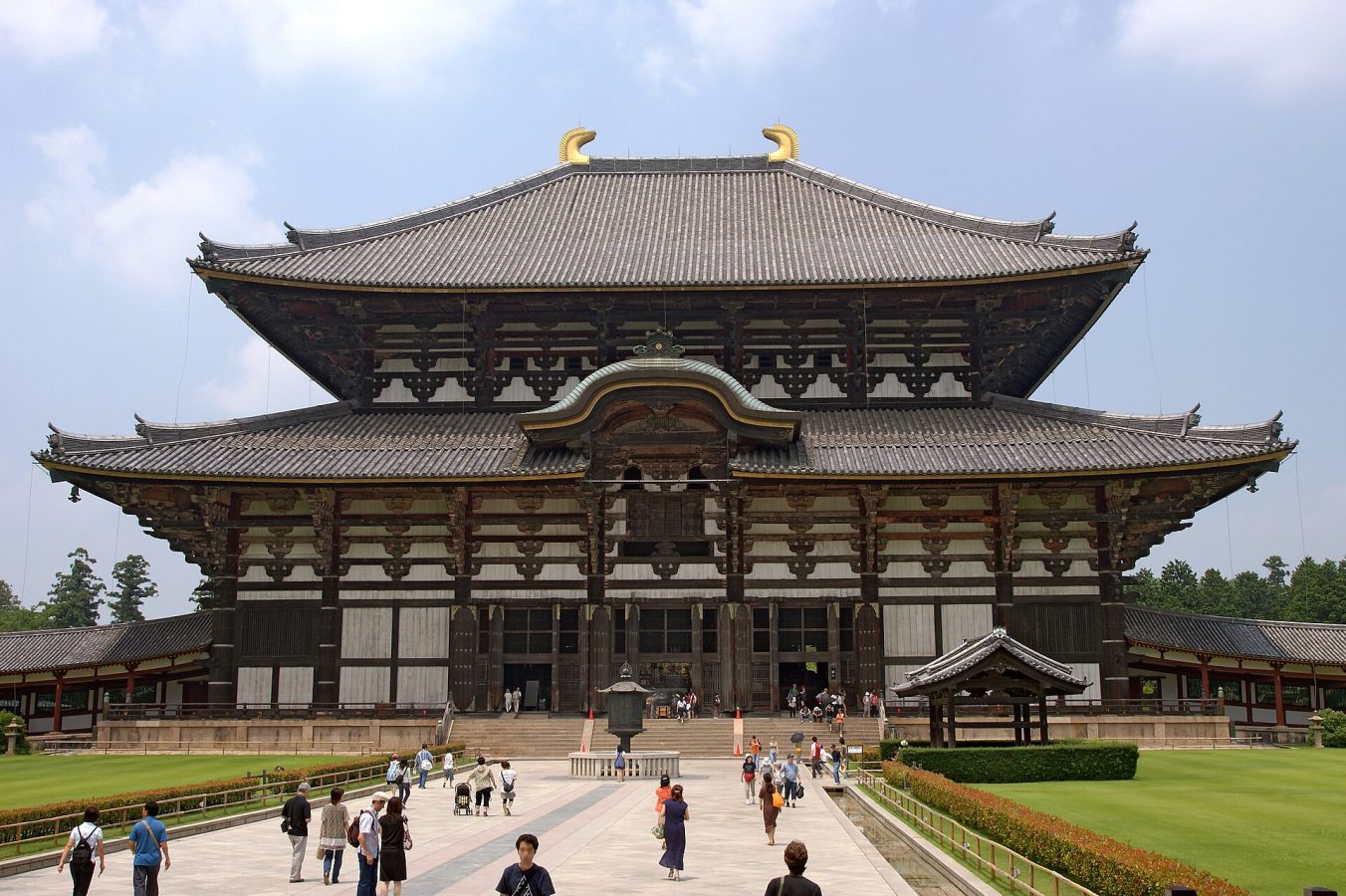
Photo: 663highland, CC BY 2.5
The precincts of Todai-ji are free to walk around, but the Great Buddha Hall, the museum and some of the other halls charge an entrance fee, paid at the ticket windows in front of each building, and there is a combined ticket for the hall and the museum. Tickets do not need to be booked in advance and the queues move quickly, so what is sold online is guidance rather than entry. The tours fall into a few kinds. Guided walks of two or three hours in Nara Park cover Todai-ji, the deer and usually Kasuga Taisha or Kofuku-ji, with some in Spanish or other languages. Others extend into the old merchant quarter of Naramachi, or start further afield and approach the temple along forest paths.
Private tours with a guide, sometimes with a car or a lunch of local food, suit families and people who want to set their own pace, and there are full-day trips from Kyoto or Osaka that add Uji and its tea houses on the way. Guide fees and the walk itself are included; temple tickets, lunch and transport to Nara are often extra, so read the details. For most visitors, travelling independently from Kyoto or Osaka by train and exploring Nara Park on foot works perfectly well, while a guide is worth paying for if you want the history and the Buddhist art explained.
Live dates and prices from GetYourGuide. Free cancellation on most tickets.
Todai-ji was founded in the eighth century by Emperor Shomu as the head of a network of provincial temples, at a time of epidemics and unrest, and its colossal bronze Buddha, Vairocana, was dedicated in 752. The temple remains the headquarters of the Kegon school of Buddhism and is part of the UNESCO World Heritage listing for the historic monuments of ancient Nara. Its buildings have burned and been rebuilt several times, and much of what stands today dates from the late twelfth century and the early eighteenth. The approach passes the deer of Nara Park and enters through the great south gate, Nandaimon, a wooden structure from around 1200 guarded by two fierce, towering wooden figures carved by the sculptors Unkei and Kaikei.
Beyond, across a courtyard, rises the Great Buddha Hall, rebuilt in 1709 at about two-thirds of its original width and still one of the largest wooden buildings in the world. Inside, the seated Buddha, about 15 m tall, is flanked by gilded bodhisattvas and guardian kings. Behind it, look for the wooden pillar with a hole at its base, said to be the size of the Buddha's nostril; children and slim adults crawl through it for luck. Do not miss the halls on the hillside to the east: the Nigatsu-do, with a wooden veranda and a fine view over Nara, and the Hokke-do, one of the oldest buildings of the complex. Behave as in any working temple, keeping voices down and following signs on photography. The temple is about 20 minutes on foot from Kintetsu Nara station, or a short bus ride; Nara is under an hour by train from Kyoto or Osaka.
The Great Buddha Hall opens from about 7.30 am in the warmer months and 8 am in winter, closing in the late afternoon; check the official site for current hours. Arrive at opening, before the school groups and coach tours, which fill the hall from mid-morning; the late afternoon is quieter again. Nara is lovely in spring, from late March into April, when cherry blossom fills the park, and in November, when the maples turn. Both seasons are crowded.
Early March brings the Omizutori ceremony at the Nigatsu-do, a rite of repentance held every year since the eighth century, in which monks swing huge flaming torches along the balcony in the evenings. On a few days a year, including New Year's Day and mid-August, the windows above the hall's entrance are opened so that the Buddha's face can be seen from outside. Summer is hot and humid. Allow one and a half to two hours for Todai-ji with the eastern halls. Combine it with Kasuga Taisha, Kofuku-ji, the Nara National Museum and Isuien garden on a full day in Nara.
Yes. GetYourGuide lists 9 tickets and tours for Todai-ji, with live dates and prices and free cancellation on most of them.
Entry to Todai-ji: Grounds free; fee for main halls
Allow one and a half to two hours for Todai-ji with the eastern halls.
No dress code; hats off inside the halls.
Todai-ji was established in 738.
Todai-ji is in Nara, Japan. The map on this page shows the exact spot.
How to visit a Buddhist temple: shoes, dress and manners — Shoes, dress, feet, photos and offerings in Buddhist temples, from the wats of Thailand and Sri Lanka to the Zen temples of Japan.
Nara, Japan
Horyuji sells a single admission ticket at the gate that covers the western precinct with the pagoda and the Golden…
3 tickets & tours
Nara, Japan
Kasuga Taisha does not need a ticket booked in advance. The approach, the outer precinct and the lantern-lined paths…
3 tickets & tours
Nara, Japan
There is no online ticket for Hase-dera alone. You pay the entrance fee at the gate at the foot of the long staircase,…
1 ticket or tour
Nara, Japan
There is no advance ticket for Kofuku-ji. The temple grounds are an open space at the western edge of Nara Park and you…
1 ticket or tour