Todai-ji
Nara, Japan
The precincts of Todai-ji are free to walk around, but the Great Buddha Hall, the museum and some of the other halls…
9 tickets & tours
Buddhist Temple · Nara · Japan
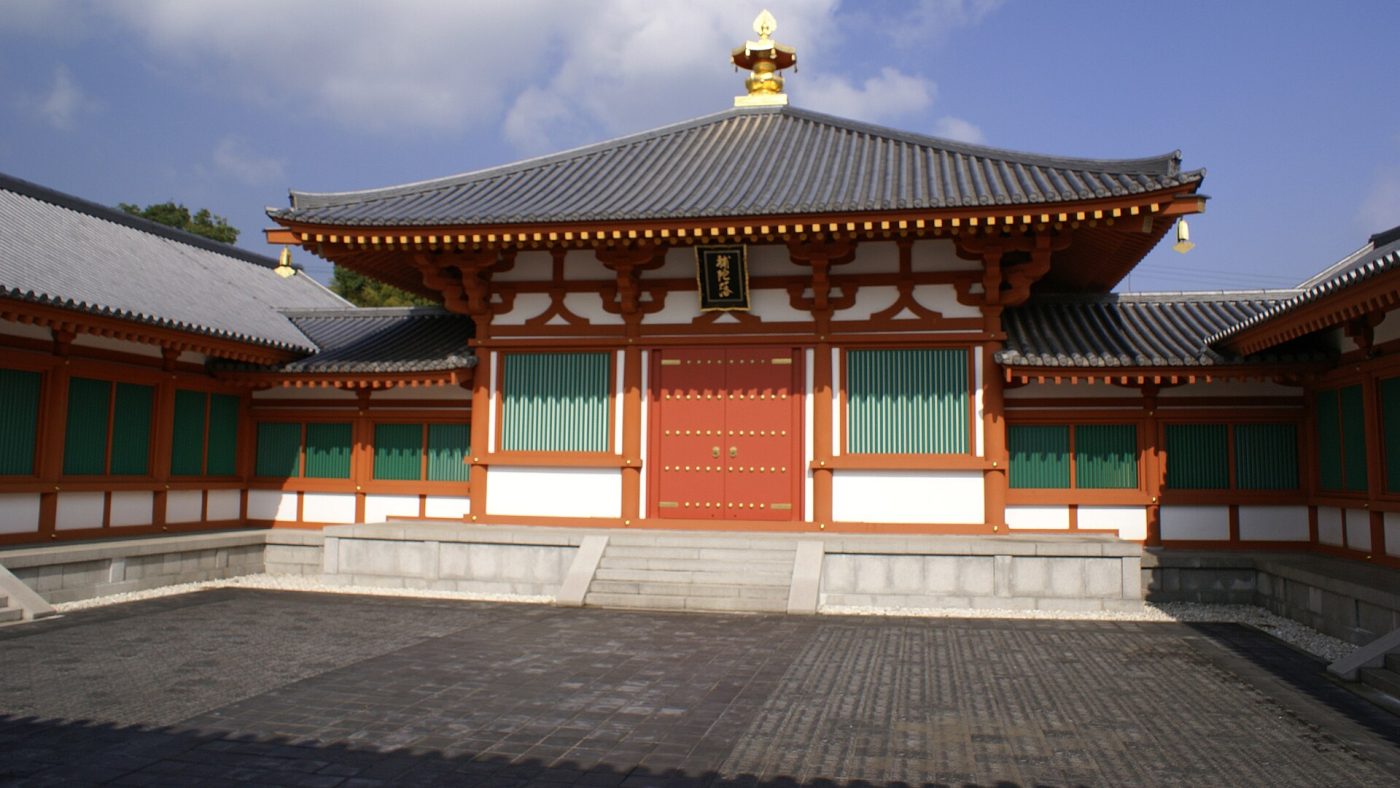
Photo: 663highland, CC BY 2.5
Horyuji sells a single admission ticket at the gate that covers the western precinct with the pagoda and the Golden Hall, the Great Treasure Gallery and the eastern precinct around the Hall of Dreams. There is no need to buy it in advance; queues are short except on spring and autumn weekends. The neighbouring nunnery of Chuguji charges its own small fee. What is sold online are guided outings. One kind is a guided walk around the temple with an English-speaking guide, sometimes rounded off with a short calligraphy lesson in which you learn to write your name in Japanese characters.
A longer version from Osaka adds a vegetarian or local lunch and the calligraphy session. Another is a full day from Osaka or Nara that pairs the temple with Mount Ikoma, the forested ridge between the two cities. Transport, guide and the temple ticket are usually included in the full-day versions; check whether lunch and the cable car are covered. Horyuji is one of the places where a good guide adds most value: the buildings look simple, and their importance only becomes clear when someone explains the age of the timber, the iconography of the statues and the story of Prince Shotoku. If you visit alone, the audio guide rented at the entrance is a good substitute.
Live dates and prices from GetYourGuide. Free cancellation on most tickets.
Horyuji, in the small town of Ikaruga about 12 km south-west of central Nara, was founded in the early 7th century by Prince Shotoku, the regent who promoted Buddhism at the Japanese court. The temple burned in 670 and was rebuilt within a few decades, and the buildings of its western precinct are regarded as the oldest surviving wooden structures in the world. Together with nearby temples they form a UNESCO World Heritage Site. The visit follows a clear route. Pass the Nandaimon gate and the Chumon, the middle gate guarded by two muscular clay guardian figures, into the cloistered courtyard of the western precinct. Inside stand the five-storey pagoda and the Kondo, or Golden Hall, which holds a bronze Shaka triad cast in 623 by the sculptor Tori, one of the masterpieces of early Buddhist art.
Look up at the eaves, supported by cloud-shaped brackets found almost nowhere else. East of the courtyard, the modern Great Treasure Gallery, opened in 1998, displays the temple's portable treasures, including the slender Kudara Kannon and the Tamamushi Shrine, a miniature lacquered sanctuary once decorated with beetle wings. A walk along a walled lane leads to the eastern precinct and the octagonal Yumedono, the Hall of Dreams, built on the site of Prince Shotoku's palace. Chuguji, just behind it, keeps a serene wooden image of the future Buddha. From Nara, take the JR Yamatoji Line to Horyuji station and walk about 20 minutes, or take a local bus, or come by direct bus from Nara city.
The temple opens at 8 am and closes in the late afternoon, around 5 pm for most of the year and slightly earlier in winter; the last admission is shortly before closing. Arrive at opening to have the western courtyard to yourself before the school groups, which come in large numbers on weekday mornings in spring and autumn. The best seasons are April, when cherries bloom along the approach, and from late October to November, when the maples turn.
Summer is hot and humid on the Nara plain, and winter is cold but quiet and clear. The Guze Kannon, a hidden statue kept in the Hall of Dreams, is shown only during special openings in spring and autumn, so plan around them if you want to see it; the temple publishes the dates. Allow at least two hours for the whole site, three with Chuguji. Horyuji works well as a half-day trip from Nara, combined in the afternoon with the deer park and Todaiji, or with Hokkiji, whose three-storey pagoda is about half an hour's walk north-east through the rice fields.
Yes. GetYourGuide lists 3 tickets and tours for Horyuji Temple, with live dates and prices and free cancellation on most of them.
The temple opens at 8 am and closes in the late afternoon, around 5 pm for most of the year and slightly earlier in winter; the last admission is shortly before closing.
Allow at least two hours for the whole site, three with Chuguji.
Entry to Horyuji Temple: One ticket for the main precincts
No dress code; shoes stay on, but photography is not allowed inside the halls.
Horyuji Temple was established in 607.
Horyuji Temple is in Nara, Japan. The map on this page shows the exact spot.
How to visit a Buddhist temple: shoes, dress and manners — Shoes, dress, feet, photos and offerings in Buddhist temples, from the wats of Thailand and Sri Lanka to the Zen temples of Japan.
Nara, Japan
The precincts of Todai-ji are free to walk around, but the Great Buddha Hall, the museum and some of the other halls…
9 tickets & tours
Nara, Japan
Kasuga Taisha does not need a ticket booked in advance. The approach, the outer precinct and the lantern-lined paths…
3 tickets & tours
Nara, Japan
There is no online ticket for Hase-dera alone. You pay the entrance fee at the gate at the foot of the long staircase,…
1 ticket or tour
Nara, Japan
There is no advance ticket for Kofuku-ji. The temple grounds are an open space at the western edge of Nara Park and you…
1 ticket or tour