Nezu Shrine
1 km away
Nezu Shrine is free to enter and open to anyone who walks in, so there is no ticket to buy;
7 tickets & tours
Buddhist Temple · Tokyo · Japan
No ticket for Kiyomizu Kannon-do is sold online, and none is needed. The temple hall stands inside Ueno Park in Tokyo, the grounds are free, and the hall can be entered at no charge during its daytime opening hours; the only purchases are incense, candles, charms and the temple's stamp. Most visitors simply walk in. The hall is about five minutes on foot from the park exit of JR Ueno Station and closer still to Keisei Ueno Station, on the slope above Shinobazu Pond, so it fits naturally into a day at the museums of Ueno.
It also appears on guided walking tours of Ueno and the old neighbourhoods of Yanaka and Asakusa, which usually include a guide on foot, sometimes a street food tasting in Ameyoko market, and rarely any entry fees, since most of the sights in the park are free. Cherry blossom walks in spring often pass the hall as well. A guided walk is worth considering if you want the history of Ueno explained: the hall was once one building of a vast temple complex that dominated this hill, and a guide can show how the park grew out of its ruins. If you are already visiting the Tokyo National Museum or the zoo, a self-guided stop of 20 minutes is enough. The page lists any GetYourGuide tours whose route passes the hall.
Live prices from GetYourGuide for tickets and tours that include this temple. Free cancellation on most of them.
Kiyomizu Kannon-do was built in 1631 by the monk Tenkai as part of Kan'ei-ji, the great temple founded to protect the shogun's capital of Edo from the north-east, the direction from which evil was believed to come. The whole complex was designed as an echo of Kyoto, and this hall was modelled on the famous Kiyomizu-dera there, with a wooden stage built out on stilts over the hillside. It was moved to its present site in the late 17th century, survived the battle of 1868 that destroyed most of Kan'ei-ji, and is now one of the oldest buildings in Tokyo and an Important Cultural Property. The hall is small, so look closely. The main image is a thousand-armed Kannon, the bodhisattva of compassion.
The hall also enshrines the Kosodate Kannon, the protector of children, and couples hoping for a child, or giving thanks for one, leave dolls at the hall. From the wooden stage, the view leads down to Shinobazu Pond and the octagonal Benten hall on its island. Look for the Moon Pine, a pine tree beside the stage trained so that one branch curls into a full circle, through which the Benten hall can be framed. It reproduces a tree shown in a print by Utagawa Hiroshige and was restored in 2012 after the original was lost. Remove your hat inside, speak quietly, and do not photograph the inside of the hall. Offer a coin and a short prayer if you wish, without clapping, since this is a Buddhist temple rather than a shrine.
The hall is open daily from about 9 am to 4 pm; the stage and grounds can be seen outside these hours. Early morning is the quietest time, especially in spring. The best season is late March and early April, when Ueno Park is one of the most famous cherry blossom spots in Tokyo; the hall and its stage are framed by the trees, but the paths below fill with picnic parties, so go before 9 am. Late November brings autumn colour, and summer mornings are pleasant before the heat.
In summer the lotus leaves cover Shinobazu Pond below the stage. The most unusual event is the doll memorial service held each year on 25 September, when old dolls brought by families are blessed and then burned in a ceremony in front of the hall. Allow 20 to 30 minutes. Combine the hall with the Ueno Toshogu shrine, the Benten hall on the pond, the Tokyo National Museum and a walk through Ameyoko market or the old lanes of Yanaka.
1 km away
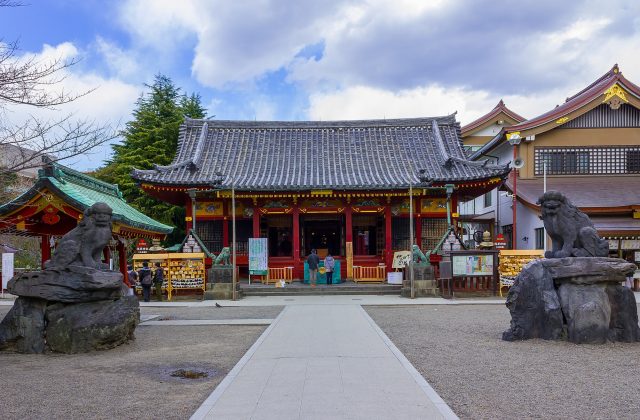
Nezu Shrine is free to enter and open to anyone who walks in, so there is no ticket to buy;
7 tickets & tours
2 km away
There is no ticket for Senso-ji: the temple grounds are free and always open, and the main hall can be entered at no…
31 tickets & tours
2 km away
There is nothing to buy for Asakusa Shrine: it stands open and free inside the grounds of Senso-ji, Tokyo's oldest…
6 tickets & tours
Yes. GetYourGuide sells tickets and guided tours whose route includes Kiyomizu Kannon-do, Ueno; live prices are shown on this page.
The temple hall stands inside Ueno Park in Tokyo, the grounds are free, and the hall can be entered at no charge during its daytime opening hours; the only purchases are incense, candles, charms and the temple's stamp.
Allow 20 to 30 minutes.
Early morning is the quietest time, especially in spring.
Entry to Kiyomizu Kannon-do, Ueno: Free
No dress code; remove hats inside the hall and keep your voice low.
Kiyomizu Kannon-do, Ueno was established in 1631.
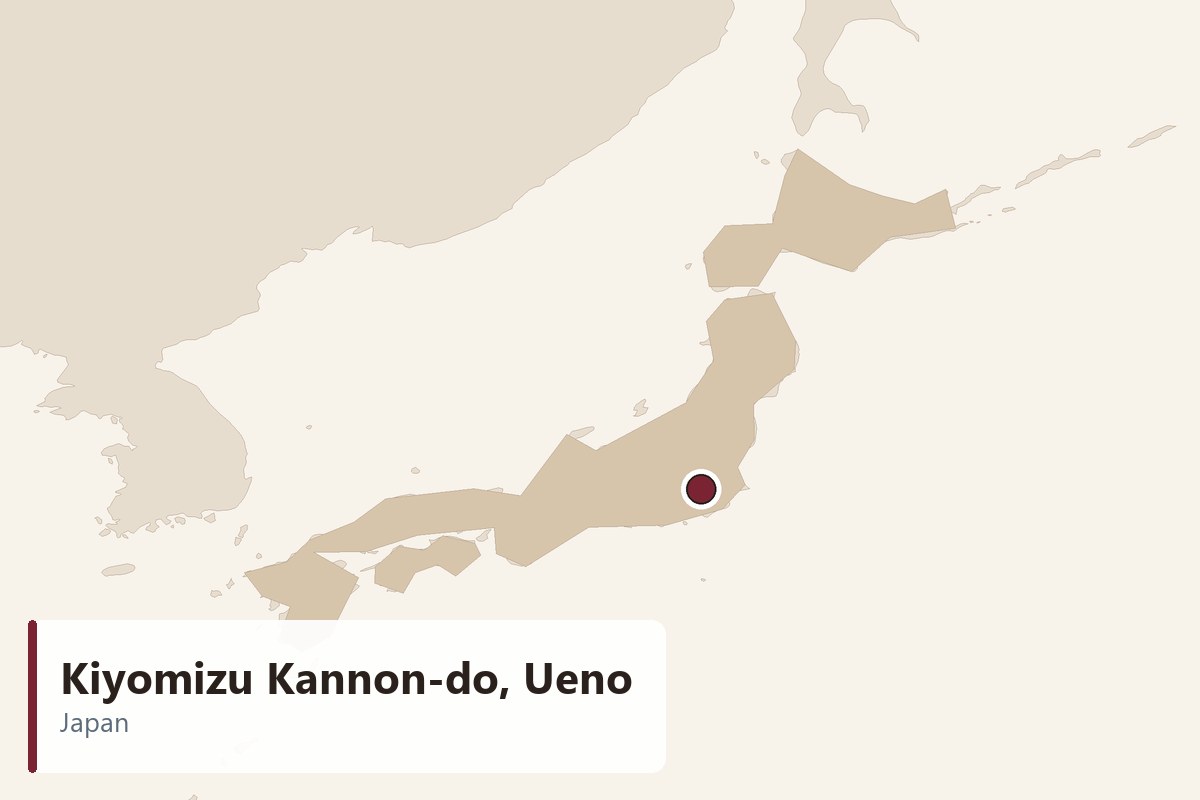
Kiyomizu Kannon-do, Ueno is in Tokyo, Japan. The map on this page shows the exact spot.
How to visit a Buddhist temple: shoes, dress and manners — Shoes, dress, feet, photos and offerings in Buddhist temples, from the wats of Thailand and Sri Lanka to the Zen temples of Japan.
Tokyo, Japan
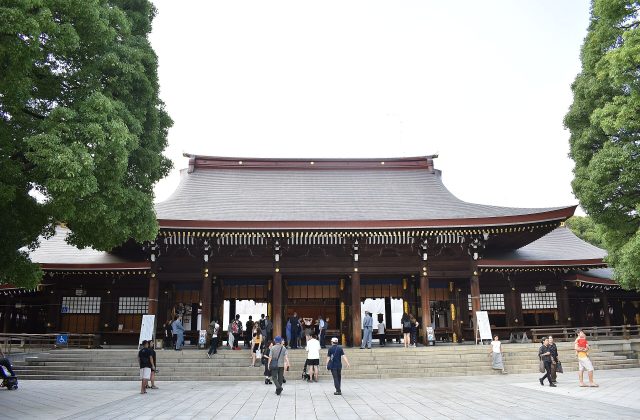
Meiji Jingu is free to enter and there is no ticket to buy for the shrine itself: you simply walk in from Harajuku or…
38 tickets & tours
Tokyo, Japan
There is no ticket for Senso-ji: the temple grounds are free and always open, and the main hall can be entered at no…
31 tickets & tours
Tokyo, Japan
Nezu Shrine is free to enter and open to anyone who walks in, so there is no ticket to buy;
7 tickets & tours
Tokyo, Japan
There is nothing to buy for Asakusa Shrine: it stands open and free inside the grounds of Senso-ji, Tokyo's oldest…
6 tickets & tours
Tokyo, Japan
Gotokuji is free to enter and there is nothing to book for the temple itself.
3 tickets & tours
Tokyo, Japan
Yasukuni Shrine, in the Kudan district of central Tokyo just north of the Imperial Palace, is free to enter, and the…
2 tickets & tours