Al-Hakim Mosque
Cairo, Egypt
There is nothing to buy in order to enter the Al-Hakim Mosque: it is a working mosque, run by the Dawoodi Bohra…
1 ticket or tour
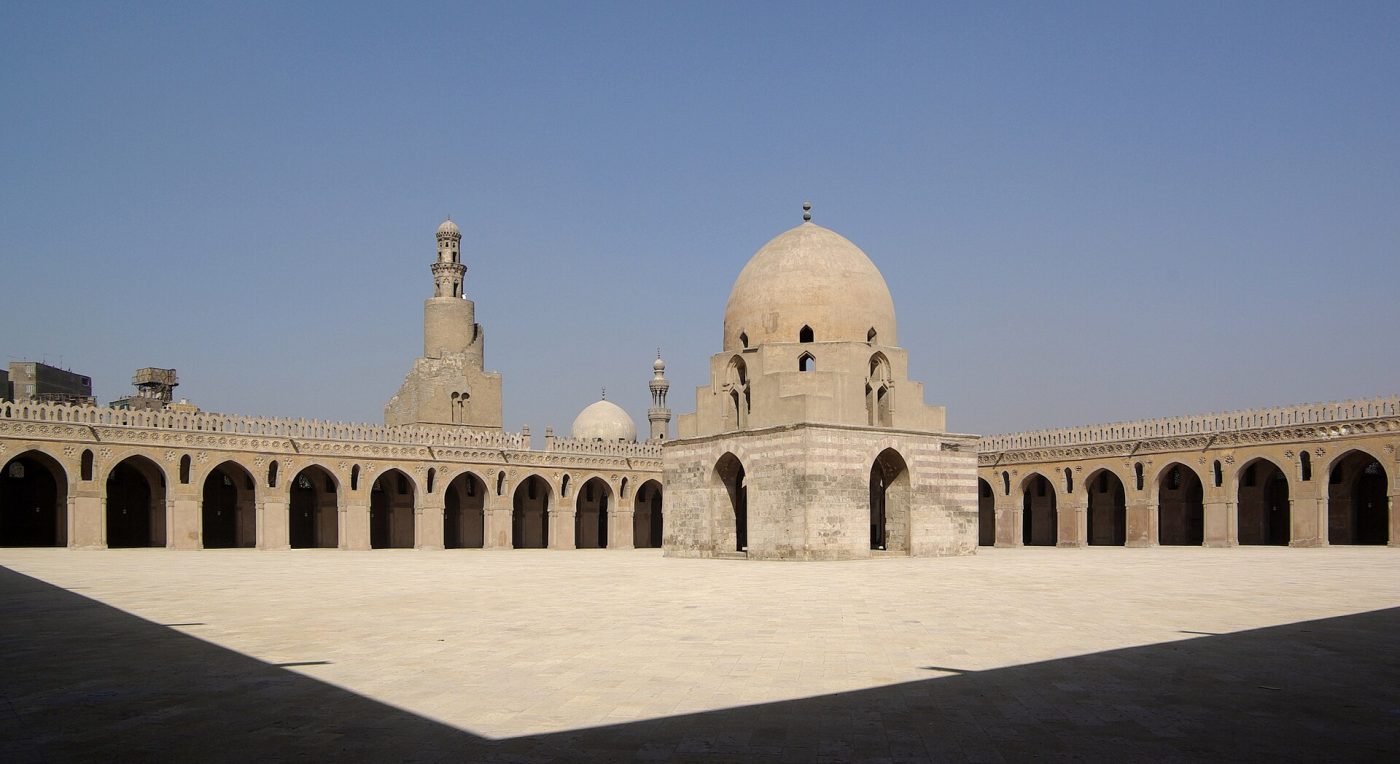
Photo: User:Berthold Werner, CC BY 3.0
No ticket is needed to enter the Mosque of Ibn Tulun. It is an active mosque, open to visitors outside prayer times, and the only costs are a small tip for the man who looks after shoes or ties on cloth shoe covers at the door, and perhaps another to the guardian who opens the minaret. The adjoining Gayer-Anderson Museum, housed in two Ottoman-era houses built against the mosque wall, has its own ticket. The bookable option is a half-day tour of Cairo's royal and Islamic heritage that combines the mosque with Manial Palace, the early twentieth-century residence of Prince Mohammed Ali on Roda Island.
The price normally includes hotel pick-up in an air-conditioned car, an Egyptologist or local guide and entry fees, which makes it useful for first-time visitors who would rather not deal with Cairo traffic and taxis. Independent travellers can take a taxi or ride-hailing car to the Sayyida Zaynab district; the mosque is about 1.5 km west of the Citadel, and many people walk there from the Sultan Hassan and Al-Rifai mosques in 15 to 20 minutes through the old streets. Many private Islamic Cairo day tours also include it alongside the Citadel and Sultan Hassan, so if you are already booking a guide for the area, check that this mosque is on the route.
Live dates and prices from GetYourGuide. Free cancellation on most tickets.
Ahmad ibn Tulun, the governor who made Egypt practically independent of the Abbasid caliphs in Baghdad, built this mosque between 876 and 879 as the main mosque of his new capital. Everything else of that city was razed in 905, but the mosque survived, and it is now the oldest mosque in Egypt that keeps its original form. It is part of the UNESCO site of Historic Cairo. Its scale and simplicity are what strike you first. A vast square courtyard is framed on all sides by arcades of pointed arches carried on thick brick piers, with the deepest arcades on the side facing Mecca forming the prayer hall. The building is of brick covered in plaster, and the arches are edged with carved stucco bands of vine and geometric patterns;
along the top of the outer walls runs a fringe of openwork crenellations. In the prayer hall, look for the long wooden frieze carrying Quranic verses, the main mihrab, and several later flat stucco mihrabs, while in the centre of the court stands a domed fountain added by the Mamluk sultan Lajin, who restored the mosque in 1296. The highlight is the minaret, about 40 m high, which stands in the outer enclosure and is climbed by an external spiral staircase, a form borrowed from the great mosque of Samarra in Iraq. From the top the view takes in the domes and minarets of old Cairo, the Citadel and, on a clear day, the pyramids of Giza. Stay out of the prayer hall during prayers, keep voices low and ask before photographing people.
The mosque opens to visitors daily from morning until late afternoon, typically from about 8 or 9 am to 4 or 5 pm; it closes to sightseers during the five daily prayers and is best avoided around Friday noon prayers. Hours can change during Ramadan, so check locally. Mid-morning or late afternoon gives the best light in the courtyard, when the arches throw long shadows across the stone. Winter, from November to March, is the most comfortable season;
in summer the open court becomes very hot by midday, and the minaret climb is best done early. Ramadan evenings bring a special atmosphere to the neighbourhood, though tourist access is more limited. The site is rarely crowded at any time of year. Allow an hour for the mosque and the minaret, and another hour for the Gayer-Anderson Museum next door. Combine it with the Sultan Hassan and Al-Rifai mosques and the Citadel of Saladin for a full day of Islamic Cairo, or with the old Khan el-Khalili bazaar and Al-Muizz Street further north.
Yes. GetYourGuide lists one ticket or tour for Mosque of Ibn Tulun, with live dates and prices and free cancellation on most of them.
It is an active mosque, open to visitors outside prayer times, and the only costs are a small tip for the man who looks after shoes or ties on cloth shoe covers at the door, and perhaps another to the guardian who opens the minaret.
Allow an hour for the mosque and the minaret, and another hour for the Gayer-Anderson Museum next door.
Entry to Mosque of Ibn Tulun: Free; tip the shoe attendant
Shoulders and knees covered, women cover hair; shoes off or shoe covers in the mosque.
Mosque of Ibn Tulun was established in 879.
Mosque of Ibn Tulun is in Cairo, Egypt. The map on this page shows the exact spot.
How to visit a mosque: dress, timing and manners — What to wear, when to go and how to behave in a mosque as a non-Muslim, and which mosques do not admit visitors at all.
Cairo, Egypt
There is nothing to buy in order to enter the Al-Hakim Mosque: it is a working mosque, run by the Dawoodi Bohra…
1 ticket or tour
Cairo, Egypt
No ticket for al-Aqmar is sold online, and entry to the mosque itself is free.
No online ticket
Cairo, Egypt
No ticket for al-Azhar is sold online, and none is needed: entry to the mosque is free for visitors of any faith…
No online ticket
Cairo, Egypt
Entry to the Ben Ezra Synagogue is free, and there is no ticket, timed slot or skip-the-line option to buy;
No online ticket
Cairo, Egypt
Nothing needs to be booked for the Mosque of Amr ibn al-As, and no ticket for it alone is sold online.
No online ticket
Cairo, Egypt
The Mosque of Muhammad Ali stands inside the Citadel of Cairo, so there is no separate ticket for it: entry is covered…
No online ticket