Mosque of Ibn Tulun
3 km away
No ticket is needed to enter the Mosque of Ibn Tulun. It is an active mosque, open to visitors outside prayer times,…
1 ticket or tour
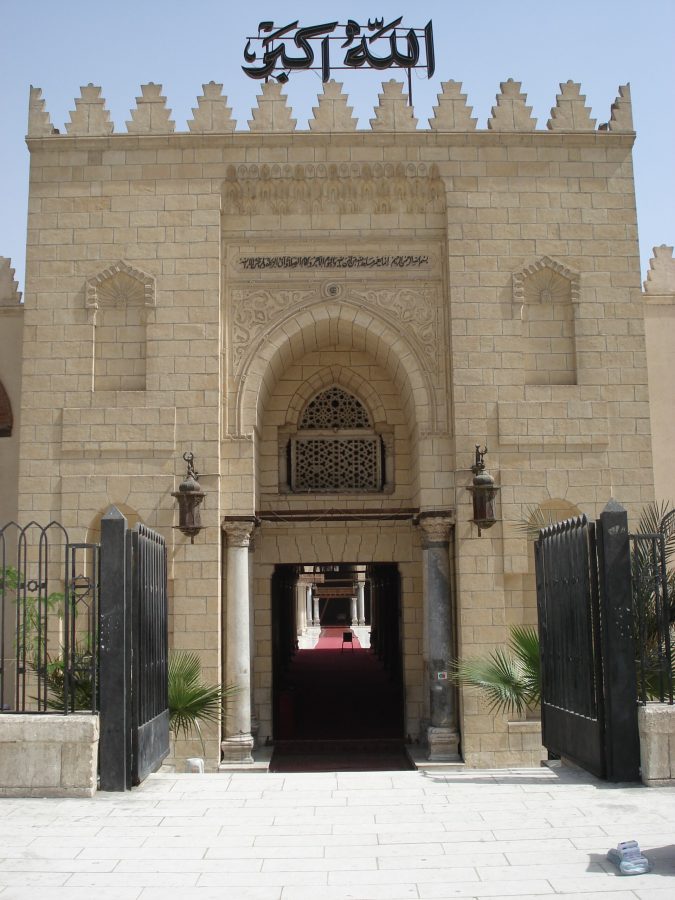
Photo: Buyoof, CC BY-SA 3.0
Nothing needs to be booked for the Mosque of Amr ibn al-As, and no ticket for it alone is sold online. It is a working mosque with a large congregation, and outside prayer times visitors may walk in free of charge. Women are usually lent a cloak and headscarf at the door if needed, and a small tip to the shoe attendant or the custodian who shows you around is customary. The mosque stands on the edge of Old Cairo, a few minutes' walk from the Coptic quarter, so most visitors combine it with that area. Guided tours of Coptic and Islamic Cairo often include it alongside the Hanging Church, the Church of Saints Sergius and Bacchus, the Ben Ezra Synagogue and the Coptic Museum.
These tours typically include hotel pick-up, a vehicle and a guide, with entry fees to the museum and lunch sometimes extra; the mosque itself costs nothing. Longer day tours sometimes add the Citadel or the Egyptian Museum. Independently, the easiest route is the Cairo Metro: take Line 1 to Mar Girgis station, visit the Coptic quarter beside the platform, and walk north for about ten minutes to the mosque. A taxi from Downtown takes around 20 minutes. The page lists any GetYourGuide tours whose route passes the mosque.
Live prices from GetYourGuide for tickets and tours that include this temple. Free cancellation on most of them.
This is where Islam in Egypt began as an institution. Amr ibn al-As, the Arab general who conquered Egypt for the Caliph Umar, built the first mosque in the country here in about 642, at the centre of his new capital of Fustat, on the very spot where his tent had stood; a well-known legend says he chose the site because a dove had nested in the tent. The first building was a small, simple hall of palm trunks and mud brick. Over the following centuries governors and caliphs rebuilt and enlarged it again and again, and it served as a leading centre of learning for some 600 years. Nothing of the 7th-century mosque survives, and what you see today is mostly the result of later rebuilding, including major restorations in the 20th century.
The appeal is its size and calm: a huge open courtyard with a domed ablutions fountain at the centre, surrounded by long arcades on rows of marble columns, many of them taken from older Roman and Byzantine buildings, so no two capitals quite match. The prayer hall on the eastern side is a forest of these columns, and it is worth walking slowly along them to compare their shapes and colours. Leave your shoes at the door, keep to the edges when people are praying, and do not photograph worshippers. Men should wear long trousers and women should cover arms, legs and hair. The mosque is especially crowded at the end of Ramadan, when people come for the night prayers.
The mosque is open from early morning until the evening prayer, but tourists are asked to stay out during the five daily prayers and on Friday until the midday prayer has ended. Prayer times shift through the year, so plan your visit between them. Mid morning is the quietest time, and a visit fits naturally after the Coptic quarter, which is busiest in the late morning when the groups arrive. October to April is the most pleasant season;
summer afternoons are hot, though the shaded arcades help. During Ramadan the mosque draws enormous crowds for the evening prayers, especially on the 27th night, and visits by tourists then are best avoided. Allow 30 to 45 minutes. Combine it with the Hanging Church, the Ben Ezra Synagogue and the Coptic Museum in the walled quarter nearby, and with the Fustat area and its pottery workshops just to the east.
3 km away
No ticket is needed to enter the Mosque of Ibn Tulun. It is an active mosque, open to visitors outside prayer times,…
1 ticket or tour
6 km away
There is nothing to buy in order to enter the Al-Hakim Mosque: it is a working mosque, run by the Dawoodi Bohra…
1 ticket or tour
382 km away
Entry to the Al-Sahaba Mosque is free, and no ticket for the mosque itself is sold.
1 ticket or tour
Yes. GetYourGuide sells tickets and guided tours whose route includes Mosque of Amr ibn al-As; live prices are shown on this page.
It is a working mosque with a large congregation, and outside prayer times visitors may walk in free of charge.
Allow 30 to 45 minutes.
Mid morning is the quietest time, and a visit fits naturally after the Coptic quarter, which is busiest in the late morning when the groups arrive.
Entry to Mosque of Amr ibn al-As: Free; donations welcome
Long sleeves and trousers or skirt; women cover their hair; shoes off inside.
Mosque of Amr ibn al-As covers 1.3 ha.
Mosque of Amr ibn al-As was established in 642.
Mosque of Amr ibn al-As is in Cairo, Egypt. The map on this page shows the exact spot.
How to visit a mosque: dress, timing and manners — What to wear, when to go and how to behave in a mosque as a non-Muslim, and which mosques do not admit visitors at all.
Cairo, Egypt
There is nothing to buy in order to enter the Al-Hakim Mosque: it is a working mosque, run by the Dawoodi Bohra…
1 ticket or tour
Cairo, Egypt
No ticket is needed to enter the Mosque of Ibn Tulun. It is an active mosque, open to visitors outside prayer times,…
1 ticket or tour
Cairo, Egypt
No ticket for al-Aqmar is sold online, and entry to the mosque itself is free.
No online ticket
Cairo, Egypt
No ticket for al-Azhar is sold online, and none is needed: entry to the mosque is free for visitors of any faith…
No online ticket
Cairo, Egypt
Entry to the Ben Ezra Synagogue is free, and there is no ticket, timed slot or skip-the-line option to buy;
No online ticket
Cairo, Egypt
The Mosque of Muhammad Ali stands inside the Citadel of Cairo, so there is no separate ticket for it: entry is covered…
No online ticket