
Kinpusen-ji
30 km away
Kinpusen-ji does not sell tickets online. The temple precinct on the Yoshino ridge is open to walk through for free,…
1 ticket or tour
Buddhist Temple · Koyasan · Japan
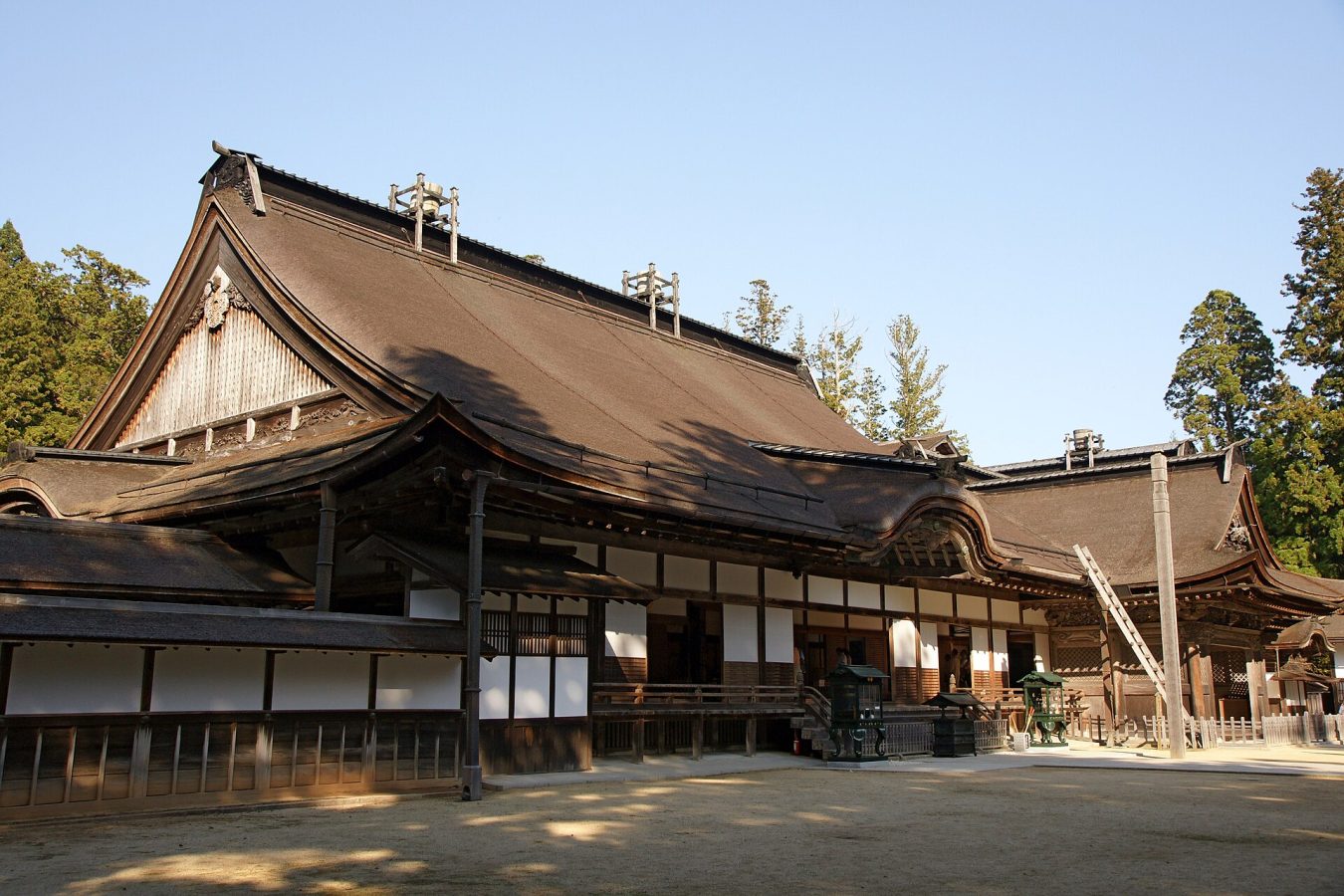
Photo: 663highland, CC BY 2.5
There is nothing to book in advance for Kongobu-ji itself. No online ticket for the temple alone is sold: you pay a modest admission fee at the reception inside the main gate, take off your shoes and walk the halls at your own pace. The fee normally includes a cup of green tea and a small sweet served in the large reception hall, which is worth sitting down for. The real decision is how to reach Koyasan and how long to stay. Most visitors come from Osaka on the Nankai line from Namba, change to the cable car at Gokurakubashi and ride a local bus from Koyasan station into the town; a regional pass covering the train, cable car and buses is sold at Namba and usually pays for itself.
Organised day trips from Osaka or Kyoto exist, and the page lists any GetYourGuide tours whose route passes the temple, but a coach day leaves little time on the mountain. The better choice is a night in a shukubo, one of the temple lodgings that line the main street. A stay normally includes a vegetarian dinner and breakfast in the shojin ryori tradition and a place at the monks' early morning service. Some lodgings and Kongobu-ji itself offer ajikan meditation sessions, the breathing practice of Shingon Buddhism; ask at your lodging or the visitor centre for the schedule, as places are limited.
Live prices from GetYourGuide for tickets and tours that include this temple. Free cancellation on most of them.
Kongobu-ji is the head temple of Koyasan Shingon Buddhism and the administrative centre of the whole mountain monastery founded by Kukai, known posthumously as Kobo Daishi, in 816. The building you visit is much younger. Toyotomi Hideyoshi raised a temple here in 1593 in memory of his mother; it was rebuilt in 1861 and took its present name in 1869, when it absorbed the role of the mountain's chief temple. You enter through the old main gate and follow a fixed route on polished wooden floors through a long sequence of tatami rooms. Look first at the painted sliding doors: cranes, willows, plum branches and seasonal landscapes by Kano Tanyu and painters of the Kyoto Kano school. One small room, the Willow Room, is remembered as the place where Hideyoshi's nephew Toyotomi Hidetsugu was forced to take his own life in 1595.
Further on is the old kitchen, with enormous iron rice cauldrons once used to feed hundreds of monks. The highlight is the Banryutei, a modern rock garden of about 2,340 square metres and the largest of its kind in Japan. Some 140 granite stones rise from a sea of raked white gravel, arranged to suggest a pair of dragons emerging from clouds to guard the temple. Sit on the veranda and give it time; the garden reads differently from each side. Photography is restricted in some rooms, and signs tell you where. Speak quietly, as this is a working head temple. From the bus stop it is a few minutes on foot, and the Danjo Garan complex with its great vermilion pagoda is a short walk west.
Kongobu-ji opens daily from early morning until late afternoon, roughly from 8.30 am to 5 pm; check the official Koyasan site for current hours, as special events occasionally close parts of the building. Day-trippers from Osaka arrive late in the morning, so the first hour after opening and the last hour before closing are the quietest times to see the screens and garden. If you stay overnight, visit straight after breakfast. Allow about an hour for the temple. Mount Koya sits at around 800 m and is noticeably cooler than Osaka.
Autumn, from late October into early November, brings fine maple colour, and late spring is fresh and green. Winter is cold, with snow on the gravel and on the roofs, and far fewer visitors. Mid-August brings the Rosoku Matsuri, when thousands of candles line the path through the Okunoin cemetery. Combine Kongobu-ji with the Danjo Garan and the Daimon gate during the day, then walk the 2 km path through Okunoin to Kobo Daishi's mausoleum at dusk or on a guided night walk.
30 km away
Kinpusen-ji does not sell tickets online. The temple precinct on the Yoshino ridge is open to walk through for free,…
1 ticket or tour
45 km away
Sumiyoshi Taisha is a working Shinto shrine and costs nothing to enter: the grounds open at dawn, and there is no…
4 tickets & tours
46 km away
There is no online ticket for Hase-dera alone. You pay the entrance fee at the gate at the foot of the long staircase,…
1 ticket or tour
Yes. GetYourGuide sells tickets and guided tours whose route includes Kongobu-ji, Mount Koya; live prices are shown on this page.
Entry to Kongobu-ji, Mount Koya: Small admission fee at the door
Kongobu-ji opens daily from early morning until late afternoon, roughly from 8.30 am to 5 pm; check the official Koyasan site for current hours, as special events occasionally close parts of the building.
Allow about an hour for the temple.
No formal dress code; shoes off inside, so wear socks and easy footwear.
Kongobu-ji, Mount Koya was established in 816.
Kongobu-ji, Mount Koya is in Koyasan, Japan. The map on this page shows the exact spot.
How to visit a Buddhist temple: shoes, dress and manners — Shoes, dress, feet, photos and offerings in Buddhist temples, from the wats of Thailand and Sri Lanka to the Zen temples of Japan.
Koyasan, Japan
Okunoin is free to enter at any time, and no ticket for the cemetery alone is sold online.
No online ticket


