
Wat Arun (Temple of Dawn)
Bangkok, Thailand
Wat Arun stands on the Thonburi bank of the Chao Phraya, opposite Wat Pho, and most people simply take the cross-river…
46 tickets & tours
Buddhist Temple · Bangkok · Thailand
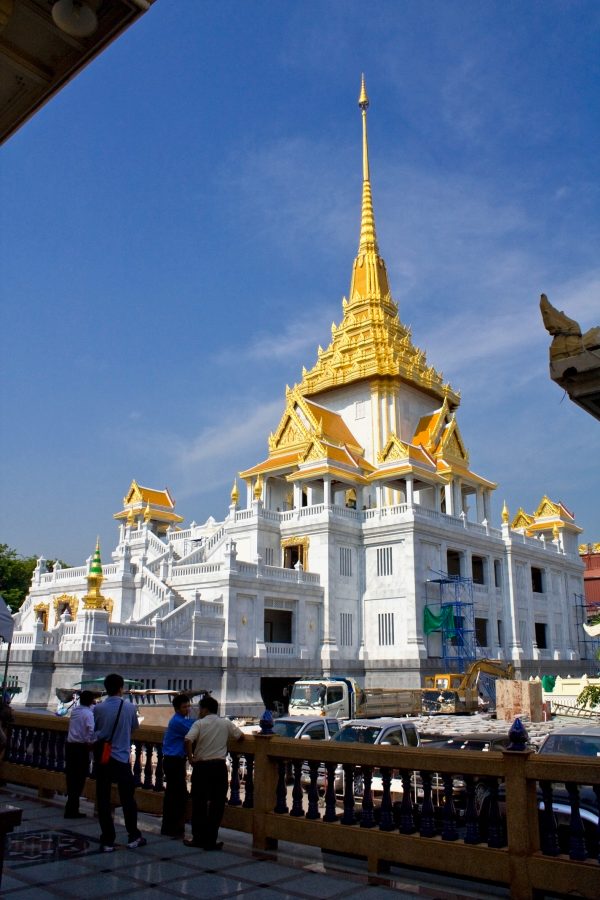
Photo: Hdamm, CC BY-SA 3.0
Wat Traimit stands at the eastern gateway of Bangkok's Chinatown, close to Hua Lamphong station, and its single great attraction is the solid gold Buddha on the top floor of a white marble pavilion. The temple grounds are free to enter; a modest ticket is sold at the foot of the pavilion for the Golden Buddha hall, and a separate small fee covers the Chinatown heritage exhibition on the floors below. There are no queues worth booking ahead for. Two kinds of tour include the temple. The first is a classic shared half-day temple circuit from a central Bangkok hotel, which adds Wat Pho with its reclining Buddha and the Marble Temple, Wat Benchamabophit;
transport by minibus, an English-speaking guide and entry fees are normally included. The second is a tuk-tuk tour that bounces between Wat Pho, Wat Arun across the river and Wat Traimit, with more fun on the road and less time at each stop; temple fees and the river ferry may be included or paid on the spot. Both are fine for a first look at the city, but Wat Traimit is also one of the easiest temples to reach alone. Take the MRT to Hua Lamphong, walk five minutes west, and pair the visit with a wander into the food stalls of Yaowarat Road. If you want time for the heritage exhibition, which explains the history of the Chinese community in Bangkok, go independently rather than on a tour that allows only half an hour.
Live dates and prices from GetYourGuide. Free cancellation on most tickets.
The gold statue is the reason for coming, and its story is better than any legend. For centuries it was disguised under a thick coat of plaster and coloured glass, probably to hide it from Burmese armies in the Ayutthaya period, and it passed unnoticed from temple to temple. In 1955, while being moved into a new building at Wat Traimit, it slipped from its ropes and fell; the cracks in the plaster revealed gleaming gold beneath. The seated Buddha, about 3 m high and weighing around five and a half tonnes, is believed to date from the Sukhothai period and is one of the largest gold objects of its kind in the world. Fragments of the plaster shell are displayed nearby. The statue now sits on the top floor of the Phra Maha Mondop, a four-storey marble pavilion in a modern Thai style, opened in 2010.
Climb the stairs or take the lift, remove your shoes and kneel or sit on the carpet; worshippers bring flowers and incense, and you will see Thai families praying and posing for photographs. From the balcony around the hall there are good views over Chinatown's rooftops. The lower floors hold the Yaowarat Chinatown Heritage Center, with dioramas and models of the old Chinese neighbourhood, and an exhibition on the history of the Golden Buddha itself. The older parts of the temple, including the ordination hall of 1947, are quieter and worth a brief look. The temple took its present name, meaning three friends, in 1940, after a tradition that three Chinese friends founded it. Point your feet away from the Buddha when you sit, and keep your voice down in the hall.
The Golden Buddha hall is open daily from morning until late afternoon, roughly 8 am to 5 pm; the heritage exhibition keeps slightly shorter hours and closes on Mondays, so check before planning around it. Early morning is the best time, before the tour groups and before Bangkok's heat makes the climb to the top floor sticky. Late afternoon is also good, and you can then walk straight into Chinatown as the street food stalls on Yaowarat Road open around dusk. The cool season, from November to February, is the most comfortable time to explore Bangkok on foot.
Chinese New Year, usually in late January or February, turns Chinatown into a festival of lanterns, dragon dances and crowds; the temple is especially busy then, as it is on Buddhist holidays such as Visakha Bucha in May or June. Allow about an hour, or an hour and a half with the exhibitions. Combine the temple with a walk through Yaowarat and the narrow market lane of Sampeng, Wat Mangkon Kamalawat, the main Chinese Buddhist temple of the district, and a boat ride from the nearby river piers.
Yes. GetYourGuide lists 2 tickets and tours for Wat Traimit (Temple of the Golden Buddha), with live dates and prices and free cancellation on most of them.
The Golden Buddha hall is open daily from morning until late afternoon, roughly 8 am to 5 pm; the heritage exhibition keeps slightly shorter hours and closes on Mondays, so check before planning around it.
Allow about an hour, or an hour and a half with the exhibitions.
Early morning is the best time, before the tour groups and before Bangkok's heat makes the climb to the top floor sticky.
Shoulders and knees covered; shoes off in the shrine hall.
Entry to Wat Traimit (Temple of the Golden Buddha): Small fee for the Golden Buddha hall
Wat Traimit (Temple of the Golden Buddha) is in Bangkok, Thailand. The map on this page shows the exact spot.
How to visit a Buddhist temple: shoes, dress and manners — Shoes, dress, feet, photos and offerings in Buddhist temples, from the wats of Thailand and Sri Lanka to the Zen temples of Japan.
Bangkok, Thailand
Wat Arun stands on the Thonburi bank of the Chao Phraya, opposite Wat Pho, and most people simply take the cross-river…
46 tickets & tours
Bangkok, Thailand
Wat Phra Kaew stands inside the walls of the Grand Palace, so there is no separate ticket: one Grand Palace ticket,…
45 tickets & tours
Bangkok, Thailand
Wat Pho is one of the easiest of Bangkok's great temples to visit on your own: the ticket is sold at the gate,…
42 tickets & tours
Bangkok, Thailand
There is nothing to book for the Erawan Shrine itself. It is an open-air shrine on a busy street corner, with no…
1 ticket or tour
Bangkok, Thailand
Admission to Wat Benchamabophit is a modest fee paid at the ticket desk inside the gate;
1 ticket or tour
Bangkok, Thailand
Wat Hong Rattanaram is a royal temple in Thonburi that receives few foreign visitors, and there is no entry fee or…
1 ticket or tour


