
Wat Arun (Temple of Dawn)
Bangkok, Thailand
Wat Arun stands on the Thonburi bank of the Chao Phraya, opposite Wat Pho, and most people simply take the cross-river…
46 tickets & tours
Buddhist Temple · Bangkok · Thailand
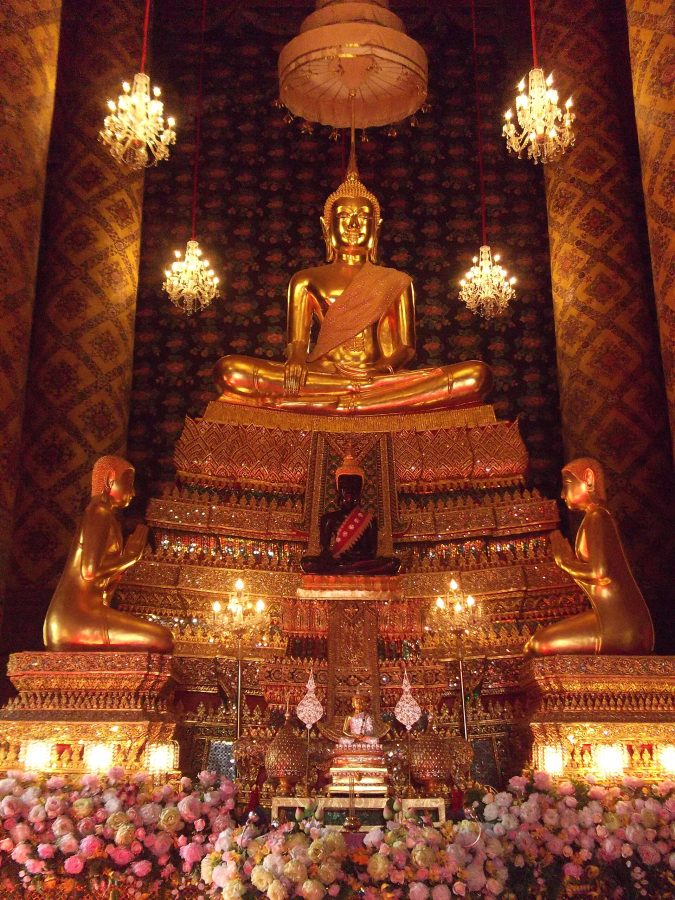
Photo: กสิณธร ราชโอรส, CC BY-SA 4.0
Wat Hong Rattanaram is a royal temple in Thonburi that receives few foreign visitors, and there is no entry fee or ticket. You can walk into the grounds during the day, remove your shoes and enter the ordination hall when it is open, and leave a donation in the box if you wish. The only organised way to see it is on a private temple tour of Bangkok that adds it to the city's two most famous riverside temples, Wat Pho with its reclining Buddha and Wat Arun on the opposite bank. These tours normally include a private guide, transport by car, taxi or river boat and the entry fees at the paid temples; meals and drinks are extra.
The private format suits travellers who want a quieter, local temple after the crowds of the big two, and the guide can explain the connection with King Taksin, which is the main reason Thais come here. Going independently is simple: the MRT Blue Line stops at Itsaraphap station, whose golden swan decoration honours this temple, and from there it is a short walk. You can also reach it from Wat Arun on foot in about fifteen minutes. Long-tail boat tours of the Thonburi canals pass the temple on Khlong Bangkok Yai and some will drop you at its pier on request. The page lists any GetYourGuide tours that include the temple.
Live dates and prices from GetYourGuide. Free cancellation on most tickets.
The temple goes back to the late Ayutthaya period, when a wealthy Chinese merchant named Hong paid for a monastery on the bank of Khlong Bangkok Yai; it is still often called simply Wat Hong. After the fall of Ayutthaya in 1767, King Taksin established his new capital at Thonburi with his palace only a few hundred metres away, and he chose Wat Hong as the temple where he worshipped and supported monastic study. It was thoroughly restored under Rama III, and it now holds second-class royal rank. The ordination hall is the centrepiece, with finely carved door and window frames and murals on all four walls illustrating the ten great birth stories of the Buddha.
The principal image is Phra Saen, a bronze Buddha in the Lan Xang style brought from the Mekong region in the nineteenth century and venerated for granting wishes. Devotees whose prayers are answered return with offerings of sticky rice, fermented fish and boiled eggs, so do not be surprised to see these on the altar. In the sermon hall stands a late Sukhothai gold Buddha that was found under a cracked plaster coating in 1957, much like the more famous golden Buddha of Wat Traimit. Outside, beside the canal, is a shrine to King Taksin built by the local community, and a sacred pond whose water people take home. The usual etiquette applies: cover shoulders and knees, remove shoes in the halls, keep your feet pointing away from the altar and ask before photographing worshippers.
The grounds are open from early morning until early evening; the ordination hall is usually unlocked during the day but may close at lunchtime, so check on arrival. Morning is the best time, when locals come to make merit and the canal side is cool and shaded. In the afternoon the light on the gables is warm and the temple is very quiet. Bangkok's cool season, from November to February, is the most comfortable time to walk around Thonburi. From March to May the heat is intense, and from June to October short heavy showers are common.
King Taksin is commemorated on 28 December, the anniversary of his coronation, when the shrines in Thonburi, including the one beside this temple, receive many offerings. Buddhist holy days such as Makha Bucha and Visakha Bucha bring evening candlelit processions round the hall. Allow 30 to 45 minutes. Combine it with Wat Arun, Wichai Prasit Fort and Wat Kalayanamit along the river, then cross by ferry to Wat Pho and the Grand Palace, or take a long-tail boat along the Thonburi canals.
Yes. GetYourGuide lists one ticket or tour for Wat Hong Rattanaram, with live dates and prices and free cancellation on most of them.
Entry to Wat Hong Rattanaram: Free
You can walk into the grounds during the day, remove your shoes and enter the ordination hall when it is open, and leave a donation in the box if you wish.
Allow 30 to 45 minutes.
Morning is the best time, when locals come to make merit and the canal side is cool and shaded.
Shoulders and knees covered; shoes off inside the ordination hall.
Wat Hong Rattanaram is in Bangkok, Thailand. The map on this page shows the exact spot.
How to visit a Buddhist temple: shoes, dress and manners — Shoes, dress, feet, photos and offerings in Buddhist temples, from the wats of Thailand and Sri Lanka to the Zen temples of Japan.
Bangkok, Thailand
Wat Arun stands on the Thonburi bank of the Chao Phraya, opposite Wat Pho, and most people simply take the cross-river…
46 tickets & tours
Bangkok, Thailand
Wat Phra Kaew stands inside the walls of the Grand Palace, so there is no separate ticket: one Grand Palace ticket,…
45 tickets & tours
Bangkok, Thailand
Wat Pho is one of the easiest of Bangkok's great temples to visit on your own: the ticket is sold at the gate,…
42 tickets & tours
Bangkok, Thailand
Wat Traimit stands at the eastern gateway of Bangkok's Chinatown, close to Hua Lamphong station, and its single…
2 tickets & tours
Bangkok, Thailand
There is nothing to book for the Erawan Shrine itself. It is an open-air shrine on a busy street corner, with no…
1 ticket or tour
Bangkok, Thailand
Admission to Wat Benchamabophit is a modest fee paid at the ticket desk inside the gate;
1 ticket or tour


