
Wat Arun (Temple of Dawn)
Bangkok, Thailand
Wat Arun stands on the Thonburi bank of the Chao Phraya, opposite Wat Pho, and most people simply take the cross-river…
46 tickets & tours
Buddhist Temple · Bangkok · Thailand
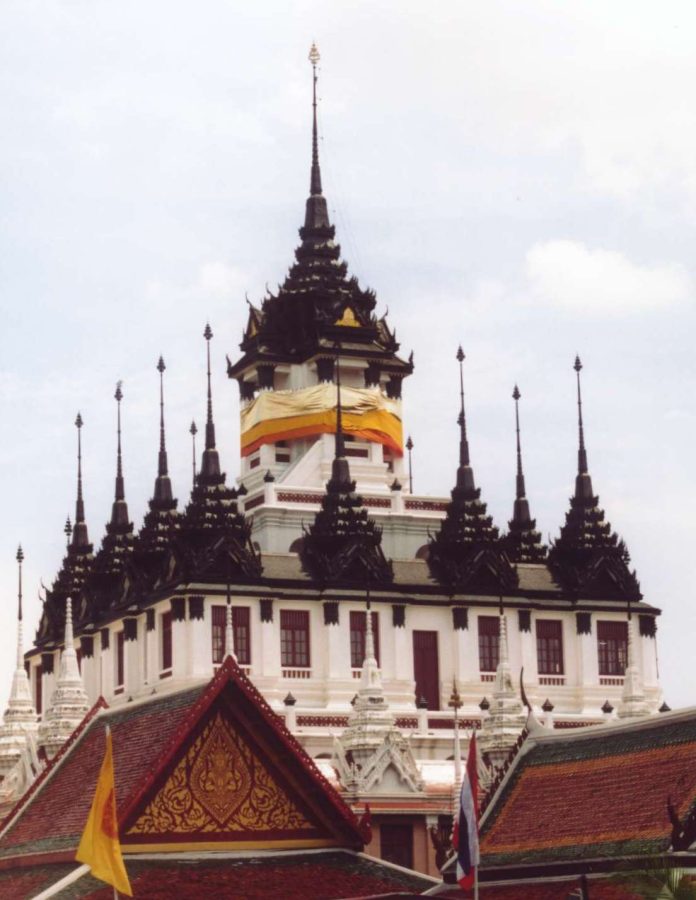
Photo: Ahoerstemeier, CC BY-SA 3.0
Wat Ratchanatdaram stands on Ratchadamnoen Klang Avenue in the old city of Bangkok, and visiting it is straightforward. The temple grounds are free to enter; access to the upper levels of the Loha Prasat, the many-spired metal palace that is the reason to come, has in some periods carried a small charge for foreign visitors, so bring some cash. No advance booking or timed entry is needed. Organised options are mostly half-day tours of the old city that link the Loha Prasat with its neighbour across the road, the Golden Mount at Wat Saket, and then continue to Chinatown for Wat Traimit and the golden Buddha.
These normally include a guide, transport by van or tuk-tuk and entry fees at the paid sites; food and drinks are extra. Some evening tuk-tuk and food tours also pass the temple, since its spires are illuminated after dark. A guide is useful mainly to explain the unusual symbolism of the building and the history of the reign of Rama III. On your own, the temple is a short walk from Khao San Road and Democracy Monument, and a few minutes from the Phan Fa Lilat pier on the Saen Saep canal boat line; the Sam Yot MRT station is also within walking distance. The page lists any GetYourGuide tours whose route passes the temple.
Live dates and prices from GetYourGuide. Free cancellation on most tickets.
King Rama III founded the temple in 1846 for his granddaughter, Princess Somanass, and its name means temple of the royal niece. Its most original feature, the Loha Prasat, was begun at the same time but left unfinished for more than a century; work resumed only in the 1960s under the Fine Arts Department, a Buddha relic was placed in the top spire in 1995, and the building opened fully in the 2000s. It is the only surviving example of a form known from ancient India and Sri Lanka, where earlier metal-roofed monasteries have long since vanished. The Loha Prasat is a stepped pyramid about 36 m high, crowned by 37 dark metal spires that stand for the 37 virtues leading to enlightenment: 24 on the lowest tier, 12 in the middle and one at the summit.
Inside, the ground floor is a cool forest of columns laid out in a grid of passages, and a spiral staircase climbs through the levels to a small shrine at the top, from which there are views over the old city rooftops, the Golden Mount and the Democracy Monument. The rest of the compound includes an ordination hall with a gilded Buddha and fine murals and, at the back, a market selling Buddhist amulets. In front lies the King Rama III memorial pavilion with a statue of the king. Dress modestly, take shoes off where the signs indicate, and climb quietly, since people come to the top shrine to pray.
The Loha Prasat is usually open from about 9 am to 5 pm, with the temple grounds open longer; check the current hours locally. Mid-morning is the quietest time inside, and the late afternoon light is lovely on the spires. In the evening the building is floodlit and makes a fine sight from the road or from the Golden Mount, though you can no longer go inside. The cool season from November to February is the best time to explore the old city on foot;
from March to May the heat is intense, especially on the open upper terraces, and from June to October brief tropical downpours are common. Major Buddhist holy days such as Makha Bucha and Visakha Bucha bring evening candlelit processions here. In late autumn the Golden Mount across the road holds its temple fair, one of Bangkok's oldest, and the whole area becomes crowded and lively. Allow 45 minutes to an hour. Combine it with the Golden Mount, the Mahakan Fort and the old city walls, and the nearby Wat Suthat and its Giant Swing.
Yes. GetYourGuide lists one ticket or tour for Wat Ratchanatdaram (Loha Prasat), with live dates and prices and free cancellation on most of them.
The temple grounds are free to enter; access to the upper levels of the Loha Prasat, the many-spired metal palace that is the reason to come, has in some periods carried a small charge for foreign visitors, so bring some cash.
The Loha Prasat is usually open from about 9 am to 5 pm, with the temple grounds open longer; check the current hours locally.
Allow 45 minutes to an hour.
Mid-morning is the quietest time inside, and the late afternoon light is lovely on the spires.
Shoulders and knees covered; shoes off inside the halls and the Loha Prasat.
Wat Ratchanatdaram (Loha Prasat) was established in 1846.
Wat Ratchanatdaram (Loha Prasat) is in Bangkok, Thailand. The map on this page shows the exact spot.
How to visit a Buddhist temple: shoes, dress and manners — Shoes, dress, feet, photos and offerings in Buddhist temples, from the wats of Thailand and Sri Lanka to the Zen temples of Japan.
Bangkok, Thailand
Wat Arun stands on the Thonburi bank of the Chao Phraya, opposite Wat Pho, and most people simply take the cross-river…
46 tickets & tours
Bangkok, Thailand
Wat Phra Kaew stands inside the walls of the Grand Palace, so there is no separate ticket: one Grand Palace ticket,…
45 tickets & tours
Bangkok, Thailand
Wat Pho is one of the easiest of Bangkok's great temples to visit on your own: the ticket is sold at the gate,…
42 tickets & tours
Bangkok, Thailand
Wat Traimit stands at the eastern gateway of Bangkok's Chinatown, close to Hua Lamphong station, and its single…
2 tickets & tours
Bangkok, Thailand
There is nothing to book for the Erawan Shrine itself. It is an open-air shrine on a busy street corner, with no…
1 ticket or tour
Bangkok, Thailand
Admission to Wat Benchamabophit is a modest fee paid at the ticket desk inside the gate;
1 ticket or tour


