
Wat Arun (Temple of Dawn)
Bangkok, Thailand
Wat Arun stands on the Thonburi bank of the Chao Phraya, opposite Wat Pho, and most people simply take the cross-river…
46 tickets & tours
Buddhist Temple · Bangkok · Thailand
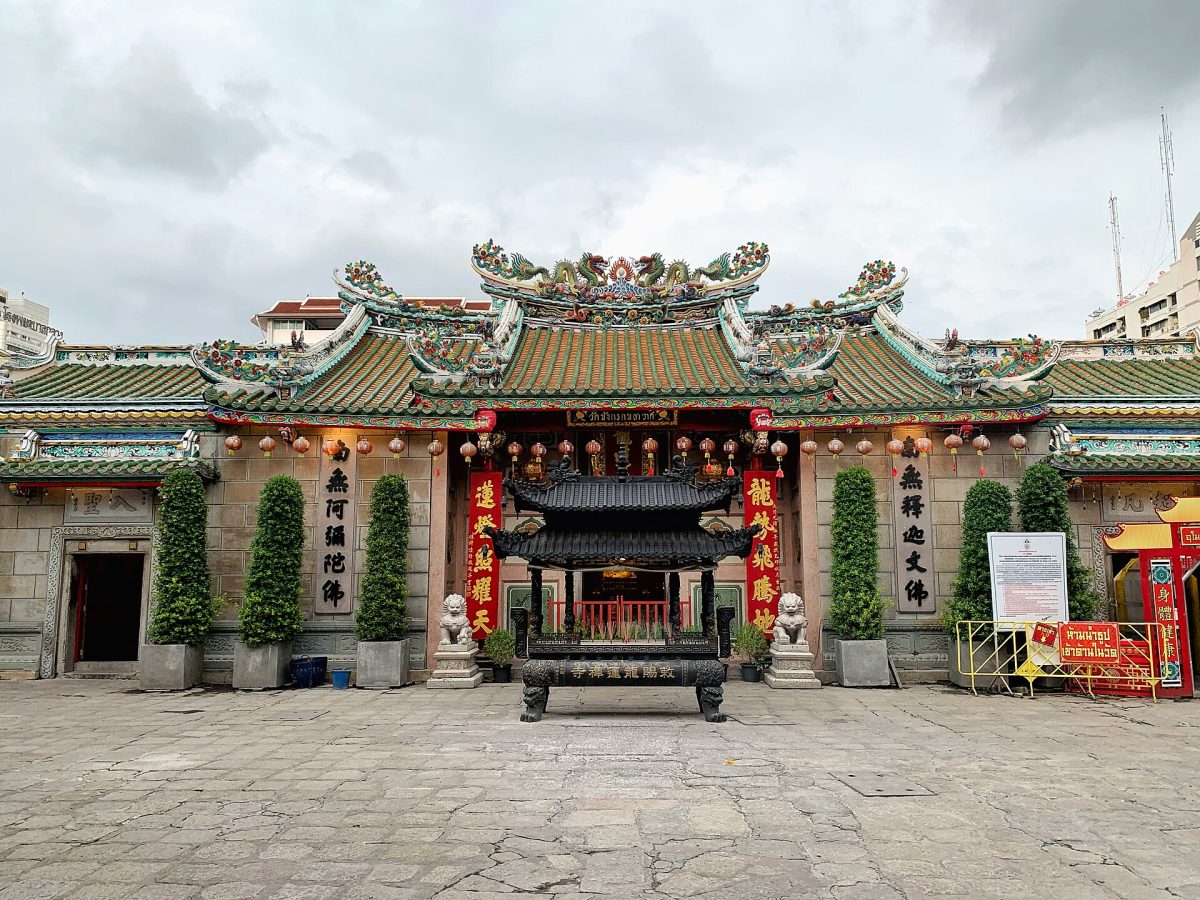
Photo: Chainwit., CC BY-SA 4.0
There is no ticket for Wat Mangkon Kamalawat. It is the largest and busiest Chinese Buddhist temple in Bangkok, and visitors walk in freely from Charoen Krung Road during opening hours. Incense, candles and flowers are sold at the stalls inside for anyone who wants to make an offering, and donation boxes stand in front of the shrines. The temple is usually the spiritual centrepiece of guided walking tours of Chinatown. These tours wander through the narrow lanes of Yaowarat and Sampeng, stop at markets, herbal shops and shrines, and spend time inside the temple explaining the mix of Buddhist, Taoist and Confucian figures, the fortune sticks and the burning of paper offerings.
A local guide is included, often with tastings of street food along the way; some versions run in the evening and focus on food. Transport to the starting point is usually not included. A guide is helpful here because the temple's many altars and rituals can be bewildering without someone to explain them. On your own, it is very easy to reach: the MRT Blue Line has a station named after the temple, Wat Mangkon, a couple of minutes' walk away, and the Chao Phraya river boats stop at the Ratchawong pier on the edge of Chinatown. The page lists any GetYourGuide tours whose route passes the temple.
Live dates and prices from GetYourGuide. Free cancellation on most tickets.
The temple was founded in the nineteenth century by a Chinese monk for Bangkok's growing community of Chinese merchants and was originally known as Leng Noei Yi. King Chulalongkorn later gave it its Thai name, which means Dragon Lotus Temple. It follows the Mahayana tradition and is still the main religious centre of Chinatown, with monks of the Chinese order in residence. The entrance from Charoen Krung leads through a gate topped by a sweeping tiled roof crowded with dragons and flowers. Inside, the layout is that of a southern Chinese monastery: four towering guardian kings in armour flank the entrance to the hall, beyond which an incense-filled courtyard holds a burner for paper offerings to the ancestors.
The main hall contains a gilded Buddha in a style that blends Thai and Chinese features, flanked by further images. Around the sides and at the back are shrines to Guan Yin, the bodhisattva of compassion, to the founder of the temple and to a range of Taoist and Confucian deities, including the gods of fortune and longevity. Look also for the gallery of small gilded Buddha images near the rear. This is one of the most active places of worship in the city, so move carefully around people praying, avoid walking in front of those kneeling at the altars and do not touch the offerings or shake the fortune sticks unless you mean to consult them. Photography is generally accepted in the courtyard, but be discreet inside the halls.
The temple is open daily from about 8 am to 4 pm; check locally, as times can vary on festival days. Mornings are the liveliest time for worship and the best moment to see the courtyard thick with incense smoke; early afternoon is quieter. The main events of the year follow the Chinese lunar calendar. Chinese New Year, in January or February, brings enormous crowds, lion dances in the surrounding streets and long queues to pray for luck in the coming year.
The vegetarian festival in the ninth lunar month, usually in September or October, turns Chinatown yellow with flags and food stalls, and the temple is at the heart of the celebrations. Both are spectacular but crowded; arrive early. For the rest of the year, the cool season from November to February is the most comfortable time for a walk around Chinatown. Allow 30 to 45 minutes. Combine it with Wat Traimit and its golden Buddha, the lanes of Sampeng market and the street-food stalls of Yaowarat Road, which come alive after dark.
Yes. GetYourGuide lists one ticket or tour for Wat Mangkon Kamalawat (Wat Leng Noei Yi), with live dates and prices and free cancellation on most of them.
It is the largest and busiest Chinese Buddhist temple in Bangkok, and visitors walk in freely from Charoen Krung Road during opening hours.
Allow 30 to 45 minutes.
Entry to Wat Mangkon Kamalawat (Wat Leng Noei Yi): Free
Modest clothing with shoulders and knees covered inside the halls.
Wat Mangkon Kamalawat (Wat Leng Noei Yi) was established in 1871.
Wat Mangkon Kamalawat (Wat Leng Noei Yi) is in Bangkok, Thailand. The map on this page shows the exact spot.
How to visit a Buddhist temple: shoes, dress and manners — Shoes, dress, feet, photos and offerings in Buddhist temples, from the wats of Thailand and Sri Lanka to the Zen temples of Japan.
Bangkok, Thailand
Wat Arun stands on the Thonburi bank of the Chao Phraya, opposite Wat Pho, and most people simply take the cross-river…
46 tickets & tours
Bangkok, Thailand
Wat Phra Kaew stands inside the walls of the Grand Palace, so there is no separate ticket: one Grand Palace ticket,…
45 tickets & tours
Bangkok, Thailand
Wat Pho is one of the easiest of Bangkok's great temples to visit on your own: the ticket is sold at the gate,…
42 tickets & tours
Bangkok, Thailand
Wat Traimit stands at the eastern gateway of Bangkok's Chinatown, close to Hua Lamphong station, and its single…
2 tickets & tours
Bangkok, Thailand
There is nothing to book for the Erawan Shrine itself. It is an open-air shrine on a busy street corner, with no…
1 ticket or tour
Bangkok, Thailand
Admission to Wat Benchamabophit is a modest fee paid at the ticket desk inside the gate;
1 ticket or tour


