Luxor Temple
Luxor, Egypt
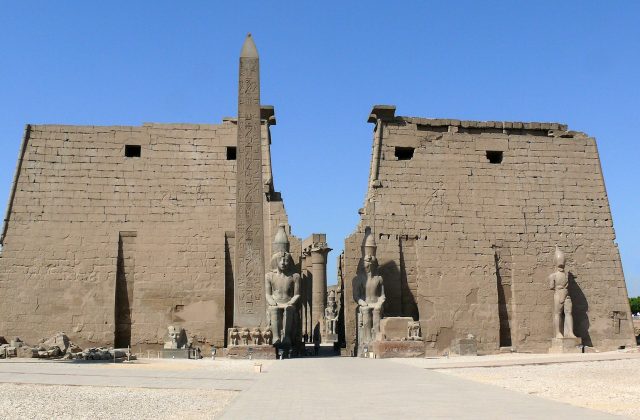
Luxor Temple stands in the middle of the modern city on the east bank of the Nile, so it is the easiest of the great…
20 tickets & tours
Ancient Temple · Luxor · Egypt
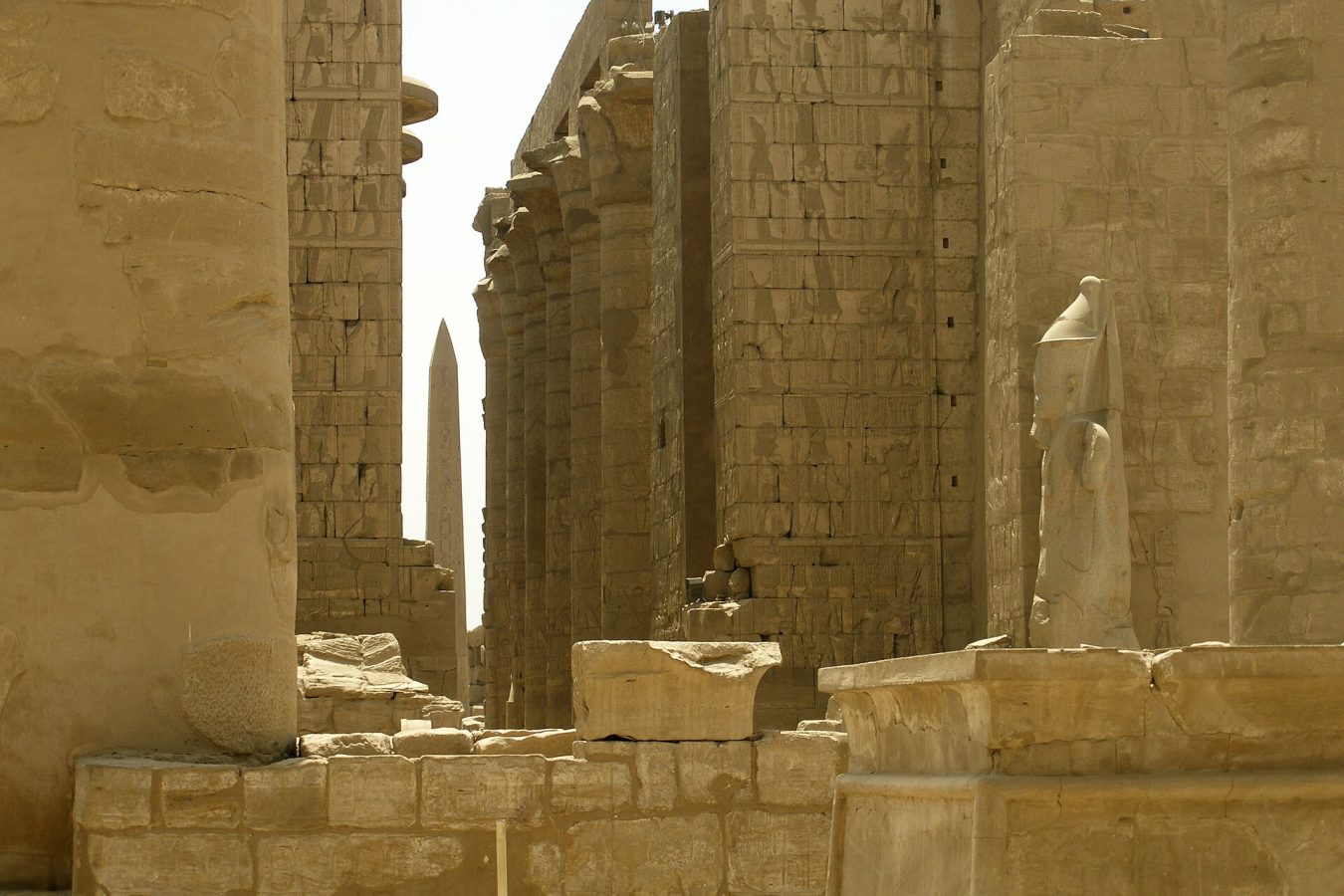
Photo: Vyacheslav Argenberg, CC BY 4.0
Karnak has its own ticket office at the visitor centre by the entrance, and tickets for foreign visitors are paid by card, the norm at Egyptian sites these days; there is also an official online ticket that gives a QR code to scan at the gate, which saves a few minutes in the queue at busy times. The Open Air Museum inside the complex needs a separate ticket, as does the evening sound and light show. Because entry is simple, the choice is mostly about guidance and timing. Many visitors book a private guided visit with an Egyptologist, which is worth it at a site this large and layered. Half-day tours of the east bank pair Karnak with Luxor Temple, linked by the long avenue of sphinxes;
full-day tours add the west bank, with the Valley of the Kings and the Temple of Hatshepsut; and there are long day trips from the Red Sea resorts of Hurghada, more than four hours away by road. In the evening, the sound and light show is sold alone or after a sunset felucca ride on the Nile. Tours normally include hotel pick-up in Luxor, an air-conditioned vehicle and the guide; entry tickets are included in some offers and not in others, so check carefully. The sensible choice is a guided morning at Karnak and Luxor Temple, followed by a separate day on the west bank, rather than squeezing everything into a single rushed day.
Live dates and prices from GetYourGuide. Free cancellation on most tickets.
Karnak is not one temple but a vast religious city that grew for some two thousand years, from the Middle Kingdom to the Ptolemies, as around thirty pharaohs added gates, halls, obelisks and chapels to the sanctuary of Amun, the chief god of Thebes. Only the largest part, the Precinct of Amun-Re, is normally open to visitors; the precincts of Mut and Montu are closed. Together with the rest of ancient Thebes, Karnak is part of a UNESCO World Heritage Site. You enter along a short avenue of ram-headed sphinxes through the great first pylon, which was never finished, into a courtyard with a small temple of Ramesses III. Beyond the second pylon lies the highlight: the Great Hypostyle Hall, a forest of 134 massive columns decorated mainly under Seti I and Ramesses II, the central ones rising more than 20 m, many still showing traces of paint on the capitals and ceiling slabs.
Further in, look for the standing obelisk of Hatshepsut, one of the tallest surviving in Egypt, the granite sanctuary of the sacred barque, and the festival hall of Thutmose III with its unusual columns. To the south, the Sacred Lake and the giant stone scarab beside it, which local tradition says brings luck if you walk around it, are pleasant places to pause. The Open Air Museum to the north holds reassembled chapels, including the elegant White Chapel of Senusret I. Karnak lies about 3 km north of the centre of Luxor, reached by taxi, horse carriage or a walk along the Corniche. Wear comfortable shoes and a hat, and bring water: much of the site is open to the sun.
Karnak opens daily early in the morning, around 6 am, and closes in the late afternoon; check current hours locally. Arrive at opening, before the tour groups from the cruise boats and from Hurghada flood in from mid-morning. Late afternoon, when the low sun shines between the columns of the hypostyle hall, is the other good moment. The sound and light show runs in several sessions each evening, in different languages on different nights. The best season is October to April, when days are warm and dry;
December, January and the Christmas and New Year holidays are the busiest. From May to September, temperatures commonly pass 40 degrees, and the only comfortable hours are the first two or three after dawn. Karnak is open throughout the year, including Fridays and religious holidays. Allow at least three hours for the main precinct, and half a day with the Open Air Museum. Combine it with Luxor Temple, ideally visited at dusk when it is floodlit, the Luxor Museum, and a day on the west bank.
Yes. GetYourGuide lists 8 tickets and tours for Karnak Temple, with live dates and prices and free cancellation on most of them.
Wear comfortable shoes and a hat, and bring water: much of the site is open to the sun.
Allow at least three hours for the main precinct, and half a day with the Open Air Museum.
The best season is October to April, when days are warm and dry; December, January and the Christmas and New Year holidays are the busiest.
Entry to Karnak Temple: Paid ticket; Open Air Museum extra
No formal dress code; light clothes covering shoulders and knees are best.
Karnak Temple was established in 2000 BC.
Karnak Temple is in Luxor, Egypt. The map on this page shows the exact spot.
How to visit an ancient temple: tickets, heat and rules — Tickets, hours, heat, guides, climbing rules and conservation at the ancient temples of Egypt, Greece, Italy, Angkor and the Maya world.
Luxor, Egypt
Luxor Temple stands in the middle of the modern city on the east bank of the Nile, so it is the easiest of the great…
20 tickets & tours
Luxor, Egypt
The temple at Deir el-Bahari sits on Luxor's West Bank, and almost everyone sees it as part of a wider tour of the…
4 tickets & tours
Luxor, Egypt
Medinet Habu has its own entry ticket, bought at the ticket office by the site entrance or online in advance as a dated…
2 tickets & tours
Luxor, Egypt
No ticket is sold online for the Mortuary Temple of Amenhotep III on its own.
No online ticket