Luxor Temple
Luxor, Egypt
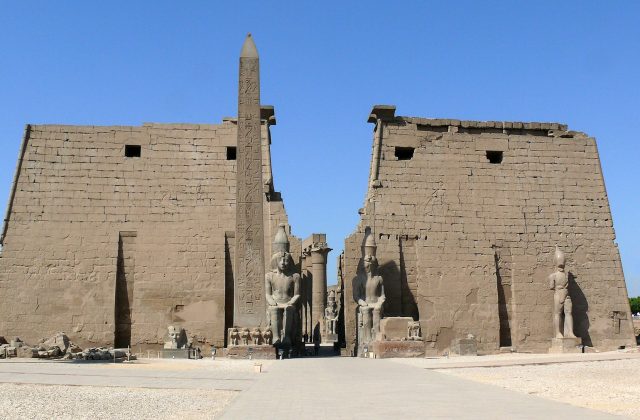
Luxor Temple stands in the middle of the modern city on the east bank of the Nile, so it is the easiest of the great…
20 tickets & tours
Ancient Temple · Luxor · Egypt
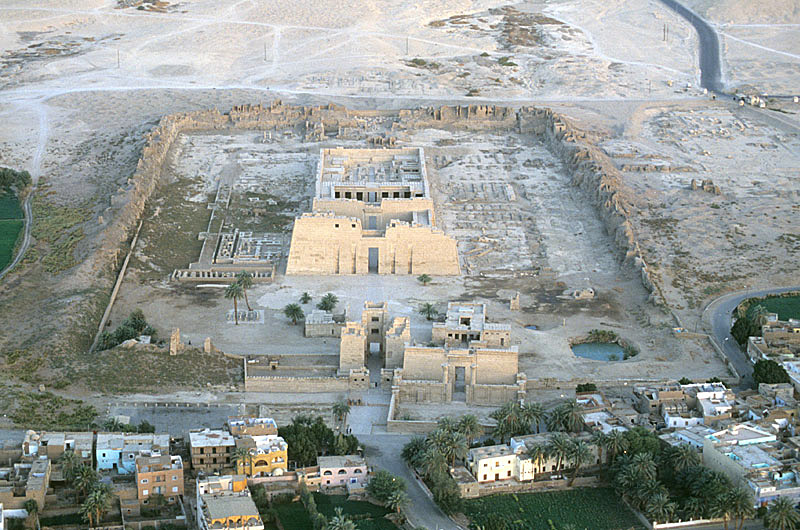
Photo: Roland Unger, CC BY-SA 3.0
Medinet Habu has its own entry ticket, bought at the ticket office by the site entrance or online in advance as a dated electronic ticket with a QR code, which spares you the cash queue but costs a little more. The ticket covers the temple of Ramesses III and the surrounding precinct; it is separate from the tickets for the Valley of the Kings, the Valley of the Queens and the other monuments of the West Bank, each of which is sold individually. Egypt has largely moved to card payment at its sites, so carry a bank card. Most organised visits come as part of a West Bank excursion from Luxor.
A typical half-day or full-day trip collects you from your hotel on the East Bank, crosses the Nile by road bridge or ferry, and links Medinet Habu with the Valley of the Queens and Deir el-Medina, the village of the craftsmen who cut the royal tombs. Such tours usually include air-conditioned transport and an Egyptologist guide; entry tickets are often charged separately, so read the inclusions carefully. Medinet Habu is a site that rewards a guide, because its reliefs tell long stories that are easy to miss. If you prefer to go alone, a taxi or a hired driver for the day is inexpensive, and the temple is calm enough to explore at your own pace with a good guidebook.
Live dates and prices from GetYourGuide. Free cancellation on most tickets.
Medinet Habu lies at the southern end of the Theban necropolis, on the West Bank opposite Luxor, about 1.5 km beyond the Colossi of Memnon. The great mortuary temple of Ramesses III, built in the twelfth century BC, is among the best preserved temples in Egypt, and many visitors find it more rewarding than the busier Ramesseum. The site was occupied long after the pharaohs, becoming the Coptic town of Jeme, and the outlines of its mud-brick walls are still visible around the temple. Visitors enter through the eastern gatehouse, a tall fortified tower modelled on the Syrian fortresses Ramesses had seen on campaign. Beyond it, the first pylon shows the king smiting his enemies before the god Amun.
The first court leads to a second, lined with columns and pillars carved with figures of the king as Osiris, where the original reds, blues and yellows survive in astonishing depth under the porticoes. Walk round the outside of the north wall to find the famous battle reliefs showing the defeat of the Sea Peoples, including a rare scene of a naval battle. To the south of the first court lie the foundations of the royal palace, and inside the enclosure stands a smaller and much older temple of Amun begun under Hatshepsut and Thutmose III. The rules are those of any Egyptian antiquities site: do not touch the painted reliefs, do not climb on the walls, and photograph without flash. Guardians may offer to show you hidden corners for a tip; this is optional. A taxi from the West Bank ferry landing takes about fifteen minutes.
The temple is open daily from early morning until late afternoon, closing a little later in summer than in winter; check the current hours locally or on the official antiquities portal. The finest moment is the first hour after opening, when the low sun picks out the deep-cut reliefs and the courts are often almost empty. Many West Bank tours go first to the Valley of the Kings, so Medinet Habu stays quiet until late morning. October to April is the comfortable season in Luxor, with mild days and cool mornings.
From May to September the heat is severe by midday, and visits should be limited to the early morning. The site is open on Fridays and through Ramadan, though hours may be shortened during the fasting month. Allow one and a half to two hours. Combine the temple with the Colossi of Memnon, Deir el-Medina and the Valley of the Queens, or start the day with a hot-air balloon flight over the West Bank.
Yes. GetYourGuide lists 2 tickets and tours for Medinet Habu (Temple of Ramesses III), with live dates and prices and free cancellation on most of them.
The temple is open daily from early morning until late afternoon, closing a little later in summer than in winter; check the current hours locally or on the official antiquities portal.
Allow one and a half to two hours.
Entry to Medinet Habu (Temple of Ramesses III): Paid ticket, sold at the site
No dress code; light clothing, a hat and sturdy shoes recommended.
Medinet Habu (Temple of Ramesses III) was established in 1200 BC.
Medinet Habu (Temple of Ramesses III) is in Luxor, Egypt. The map on this page shows the exact spot.
How to visit an ancient temple: tickets, heat and rules — Tickets, hours, heat, guides, climbing rules and conservation at the ancient temples of Egypt, Greece, Italy, Angkor and the Maya world.
Luxor, Egypt
Luxor Temple stands in the middle of the modern city on the east bank of the Nile, so it is the easiest of the great…
20 tickets & tours
Luxor, Egypt
Karnak has its own ticket office at the visitor centre by the entrance, and tickets for foreign visitors are paid by…
8 tickets & tours
Luxor, Egypt
The temple at Deir el-Bahari sits on Luxor's West Bank, and almost everyone sees it as part of a wider tour of the…
4 tickets & tours
Luxor, Egypt
No ticket is sold online for the Mortuary Temple of Amenhotep III on its own.
No online ticket