Luxor Temple
Luxor, Egypt
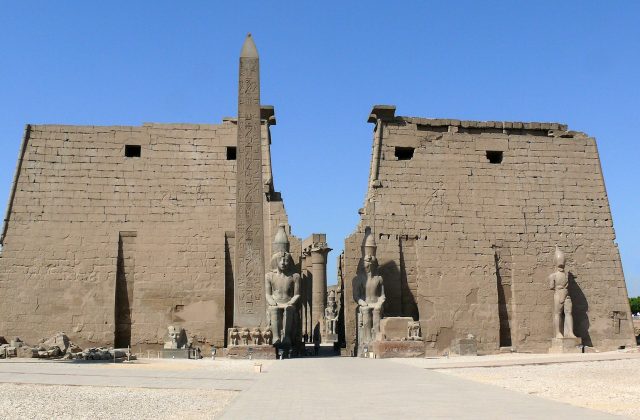
Luxor Temple stands in the middle of the modern city on the east bank of the Nile, so it is the easiest of the great…
20 tickets & tours
Ancient Temple · Luxor · Egypt

Photo: Ian Lloyd, CC BY-SA 3.0
The temple at Deir el-Bahari sits on Luxor's West Bank, and almost everyone sees it as part of a wider tour of the necropolis. Tickets are sold at the visitor centre at the foot of the site, and independent visitors can simply arrive by taxi, pay at the window and walk or ride the small electric train up the approach; the train has its own modest fare. The products sold online fall into a few groups. A private guided visit pairs the temple with the Valley of the Kings, usually adding the Colossi of Memnon on the way back, with a guide, air-conditioned car and pickup from a hotel on either bank.
Full-day West Bank programmes stretch further, to the tombs of the nobles, Medinet Habu or the Valley of the Queens. Some half-day options end with a felucca sail on the Nile, and there are combinations that close the day at the sound and light show at Karnak, on the East Bank. In most cases entry tickets are either included or listed as an extra, so read the inclusions carefully: the price difference is often entirely ticket fees. A guide is genuinely useful here, because the most interesting reliefs are faded and fragmentary and the story of the female pharaoh behind them is easy to miss on your own.
Live dates and prices from GetYourGuide. Free cancellation on most tickets.
Hatshepsut, one of the few women to rule Egypt as pharaoh, built this temple in the 15th century BC beneath a sheer amphitheatre of limestone cliffs. Its three broad terraces, linked by long ramps and fronted by colonnades, were laid out next to the much older temple of Mentuhotep II, whose ruins still lie to the south. The design is unlike any other Egyptian temple, and its clean horizontal lines are what make it so photogenic from the car park. The middle terrace holds the reliefs worth seeking out. On one side are scenes of a trading expedition to the Land of Punt, with ships, incense trees and exotic animals; on the other is the cycle of Hatshepsut's divine birth, presented as proof of her right to the throne.
Small chapels to Hathor, with cow-eared columns, and to Anubis flank this level. The upper terrace leads to the rock-cut sanctuary of Amun, fronted by a row of large Osiris statues of the queen. Look closely and you will notice chiselled-out faces and names: after her death her successor Thutmose III had her image erased, and much of what stands now is the product of careful Polish-Egyptian restoration since the 1960s. Centuries later a Coptic monastery occupied the site. There are no religious restrictions, but there is very little shade, so carry water. Photography without flash is allowed. The site is about 15 to 20 minutes by taxi from the West Bank ferry landing, or longer if crossing by the road bridge south of Luxor.
The site generally opens early in the morning, around 6 am, and closes in the late afternoon; confirm current hours locally, especially during Ramadan, when closing times can move earlier. The best visit is the first hour after opening, before tour buses arrive and before the sun hits the bare terraces head on; the cliffs face east, so morning light also shows the colonnades at their best. October to April is the comfortable season, with winter days warm and clear.
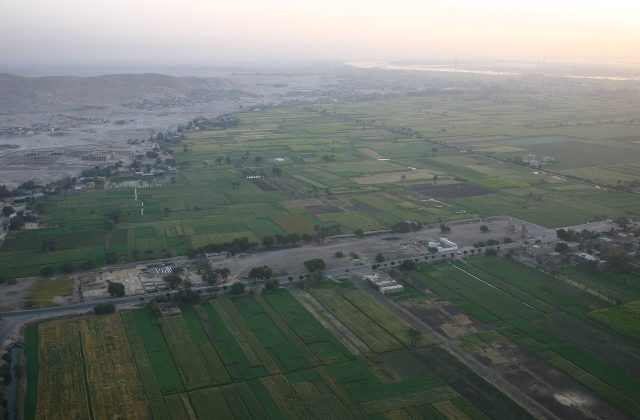
From May to September midday temperatures regularly pass 40 degrees, and visits should finish by about 10 am. Hot-air balloon flights take off over the West Bank at dawn and pass close to the temple, which makes a rewarding prelude. Allow about one and a half hours for the temple itself. Most people combine it with the Valley of the Kings, just behind the cliffs, and the Colossi of Memnon in a single morning, then cross back to the East Bank for Karnak or Luxor Temple in the late afternoon.
Yes. GetYourGuide lists 4 tickets and tours for Temple of Hatshepsut, with live dates and prices and free cancellation on most of them.
Allow about one and a half hours for the temple itself.
Entry to Temple of Hatshepsut: Paid ticket at the site gate
No dress code; light clothing that covers the shoulders and a sun hat are sensible.
Temple of Hatshepsut was established in 1479 BC.
Temple of Hatshepsut is in Luxor, Egypt. The map on this page shows the exact spot.
How to visit an ancient temple: tickets, heat and rules — Tickets, hours, heat, guides, climbing rules and conservation at the ancient temples of Egypt, Greece, Italy, Angkor and the Maya world.
Luxor, Egypt
Luxor Temple stands in the middle of the modern city on the east bank of the Nile, so it is the easiest of the great…
20 tickets & tours
Luxor, Egypt
Karnak has its own ticket office at the visitor centre by the entrance, and tickets for foreign visitors are paid by…
8 tickets & tours
Luxor, Egypt
Medinet Habu has its own entry ticket, bought at the ticket office by the site entrance or online in advance as a dated…
2 tickets & tours
Luxor, Egypt
No ticket is sold online for the Mortuary Temple of Amenhotep III on its own.
No online ticket