
Gunung Kawi, Tampaksiring
17 km away
Gunung Kawi does not need a ticket in advance: you pay the entrance fee at the top of the steps, where a sarong is…
4 tickets & tours
Hindu Temple · Kintamani · Indonesia
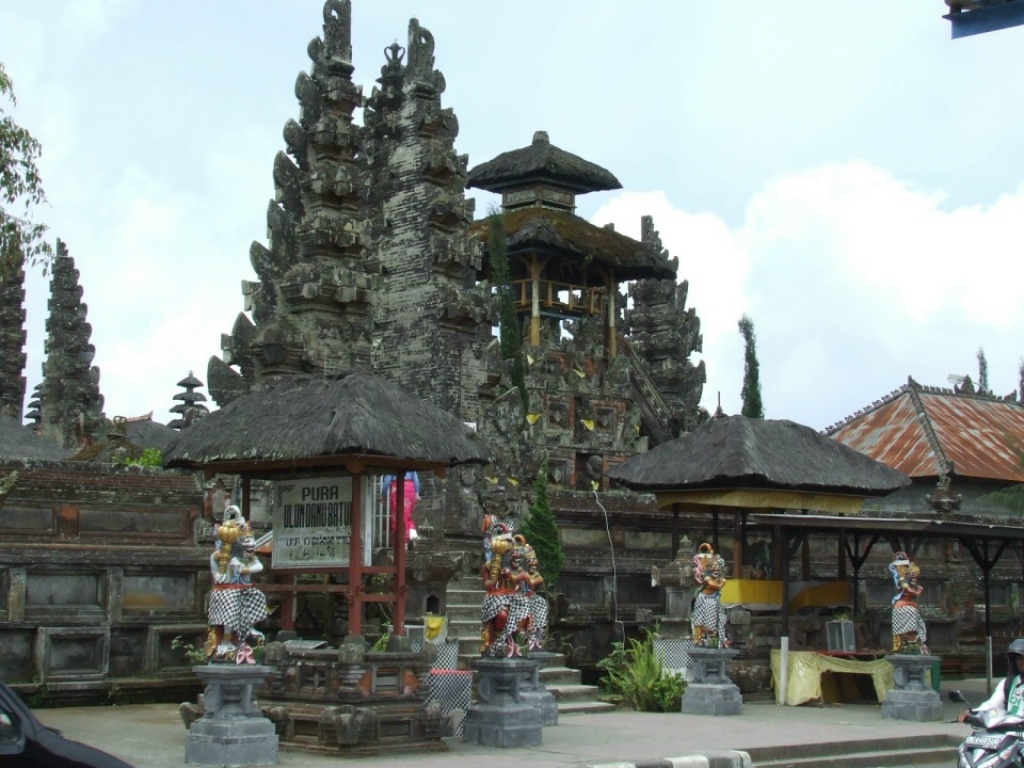
Photo: Horst Emscher, CC BY 3.0
There is no online ticket for Pura Ulun Danu Batur. Foreign visitors pay an entry fee at the ticket counter by the car park on the main Kintamani road, and the price includes the loan of a sarong and sash, which everyone must wear inside. Local guides wait at the entrance and offer to take you round for a fee; agree the price before you start, and know that a guide is not compulsory. Most people reach the temple by car from the south of Bali, which takes about an hour and a half from Ubud and two hours or more from the beach resorts.
The usual pattern is a private driver hired for the day, who will combine Batur with the Tegallalang rice terraces, the water temple of Tirta Empul and a lunch stop with a view of the caldera in Kintamani. Day tours sold by hotels and agencies follow the same route, typically including the car, an English-speaking driver or guide and sometimes lunch, with the temple fees paid on the spot. The other common combination is the pre-dawn trek up Mount Batur, organised by local guide associations with hotel pick-up around 2 am; after breakfast on the summit and the walk down, many drivers stop at the temple on the way back. If you go on your own by scooter, the road up from Ubud is good but busy, and the rim can be cold and misty.
Live prices from GetYourGuide for tickets and tours that include this temple. Free cancellation on most of them.
Pura Ulun Danu Batur is one of the nine directional temples that guard Bali, the temple of the north, dedicated to Vishnu and to Dewi Danu, goddess of Lake Batur, whose water feeds the springs and irrigation channels of much of the island. It belongs to the Cultural Landscape of Bali Province, the UNESCO World Heritage Site inscribed in 2012 for the subak water system. The original temple stood at the foot of the volcano; after the eruption of 1926 buried the old village, the main shrines were carried up to the caldera rim and the temple was rebuilt on its present site. The complex is large, with a sequence of courtyards climbing the slope. You enter through towering split gates of dark volcanic stone, and the space opens on to wide courts lined with pavilions and shrines.
The focus of the inner courtyard is a cluster of tall meru, the pagoda-like towers with tiered thatched roofs, the highest of them with 11 tiers, reserved for the most important gods. Look out also for the shrine with Chinese-style decoration, a reminder of the old links between Bali and Chinese traders, and for the guardian statues and carved stone at the gates. Etiquette is strict here because the temple is in daily use. Keep to the areas your guide or the signs allow, as the innermost court is often closed to visitors; never stand higher than a priest or step over offerings on the ground; and do not climb on the shrines. By Balinese custom, women who are menstruating are asked not to enter.
The temple is open to visitors every day from morning until early evening; ceremonies take priority, and parts of the complex may be closed when one is under way. Come early, between 8 and 10 am, when the air on the rim is clear and you are more likely to see the volcano and the lake before the clouds roll in, which they often do by midday. Bring a light jacket: at about 1,400 m, Kintamani is much cooler than the coast. The dry season from April to October gives the best views, while from November to March mist and rain are frequent.
The great event of the year is the Ngusaba Kedasa festival, held around the full moon of the tenth Balinese month, usually in March or April, when pilgrims from all over Bali bring offerings and the courtyards fill with music and dance for days. Visitors are welcome to watch respectfully from the edges. Smaller anniversary ceremonies follow the 210-day Balinese calendar, so ask locally what falls during your stay. Allow about an hour for the temple, and combine it with Tirta Empul and the Tegallalang terraces on the drive back towards Ubud.
17 km away
Gunung Kawi does not need a ticket in advance: you pay the entrance fee at the top of the steps, where a sarong is…
4 tickets & tours
18 km away
Most visitors reach Tirta Empul on a driver-led day out from Ubud, Denpasar or the southern beach resorts, because the…
39 tickets & tours
18 km away
Besakih lies high on the slopes of Mount Agung in eastern Bali, about two hours by car from Ubud and more from the…
20 tickets & tours
Yes. GetYourGuide sells tickets and guided tours whose route includes Pura Ulun Danu Batur; live prices are shown on this page.
Entry to Pura Ulun Danu Batur: Small fee; sarong included
Keep to the areas your guide or the signs allow, as the innermost court is often closed to visitors; never stand higher than a priest or step over offerings on the ground; and do not climb on the shrines.
Allow about an hour for the temple, and combine it with Tirta Empul and the Tegallalang terraces on the drive back towards Ubud.
Sarong and sash required (lent at the gate); shoulders covered.
Pura Ulun Danu Batur covers 1.4 ha.
Pura Ulun Danu Batur is in Kintamani, Indonesia. The map on this page shows the exact spot.
How to visit a Hindu temple: dress, shoes and access — What to wear, what to leave at the gate and where non-Hindus may go in Hindu temples in India, Nepal, Bali and South-East Asia.

