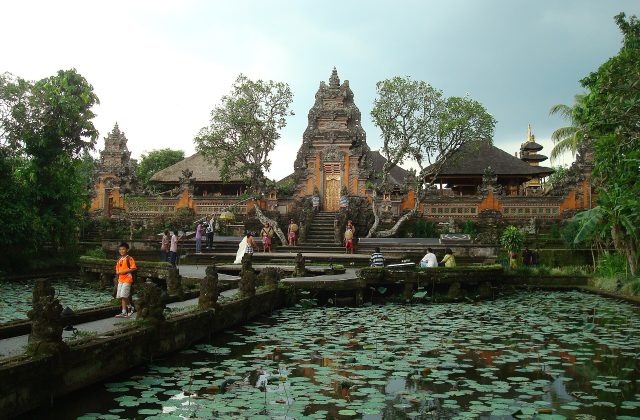
Pura Puseh Batuan (Batuan Temple)
Ubud, Indonesia
Batuan Temple is a village temple, and visitors simply pay a small entrance donation at the gate, where a sarong and…
9 tickets & tours
Hindu Temple · Ubud · Indonesia
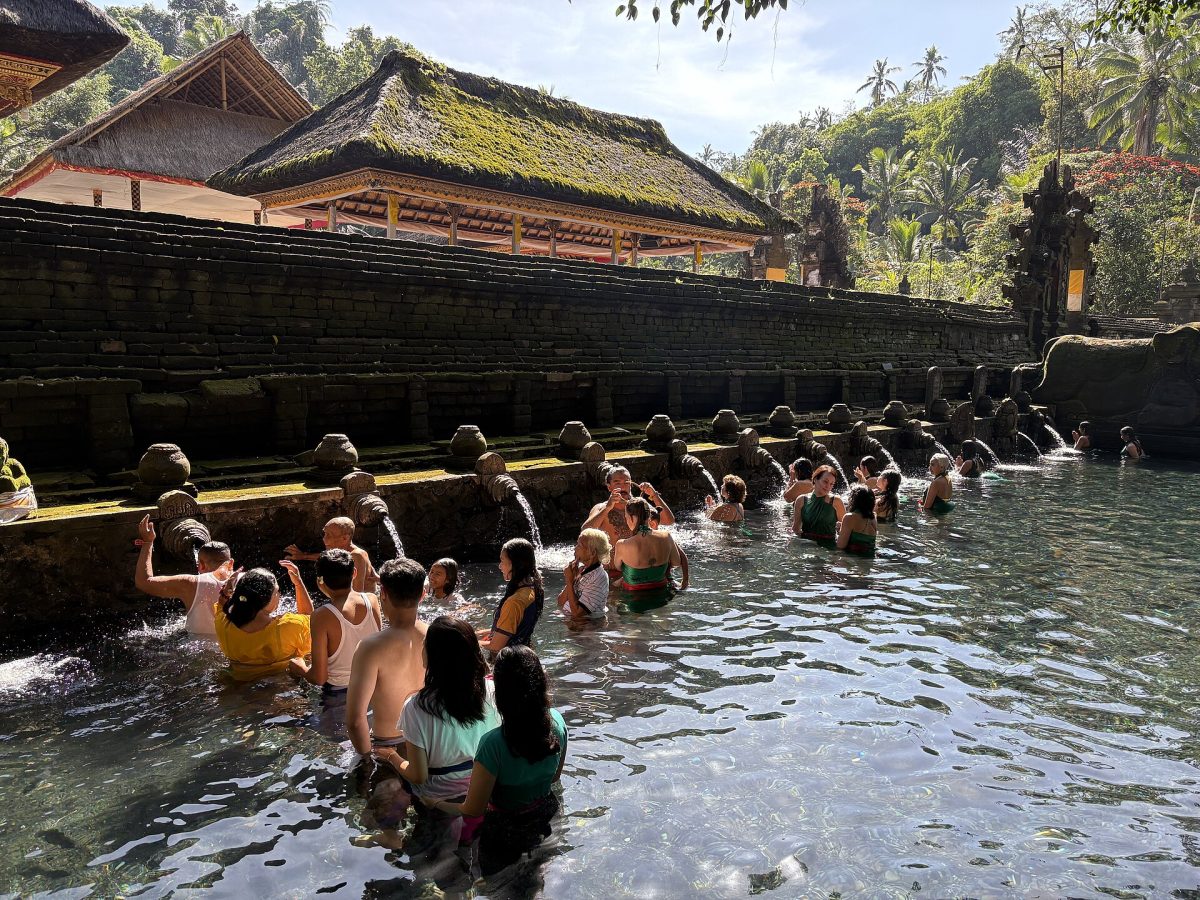
Photo: Chainwit., CC BY 4.0
Most visitors reach Tirta Empul on a driver-led day out from Ubud, Denpasar or the southern beach resorts, because the temple sits in the hills near Tampaksiring, about 15 km north-east of Ubud, and public transport is thin. The simplest booking is a private car with driver for half a day, which normally pairs the spring with the rock-cut royal tombs of Gunung Kawi, the Tegalalang rice terraces or a waterfall such as Tibumana or Tukad Cepung. Full-day versions push on to the Kintamani volcano viewpoint or the traditional village of Penglipuran. The second kind of product is built around the purification itself.
A local guide, sometimes a priest or temple assistant, explains the order of the spouts, helps with the offering of flowers and incense, and leads you into the water. These usually include the entrance fee, the bathing sarong, a locker and a towel, and often transfers from Ubud; the offering basket may be extra. If you only want to watch, any general Ubud tour will do, and the gate fee is paid on arrival. Independent visitors can simply arrive by scooter or taxi and pay at the ticket office, where a sarong is lent for the visit. For bathing you need your own sarong or must rent one at the changing rooms, and a small charge is usually made for lockers.
Live dates and prices from GetYourGuide. Free cancellation on most tickets.
The temple was founded around a strong spring in 962, under the Warmadewa kings of Bali, and the spring still feeds the Pakerisan river, along whose valley lie several of the island's oldest monuments. It is dedicated to Vishnu, and Balinese families come here for melukat, a ritual cleansing that is performed for illness, bad luck or before important ceremonies. Like most Balinese temples, the compound is divided into three courtyards. The outer yard, the jaba pura, holds the split gate and the pavilions used for gatherings. The middle yard, the jaba tengah, is the part everyone comes for: two long rectangular pools fed by a row of carved stone spouts, around 30 in all, each with its own purpose.
Bathers move along the line from left to right, praying and letting the water fall over the head at each spout, while the few spouts reserved for funeral rites are skipped. Above the pools is the inner courtyard, the jeroan, with the shrines and a clear pond where you can watch the spring bubble up through black sand and gravel. Visitors who bathe should make a small offering first and keep a respectful pace behind local worshippers; do not swim, splash or pose for long photographs in the water. Menstruating women are traditionally asked not to enter the temple. Shoulders should be covered, and you will be given a sarong and sash at the entrance if you need them. On the hill above stands the villa built for President Sukarno in 1954, still used as a government guesthouse and closed to the public. The temple is about 30 minutes by road from central Ubud.
The temple opens early in the morning and closes in the late afternoon; check locally for the current hours, which have varied. Arrive at opening time, before about 9 am, and you will share the pools mostly with Balinese families; by late morning the tour minibuses arrive and the queue along the spouts can take half an hour or more. The dry season, from April to October, brings clear mornings, though the water is cool all year and the rains of November to March rarely spoil a visit.
The most interesting days are temple anniversaries and full-moon days, when Balinese come in large numbers in ceremonial dress; on Nyepi, the Day of Silence in March, the whole island closes and nothing operates. Allow about an hour if you only look around and two hours if you bathe and change. Gunung Kawi lies about 3 km to the south and makes the natural pairing, with Goa Gajah, the Tegalalang terraces and Ubud's market all within easy reach for the rest of the day.
Yes. GetYourGuide lists 39 tickets and tours for Tirta Empul, with live dates and prices and free cancellation on most of them.
Entry to Tirta Empul: Small fee; sarong loan included
Allow about an hour if you only look around and two hours if you bathe and change.
Sarong and sash required (lent at the gate); bathers wear a separate sarong in the pools.
Tirta Empul was established in 962.
Tirta Empul receives about 196 417 a year (2020).
Tirta Empul is in Ubud, Indonesia. The map on this page shows the exact spot.
How to visit a Hindu temple: dress, shoes and access — What to wear, what to leave at the gate and where non-Hindus may go in Hindu temples in India, Nepal, Bali and South-East Asia.
Ubud, Indonesia
Batuan Temple is a village temple, and visitors simply pay a small entrance donation at the gate, where a sarong and…
9 tickets & tours
Ubud, Indonesia
Gunung Kawi does not need a ticket in advance: you pay the entrance fee at the top of the steps, where a sarong is…
4 tickets & tours
Ubud, Indonesia
There is nothing to buy to see Pura Taman Saraswati. The lotus ponds and the front courtyard are open to anyone walking…
3 tickets & tours