Dau Pagoda (Chua Dau)
Bac Ninh, Vietnam
Entry to the pagoda is free, and there is no ticket to buy online.
3 tickets & tours
Buddhist Temple · Bac Ninh · Vietnam
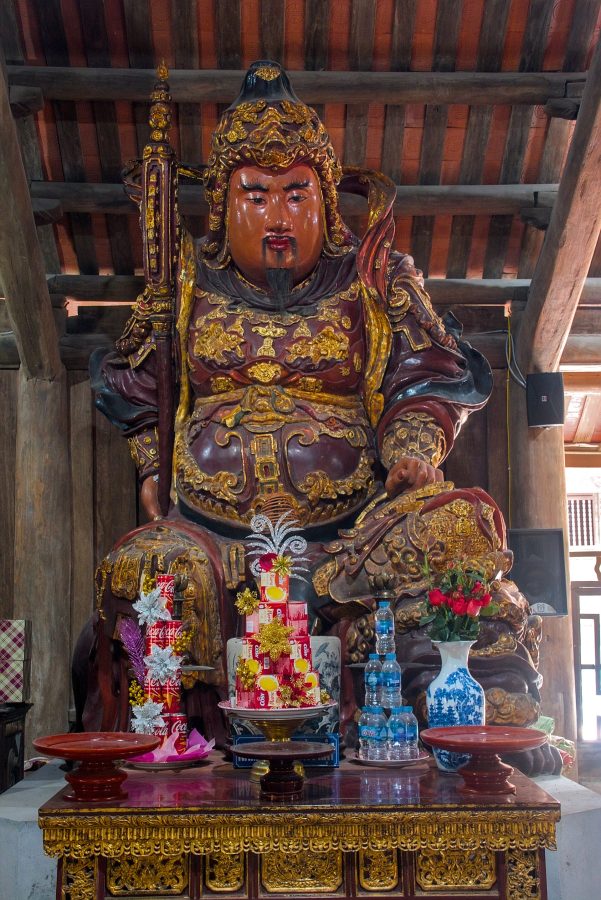
Photo: Benjamin Smith, CC BY-SA 4.0
But Thap Pagoda stands in the countryside of Bac Ninh Province, beside the dyke of the Duong river, about 30 km east of central Hanoi. Entry is free and no booking is needed; a donation box stands in the main hall and incense can be bought at the gate. Most foreign visitors come on a private day trip from Hanoi with a car, a driver and a guide. These usually combine the pagoda with the folk-painting village of Dong Ho, where families still print woodblock pictures on handmade paper, and sometimes with Dau Pagoda, one of the oldest Buddhist sites in Vietnam, or the ceramics village of Bat Trang.
Transport and guide are included; lunch, painting workshops and purchases are normally paid separately. A guide is worthwhile here, because the pagoda's value lies in its carvings, statues and symbolism, and there is very little English signage. Going independently is possible by taxi or ride-hailing car from Hanoi, which takes about an hour each way depending on traffic, or by local bus to Thuan Thanh and a short taxi from there. Ask the driver to wait, as return transport from the village is not always easy to find. Motorbike rental is another option for confident riders.
Live dates and prices from GetYourGuide. Free cancellation on most tickets.
The pagoda, formally known as Ninh Phuc, has roots in the 13th century, but its present form dates from the 17th century, when the Zen master Chuyet Chuyet and his disciples rebuilt it with the support of members of the royal court. Because it escaped later remodelling, it is regarded as one of the best-preserved examples of classical Vietnamese Buddhist architecture and carving. The complex runs for about 100 m along a single axis, with ten buildings laid out from the three-entrance gate to the bell tower and the rear halls. Courtyards and covered corridors link them, and the roofs are of dark tiles with curved ridge ends.
Beside the main halls rises the Bao Nghiem stone stupa, from which the pagoda takes its popular name, with its galleries of carved stone panels showing animals, plants and mythical creatures. Inside the halls are more than 50 statues. The most famous is the Quan Am with a thousand eyes and a thousand arms, carved in wood in the 17th century and widely considered a masterpiece of Vietnamese sculpture; the arms fan out in a great halo around the seated figure, each hand with an eye on its palm. Look also for the bodhisattvas Van Thu on a lion and Pho Hien on an elephant, and for the carved stone balustrade around the upper hall. This is an active pagoda. Dress modestly, speak quietly, do not turn your back to the altars when photographing, and ask before photographing monks or people at prayer.
The pagoda is open every day from early morning until late afternoon, roughly 7 am to 5 pm, though the main halls may be closed briefly around midday. Weekday mornings are calmest, before local school groups and weekend visitors from Hanoi arrive. The most pleasant months are from October to December and from March to April, when the weather in the Red River delta is mild and dry.
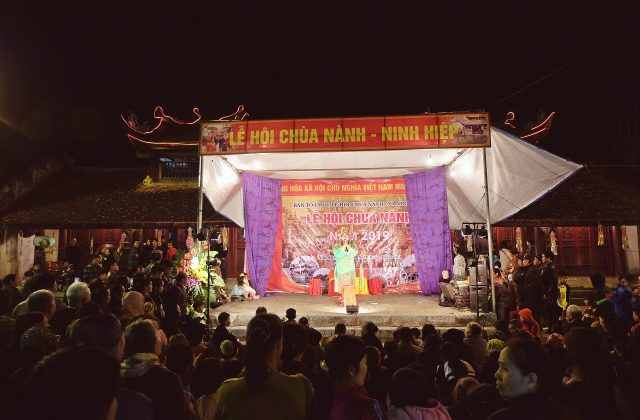
Winter, from December to February, can be grey and chilly, and summer brings heat, humidity and heavy rain. The weeks after Tet, the lunar New Year in late January or February, are the season of village festivals and pilgrimages across Bac Ninh, and the pagoda is busy with worshippers then; it is lively and colourful but crowded. The first and fifteenth days of each lunar month also bring more local visitors. Allow about an hour at the pagoda. Combine it with Dong Ho painting village, Dau Pagoda and Phat Tich Pagoda, or with Bat Trang, for a full day out of Hanoi.
Yes. GetYourGuide lists one ticket or tour for But Thap Pagoda, with live dates and prices and free cancellation on most of them.
The pagoda is open every day from early morning until late afternoon, roughly 7 am to 5 pm, though the main halls may be closed briefly around midday.
Allow about an hour at the pagoda.
The most pleasant months are from October to December and from March to April, when the weather in the Red River delta is mild and dry.
Entry to But Thap Pagoda: Free; donations welcome
Shoulders and knees covered; remove hats inside the halls.
But Thap Pagoda was established in 1200.
But Thap Pagoda is in Bac Ninh, Vietnam. The map on this page shows the exact spot.
How to visit a Buddhist temple: shoes, dress and manners — Shoes, dress, feet, photos and offerings in Buddhist temples, from the wats of Thailand and Sri Lanka to the Zen temples of Japan.
Bac Ninh, Vietnam
Entry to the pagoda is free, and there is no ticket to buy online.
3 tickets & tours