
But Thap Pagoda
Bac Ninh, Vietnam
But Thap Pagoda stands in the countryside of Bac Ninh Province, beside the dyke of the Duong river, about 30 km east of…
1 ticket or tour
Buddhist Temple · Bac Ninh · Vietnam
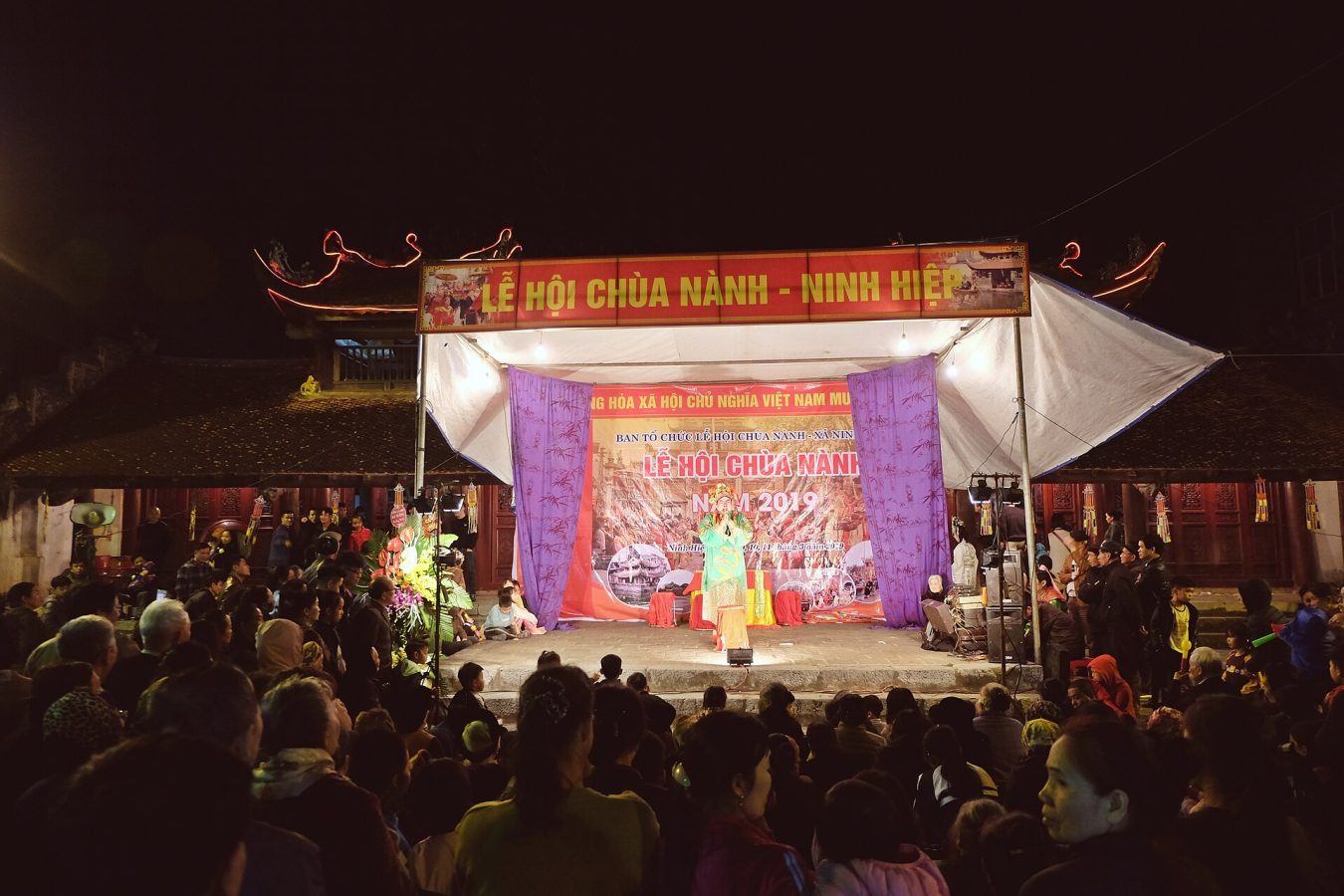
Photo: Kentaro Nka, CC BY-SA 4.0
Entry to the pagoda is free, and there is no ticket to buy online. Because it lies in rural Bac Ninh province, about 30 km east of Hanoi, most foreign visitors come on a guided day trip from the capital, travelling by private car or minibus with a driver and guide included in the price. The usual combinations bring together several sights of the Thuan Thanh district: the pagoda itself, the temple of the ancient governor Si Nhiep nearby, and often the Dong Ho woodblock painting village, where families still print folk pictures on handmade paper.
Some trips add the But Thap pagoda, famous for its carved stone balustrades and statues listed among Vietnam's national treasures. Lunch is often included on these tours, and a few run the opposite way, linking the pagoda with other temples on a long day towards Ninh Binh. The sensible choice depends on your interest. For Buddhist art and early Vietnamese history, pick a guided trip that covers the pagoda and its neighbours with time to look closely; the explanations matter, since signage is in Vietnamese. If you simply want a day in the countryside, the painting village tour gives more variety. Independent travellers can hire a car and driver in Hanoi for the day.
Live dates and prices from GetYourGuide. Free cancellation on most tickets.
Dau Pagoda stands on the site of Luy Lau, the old capital of the Chinese-ruled province of Jiaozhi and a trading post between China and India. Buddhist monks passing along that route made it a centre of the faith around the 2nd and 3rd centuries, and the pagoda is regarded as the oldest documented Buddhist foundation in Vietnam. Nothing visible goes back that far: the present buildings are mostly from later dynasties, much restored, but the sense of age is strong. The layout is the classic one of northern Vietnam: a front gate, a long courtyard and a series of parallel halls with heavy tiled roofs and dark wooden columns. In the centre of the courtyard rises the Hoa Phong tower, a three-storey brick tower built in 1737, the landmark of the site.
Inside the main hall the focus is the statue of Phap Van, the goddess of clouds, one of the four deities of clouds, rain, thunder and lightning worshipped across the Red River Delta, a fusion of Buddhism with older farming cults. Look also for the carved wooden and stone statues, some of which predate the 10th century. This is a working village pagoda with a resident community, so keep voices low, remove your hat in the halls, do not point your feet at the altars and ask before photographing monks or worshippers. The temple of Si Nhiep, the governor credited with spreading learning in the region, lies about 500 m away and is worth the short walk. The drive from Hanoi takes about an hour, depending on traffic.
The pagoda is open daily from early morning until late afternoon, with no fixed published hours; arriving between 8 and 11 am or after 2 pm avoids the quiet midday break. Weekdays are calm, while weekends bring local families and pilgrims. The best seasons are spring, from February to April, and autumn, from October to early December, when the weather in the north is mild.
Summer is hot, wet and stormy, and winter can be grey and chilly. The pagoda festival on the eighth day of the fourth lunar month, usually in late April or May, is the high point of the year: the statues of the four deities are carried in procession between the neighbouring pagodas, with offerings, drums, music and folk games drawing worshippers from across the delta. Expect huge crowds that day, along with the most atmosphere. The first and fifteenth days of each lunar month also bring more worshippers. Allow about an hour at the pagoda and half a day to a full day with the nearby temples and villages.
Yes. GetYourGuide lists 3 tickets and tours for Dau Pagoda (Chua Dau), with live dates and prices and free cancellation on most of them.
The pagoda is open daily from early morning until late afternoon, with no fixed published hours; arriving between 8 and 11 am or after 2 pm avoids the quiet midday break.
Allow about an hour at the pagoda and half a day to a full day with the nearby temples and villages.
The pagoda is open daily from early morning until late afternoon, with no fixed published hours; arriving between 8 and 11 am or after 2 pm avoids the quiet midday break.
Entry to Dau Pagoda (Chua Dau): Free; donations welcome
Shoulders and knees covered; hats off and shoes off where mats are laid in the halls.
Dau Pagoda (Chua Dau) was established in 187.
Dau Pagoda (Chua Dau) is in Bac Ninh, Vietnam. The map on this page shows the exact spot.
How to visit a Buddhist temple: shoes, dress and manners — Shoes, dress, feet, photos and offerings in Buddhist temples, from the wats of Thailand and Sri Lanka to the Zen temples of Japan.
Bac Ninh, Vietnam
But Thap Pagoda stands in the countryside of Bac Ninh Province, beside the dyke of the Duong river, about 30 km east of…
1 ticket or tour