Potala Palace
2 km away
Visiting the Potala is shaped by the rules for foreign travel in Tibet rather than by the ticket itself.
1 ticket or tour
Buddhist Temple · Lhasa · China
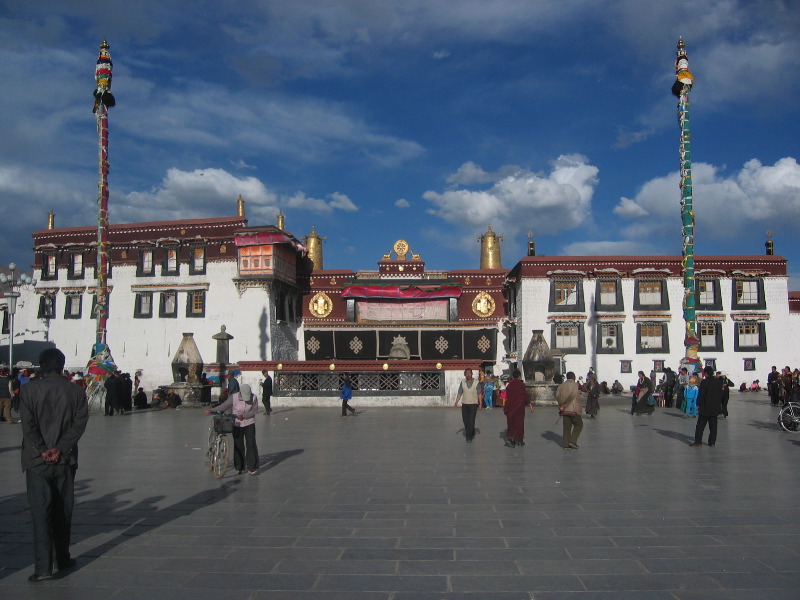
Photo: onwardtibet.org, CC BY-SA 2.0
No ticket for the Jokhang alone is sold online, and in practice no foreign visitor arrives on their own. Travel to the Tibet Autonomous Region requires a special Tibet Travel Permit on top of a Chinese visa, and the permit is only issued through a licensed Tibetan travel agency that also books a guide, a driver and accommodation. The Jokhang is therefore part of almost every Lhasa itinerary such an agency puts together, usually on the first or second full day alongside the Potala Palace and the Sera or Drepung monasteries. Entry is paid at the gate and is normally folded into the price of the agency tour, together with the services of the guide, who must accompany you inside.
What is worth comparing between agencies is how much time is set aside: the better itineraries give a full morning to the Barkhor circuit and the temple rather than squeezing it between two other sites, and some leave a free hour afterwards to sit on the square and watch pilgrims. Chinese citizens can visit independently and buy the ticket at the entrance. For everyone, the circuit of the Barkhor around the outside of the temple is free and open at all hours. The page lists any GetYourGuide tours whose route passes the temple, but most travellers organise their Tibet trip through a specialist agency.
Live prices from GetYourGuide for tickets and tours that include this temple. Free cancellation on most of them.
The Jokhang is the most sacred temple in Tibet and the place where pilgrims from across the plateau end their journey. It was founded around 640 by King Songtsen Gampo, the first ruler of a unified Tibet, and its oldest core, built with help from Nepalese and Indian craftsmen, still shows carved wooden doorframes and pillars of that era. The temple houses the Jowo Shakyamuni, a statue of the Buddha at the age of twelve, traditionally said to have been brought by the king's Chinese wife, Princess Wencheng; it is the most venerated image in the Tibetan world. The approach is part of the experience. Pilgrims prostrate themselves full length on the flagstones in front of the main gate, and four large incense burners mark Barkhor Square. Inside, a dim courtyard leads to the central hall, ringed by chapels lit by butter lamps, each with its own statues of buddhas, bodhisattvas and kings.
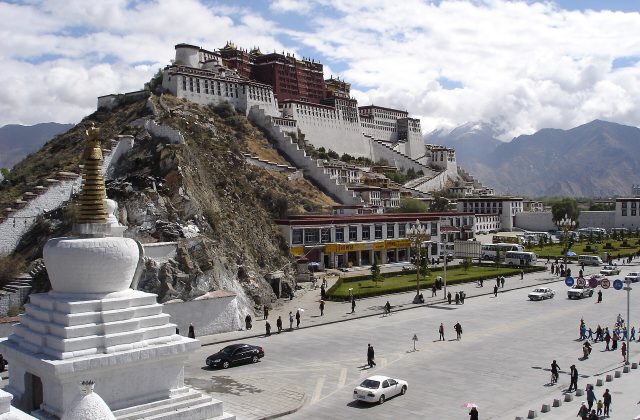
The queue to touch the Jowo moves slowly; follow the flow clockwise and do not overtake. Climb to the roof for gilded roof ornaments and a view across the square to the Potala Palace, about 1 km to the west. The temple was attacked during the Cultural Revolution in 1966 and restored between 1972 and 1980, and in 2000 it was added to the UNESCO listing of the Potala Palace as part of the Historic Ensemble of Lhasa. Photography is not allowed inside the chapels; ask your guide where it is permitted. Carry small notes if you wish to leave an offering, keep your voice low, and never point your feet at an altar. Afterwards, walk the Barkhor, the circuit of lanes around the temple, clockwise with the pilgrims. It takes about 20 minutes and passes shops selling prayer flags, incense and butter.
Mornings at the Jokhang belong to pilgrims, and the main temple is generally opened to tourists from late morning into the afternoon; your guide will know the current hours, which change from season to season. The best plan is to walk the Barkhor in the early morning, when it is full of people turning prayer wheels and murmuring mantras, and then go inside once the gate opens to visitors. The most comfortable months in Lhasa are April to June and September to October, with clear skies and mild days at an altitude of about 3,650 m.
Spend at least a day acclimatising before a long temple visit. The temple is at its most intense during Losar, the Tibetan new year, and the Monlam prayer festival that follows, and during Saga Dawa, the fourth Tibetan month, when pilgrim numbers peak; permits for foreigners are sometimes suspended around sensitive dates, so check with your agency. Allow two to three hours for the temple, the roof and the Barkhor, and combine it with the Potala Palace or the Ramoche Temple.
2 km away
Visiting the Potala is shaped by the rules for foreign travel in Tibet rather than by the ticket itself.
1 ticket or tour
392 km away
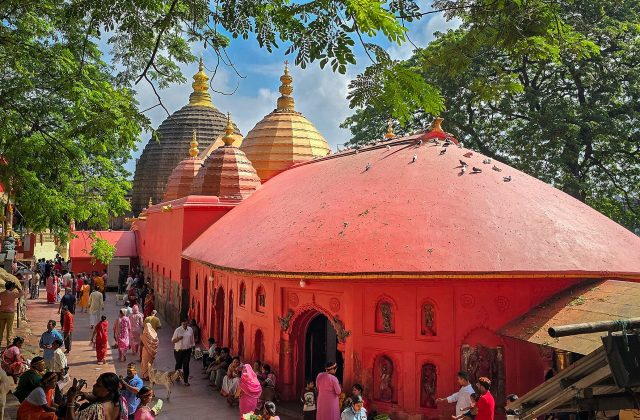
Entry to the Kamakhya complex is free, and anyone may walk around the courtyards and the smaller shrines.
1 ticket or tour
Yes. GetYourGuide sells tickets and guided tours whose route includes Jokhang Temple; live prices are shown on this page.
Allow two to three hours for the temple, the roof and the Barkhor, and combine it with the Potala Palace or the Ramoche Temple.
Photography is not allowed inside the chapels; ask your guide where it is permitted.
Entry to Jokhang Temple: About CNY 85
Modest dress; remove hats inside the chapels and walk clockwise around the temple and its shrines.
Jokhang Temple was established in 639.
Jokhang Temple is in Lhasa, China. The map on this page shows the exact spot.
How to visit a Buddhist temple: shoes, dress and manners — Shoes, dress, feet, photos and offerings in Buddhist temples, from the wats of Thailand and Sri Lanka to the Zen temples of Japan.
Lhasa, China
Visiting the Potala is shaped by the rules for foreign travel in Tibet rather than by the ticket itself.
1 ticket or tour