
Jokhang Temple
Lhasa, China
No ticket for the Jokhang alone is sold online, and in practice no foreign visitor arrives on their own.
No online ticket
Buddhist Temple · Lhasa · China
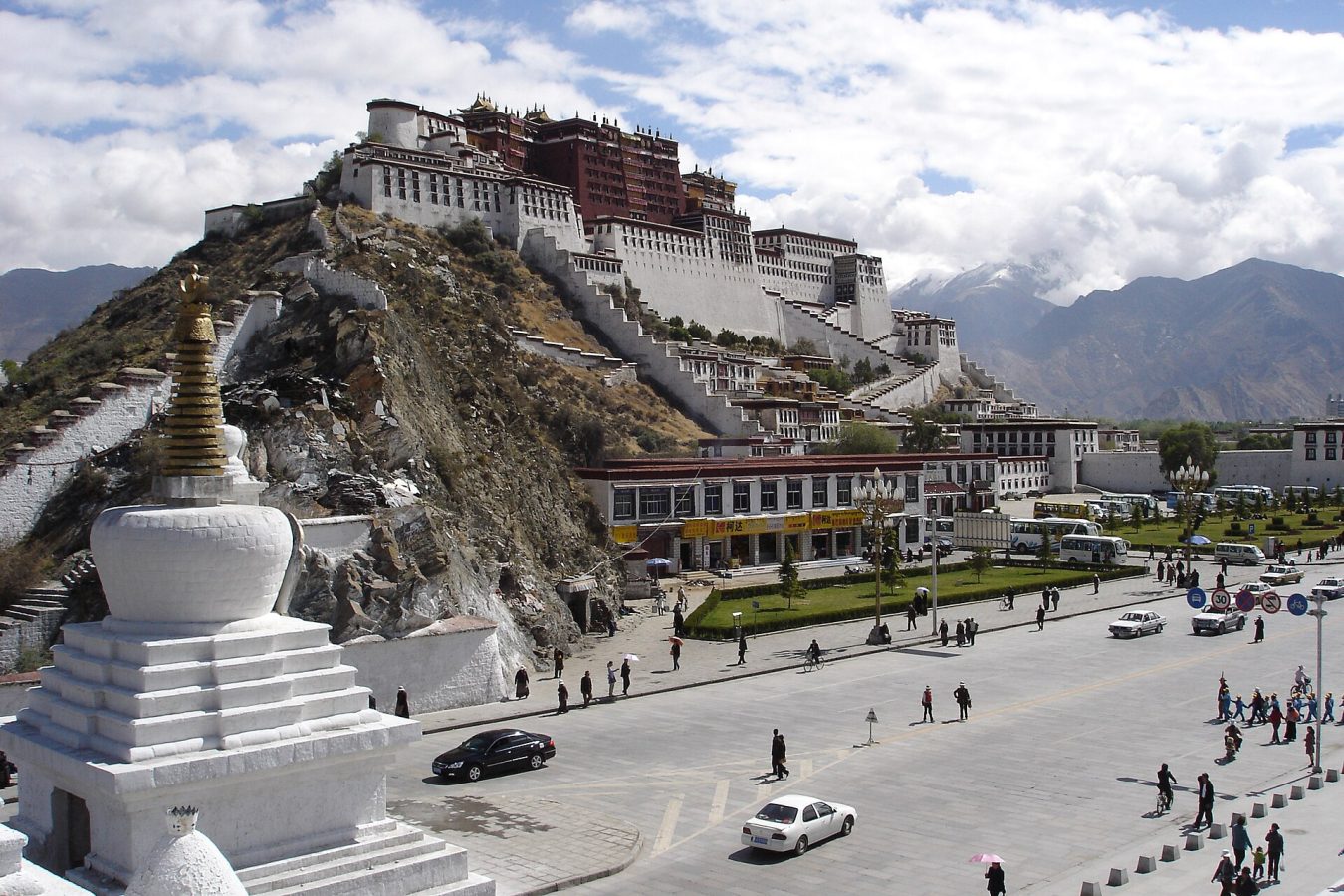
Photo: Ondřej Žváček, CC BY 2.5
Visiting the Potala is shaped by the rules for foreign travel in Tibet rather than by the ticket itself. Visitors from outside China need a Tibet Travel Permit, which is issued only through a licensed agency, and they must be accompanied by a registered guide for sightseeing in Lhasa. In practice that means almost everyone arrives on a pre-booked package, and the Potala ticket is reserved by the agency on your behalf, often days in advance, because the number of visitors allowed in each day is capped and entry is by timed slot. The packages on offer range from short private itineraries of three or four days in Lhasa to longer overland tours that continue to Gyantse, Shigatse and Everest Base Camp.
A typical Lhasa programme includes the permit paperwork, airport or railway station transfers, a private guide and driver, hotel nights and entry tickets to the Potala, the Jokhang and the big monasteries of Sera and Drepung; meals, tips and flights are usually extra. The sensible choice for a first visit is a private tour of at least four days, which leaves time to acclimatise before the stairs of the palace. Compare what is included carefully, especially whether the Potala ticket is guaranteed for a specific day, and book well ahead for the summer months, when slots sell out quickly.
Live dates and prices from GetYourGuide. Free cancellation on most tickets.
The palace climbs the Red Hill above central Lhasa in a wall of white and dark red, thirteen storeys and about 117 m high, at an altitude of roughly 3,700 m. A palace of the Tibetan king Songtsen Gampo stood here in the 7th century, and two small chapels in the present building, including a cave where he is said to have meditated, are believed to preserve parts of it. What you see today was begun by the Fifth Dalai Lama in 1645; the White Palace, with its living quarters and offices of government, was finished first, and the Red Palace, the religious heart, was added around 1690. From then until 1959 it was the winter residence of the Dalai Lamas, and it is now run as a museum. The visit follows a fixed one-way route.
You climb the long zigzag stairs on the south face, enter the White Palace to see the private apartments, then pass into the Red Palace, a maze of dim chapels lit by butter lamps and crowded with statues, murals and thangkas. The high point is the series of funeral stupas of past Dalai Lamas, the largest that of the Fifth, covered in gold and jewels. Time inside is limited to about an hour, so let the guide set the pace. Move clockwise, walk quietly, take off your hat in the chapels and do not photograph inside. Pilgrims may be making offerings or prostrating, so give them room. Climb slowly because of the altitude. The palace is in the centre of Lhasa, a short walk from the Barkhor and Jokhang area.
The palace opens in the morning and closes in the late afternoon, and each ticket carries an entry time that you must keep; the agency will tell you yours. Morning slots are generally the best, with softer light on the stairs and fewer groups inside. May, June, September and October are the most comfortable months, with clear skies and mild days; July and August bring the summer rains and the peak crowds of domestic travellers. Winter is cold but sunny and much quieter, and tickets are cheaper.
Tibetan festivals add colour: Saga Dawa in late spring brings pilgrims circling the palace on the outer kora, and the Shoton festival in late summer sees huge thangkas unveiled at Drepung. Note that foreign travel permits are sometimes suspended for weeks around sensitive dates, often in March. Allow two to three hours including the climb and the walk around the outside. For the classic view, climb Chakpori hill opposite in the evening, and combine the palace with the Jokhang, the Barkhor and the Norbulingka summer palace over your first two days in Lhasa.
Yes. GetYourGuide lists one ticket or tour for Potala Palace, with live dates and prices and free cancellation on most of them.
Allow two to three hours including the climb and the walk around the outside.
Entry to Potala Palace: CNY 200 peak season, CNY 100 winter
Modest clothing; hats off inside the chapels and no photography indoors.
Potala Palace was established in 637.
Potala Palace is in Lhasa, China. The map on this page shows the exact spot.
How to visit a Buddhist temple: shoes, dress and manners — Shoes, dress, feet, photos and offerings in Buddhist temples, from the wats of Thailand and Sri Lanka to the Zen temples of Japan.
Lhasa, China
No ticket for the Jokhang alone is sold online, and in practice no foreign visitor arrives on their own.
No online ticket