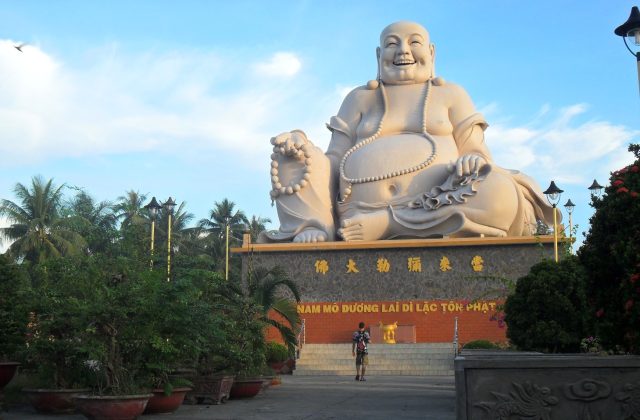
Cao Dai Temple, Ho Chi Minh City
5 km away
This city temple of the Cao Dai faith is a working place of worship rather than a ticketed attraction, so entry is free…
16 tickets & tours
Buddhist Temple · Ho Chi Minh City · Vietnam
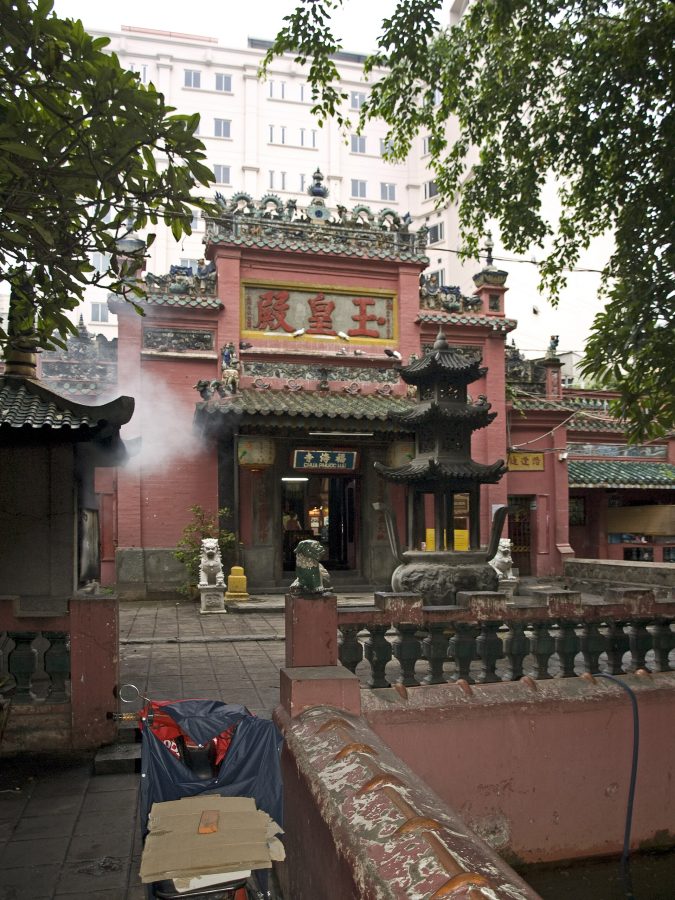
Photo: Ymblanter, CC BY-SA 4.0
There is nothing to book for the Jade Emperor Pagoda itself. No ticket for the temple alone is sold online, and none is needed: the gate on Mai Thi Luu Street stands open through the day, entry is free, and the only money that changes hands is a donation dropped into a box or spent on a bundle of incense sticks from the stall by the door. Most visitors come in one of three ways. Independent travellers walk or take a short taxi or ride-hailing motorbike from the centre of District 1; the pagoda sits in the Da Kao quarter, roughly 2 km north of the Saigon Notre-Dame Cathedral and the old post office, so it fits easily into a morning on foot.
Others arrive on a half-day city tour by minibus or on the back of a scooter, where the pagoda is one stop among the cathedral, the post office, the War Remnants Museum and Ben Thanh Market. A third group comes with a food or night tour that passes through the neighbourhood. If you are short of time, a guided city tour is the sensible option, because a guide can decode the crowded altars, which carry far more meaning than the small labels explain. If you have a free morning, go on your own: the building is compact, and an unhurried hour costs nothing. The page lists any GetYourGuide tours whose route includes the pagoda.
Live prices from GetYourGuide for tickets and tours that include this temple. Free cancellation on most of them.
The pagoda was founded in the first decade of the 20th century by a Cantonese merchant, Liu Daoyuan, for the Chinese community of Saigon, and it was dedicated to the Jade Emperor, the supreme ruler of heaven in Taoist belief. Since 1984 it has been run as a Buddhist temple under the name Phuoc Hai Tu, but the mixture of Taoist, Buddhist and folk deities inside is unchanged, which is what makes it so absorbing. You enter through a small courtyard with a pond full of turtles, which worshippers release to earn merit. Beyond, the low main building is dark, heavy with incense smoke and crowded with painted wood and papier-mache figures. In the central hall the Jade Emperor sits in robes, flanked by his guardians and by the four great generals.
Look for the side room dedicated to the City God, where a series of carved wooden panels shows the punishments of the ten courts of hell in grim detail, and for the chamber of Kim Hoa, the goddess of fertility, surrounded by twelve women who each care for a different stage of childhood. Women hoping for a child leave offerings here, and the room is often busy. Upstairs, a small shrine to Quan Am, the goddess of mercy, looks over the roofs. The building is a working place of worship rather than a museum, so move slowly, do not step in front of people praying and avoid flash photography at the altars. Small sticks of incense are sold at the door if you wish to make an offering. The temple drew international attention in 2016, when the then US president Barack Obama visited during a state trip.
The pagoda is open every day from early morning until about 6 pm, with a pause at lunchtime on some days; check locally if you plan to arrive late in the afternoon. Early morning, before 9 am, is the quietest and coolest time, and the light falling through the smoke inside is at its best. Ho Chi Minh City has a dry season from about December to April, which is the most comfortable time for walking between sights; from May to November short, heavy afternoon showers are common, so plan your outdoor walking for the morning.
The temple is at its busiest on the first and fifteenth days of each lunar month and around Tet, the lunar new year, especially on the ninth day of the first month, traditionally celebrated as the Jade Emperor's birthday, when crowds of worshippers fill the halls. Allow 45 minutes to an hour. Combine it with the Tan Dinh Church and the market of the same name a short walk away, or with the cathedral, the post office and the History Museum in the botanical garden.
5 km away
This city temple of the Cao Dai faith is a working place of worship rather than a ticketed attraction, so entry is free…
16 tickets & tours
59 km away
Vinh Trang is a working Buddhist pagoda on the edge of My Tho, the gateway town of the Mekong Delta, and there is no…
2 tickets & tours
209 km away
Phnom Chisor has no ticket to book online. Foreign visitors pay a small fee at the foot of the hill or at the top, and…
2 tickets & tours
Yes. GetYourGuide sells tickets and guided tours whose route includes Jade Emperor Pagoda (Chua Ngoc Hoang); live prices are shown on this page.
The pagoda is open every day from early morning until about 6 pm, with a pause at lunchtime on some days; check locally if you plan to arrive late in the afternoon.
Allow 45 minutes to an hour.
Early morning, before 9 am, is the quietest and coolest time, and the light falling through the smoke inside is at its best.
Entry to Jade Emperor Pagoda (Chua Ngoc Hoang): Free; donations welcome
Shoulders and knees covered; speak quietly and keep clear of worshippers lighting incense.
Jade Emperor Pagoda (Chua Ngoc Hoang) is in Ho Chi Minh City, Vietnam. The map on this page shows the exact spot.
How to visit a Buddhist temple: shoes, dress and manners — Shoes, dress, feet, photos and offerings in Buddhist temples, from the wats of Thailand and Sri Lanka to the Zen temples of Japan.
Ho Chi Minh City, Vietnam
This city temple of the Cao Dai faith is a working place of worship rather than a ticketed attraction, so entry is free…
16 tickets & tours
Ho Chi Minh City, Vietnam
The memorial temple stands inside the Ben Duoc section of the Cu Chi tunnels, about 70 km north-west of central Ho Chi…
No online ticket
Ho Chi Minh City, Vietnam
There is nothing to buy in advance for the Thien Hau Temple: the gate on Nguyen Trai Street is open to anyone during…
No online ticket