Buddhist Temple · My Tho · Vietnam
Vinh Trang Pagoda
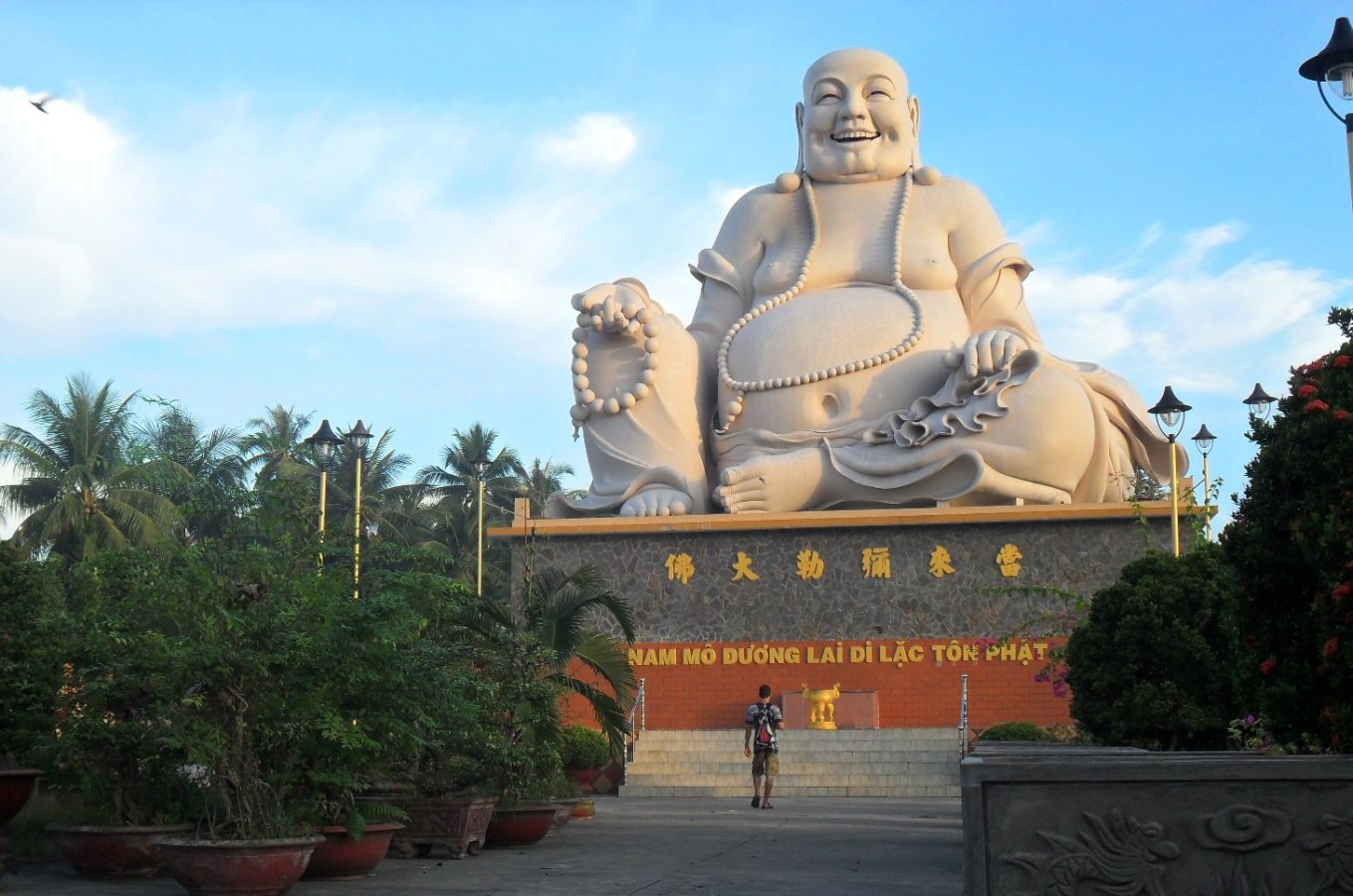
Photo: Milei.vencel, Hungary, CC BY-SA 3.0
- Type
- Buddhist Temple
- Religion
- Mahayana Buddhism
- Area
- 2 ha
- Founded
- 1850 (completed 1850; rebuilt after a storm in 1907)
- Entry
- Free; donations welcome
- Dress code
- Shoulders and knees covered; shoes off before entering the main hall.
- Tickets
- 2 tickets and tours
Vinh Trang Pagoda tickets and tours: which one to book
Vinh Trang is a working Buddhist pagoda on the edge of My Tho, the gateway town of the Mekong Delta, and there is no ticket to buy: entry to the grounds and halls is free, with donation boxes inside. Almost every foreign visitor arrives as part of a day trip from Ho Chi Minh City, about 70 km and two hours away by road, and the pagoda is usually the first stop before the boats. Two types of trip are sold online. The first is a private day tour with car, driver and guide, which collects you from your hotel, visits the pagoda and then continues to the river for a boat ride among the islands between My Tho and Ben Tre.
The second is a small-group version of the same day, capped at around a dozen people, which is cheaper and less rushed than the big coach tours. Both normally include transport, guide, boat trips, a fruit tasting and lunch; drinks and tips are extra. The usual delta programme after the pagoda involves a motorboat across the Tien River, a ride in a small rowing boat through the palm-lined canals, a visit to a coconut-candy workshop and some traditional music. If you mainly want time at Vinh Trang itself, a private tour is better, as you can ask the guide to linger. Travellers already in My Tho can reach the pagoda by taxi or motorbike in a few minutes from the riverfront.
2 tickets and tours for Vinh Trang Pagoda
Live dates and prices from GetYourGuide. Free cancellation on most tickets.
Visiting Vinh Trang Pagoda: what to see and how to behave
The pagoda was founded in the middle of the nineteenth century on land given by a local official and completed around 1850. It was badly damaged in the fighting when the French took the south in the 1860s, rebuilt, wrecked again by a storm in 1904 and rebuilt once more, which is why most of what you see dates from the early twentieth century. It occupies about 2 hectares of gardens and orchards beside a canal. The front of the main building is the most striking thing about it: a mix of Vietnamese, Chinese, Khmer and European ideas, with arched colonnades and pillars covered in mosaics of broken porcelain and coloured tiles. The great triple gate at the entrance was built in 1933 by craftsmen brought from Hue, and the tiled decoration on its upper storey rewards a close look. Inside the main hall, dark wooden columns carved with dragons frame the altars.
Look for the bronze statues of Amitabha and his attendant bodhisattva, the oldest images in the pagoda, and the set of eighteen carved wooden arhats, each around 80 cm tall, made by southern craftsmen in 1907. The garden behind holds three huge white statues added in recent decades, a standing Amitabha, a laughing Maitreya and a reclining Buddha, which dwarf the old buildings. Monks still live and study here, so keep voices low and do not walk in front of anyone praying. Shoes come off before the main hall, and photography is usually fine except during ceremonies. The pagoda is on the eastern edge of My Tho, a few minutes by car from the town centre and the boat piers.
Vinh Trang Pagoda: opening hours, ceremonies and the best time to go
The pagoda is open every day from early morning to late afternoon, with a pause around midday when the monks eat and rest; there are no fixed hours posted for visitors, so aim for the morning or mid-afternoon. Day tours from Ho Chi Minh City usually arrive between nine and ten, so the halls are at their quietest before or after that wave. Early morning is cooler and you may hear chanting. The dry season, from December to April, brings the most comfortable weather in the delta;
the rainy season from May to November means short heavy downpours, usually in the afternoon, but the orchards and canals are greener and the fruit is at its best in midsummer. Buddhist festivals bring crowds of worshippers and make for a lively visit: the full moon of the first lunar month, Buddha's birthday in the fourth or fifth lunar month, and Vu Lan, the festival for parents, in the seventh. Tet, the lunar new year, is the busiest time of all. Allow forty-five minutes to an hour. Combine the pagoda with a boat trip to the islands of the Tien River, the floating market further south at Cai Be and an overnight stay in the delta if time allows.
More tours and activities in My Tho
Before you go
Can I book a temple tour or ticket in Vinh Trang Pagoda online?
Yes. GetYourGuide lists 2 tickets and tours for Vinh Trang Pagoda, with live dates and prices and free cancellation on most of them.
When is Vinh Trang Pagoda open?
The pagoda is open every day from early morning to late afternoon, with a pause around midday when the monks eat and rest; there are no fixed hours posted for visitors, so aim for the morning or mid-afternoon.
How many days do you need in Vinh Trang Pagoda?
Allow forty-five minutes to an hour.
When is the best time to visit Vinh Trang Pagoda?
Early morning is cooler and you may hear chanting.
How much is the entrance fee for Vinh Trang Pagoda?
Entry to Vinh Trang Pagoda: Free; donations welcome
What should I wear to visit Vinh Trang Pagoda?
Shoulders and knees covered; shoes off before entering the main hall.
How big is Vinh Trang Pagoda?
Vinh Trang Pagoda covers 2 ha.
When was Vinh Trang Pagoda founded?
Vinh Trang Pagoda was established in 1850.
Where is Vinh Trang Pagoda?
Vinh Trang Pagoda is in My Tho, Vietnam. The map on this page shows the exact spot.
How to visit a Buddhist temple: shoes, dress and manners — Shoes, dress, feet, photos and offerings in Buddhist temples, from the wats of Thailand and Sri Lanka to the Zen temples of Japan.