Sultan Ahmed Mosque (Blue Mosque)
Istanbul, Turkey
Entry to the Sultan Ahmed Mosque is free and there is no ticket to buy, so anything sold online is really a guide, a…
34 tickets & tours

Photo: Arild Vågen, CC BY-SA 3.0
Since Hagia Sophia became a mosque again in 2020, the way you visit it has changed. Worshippers enter free to the prayer hall on the ground floor, while foreign visitors buy a ticket for a separate route through the entrance hall and up to the upper galleries, from which you look down into the main space. The ticket is sold at the site and online, and the queue at the entrance can be long, especially in the middle of the day. What is sold online falls into a few groups. Fast-track tickets save the queue for the ticket, though not always the security check. Guided tours of the building last about an hour and are worth considering here more than at most mosques, because the story of the building is complex and the signage is sparse.
Walking tours of the old city combine Hagia Sophia with the Blue Mosque, the Hippodrome and the Basilica Cistern, and longer days add Topkapi Palace or the Grand Bazaar. There are also boat trips on the Bosphorus that start with the old city, and a separate history museum nearby with immersive displays on the building, which is a different ticket from Hagia Sophia itself. A small-group guided tour of the Sultanahmet area is the best choice on a first visit. Check whether the entry ticket is included, as many walking tours leave it as an extra or explain the building from outside.
Live dates and prices from GetYourGuide. Free cancellation on most tickets.
Hagia Sophia was built for the Byzantine emperor Justinian between 532 and 537 by the mathematicians Anthemius of Tralles and Isidore of Miletus, replacing an earlier church burned in the Nika riots. Its dome, about 55 m above the floor and carried on pendentives over a vast square space, made it the largest interior in the world for centuries. It was the cathedral of Constantinople for over 900 years, a mosque after the Ottoman conquest of 1453, a museum from 1935 and has been a mosque again since 2020. The building shows all its lives at once. The Ottomans added the four minarets, the buttresses, partly by the architect Sinan, the mihrab set slightly askew towards Mecca, the marble minbar and the eight huge wooden roundels with the names of God, Muhammad, the first caliphs and the Prophet's grandsons in gold calligraphy. From the upper galleries, the highlights are the Byzantine mosaics that survived beneath later plaster.
Look for the Deesis in the south gallery, a thirteenth-century panel of Christ between the Virgin and John the Baptist, with unusually tender faces, and nearby the imperial portraits of Empress Zoe and of John II Komnenos with Empress Irene offering gifts to Christ. On the way out, the vestibule mosaic shows Constantine and Justinian presenting the city and the church to the Virgin. Some mosaics on the ground floor are covered or screened during prayers. Speak quietly and do not photograph people at prayer. The T1 tram stops at Sultanahmet, a few minutes away.
The visitor route is open daily from morning until early evening, but it closes to tourists around each of the five daily prayers and for longer on Fridays around the midday prayer, so plan around the prayer times. Arrive before the morning opening or come in the last two hours of the day, when the cruise and coach groups have gone. Midday queues are the longest, and the Friday closure catches many people out. Spring and autumn, from April to June and September to October, are the pleasantest seasons in Istanbul;
summer is hot and very busy, and winter is quieter but often wet. During Ramadan, and on the two Eids, the building is busier with worshippers, and the evening prayers draw large crowds; tourist hours may be shortened. Allow about an hour inside, more with a guide. Combine Hagia Sophia with the Blue Mosque opposite, the Basilica Cistern across the road and Topkapi Palace behind it, which together make a full day.
Yes. GetYourGuide lists 78 tickets and tours for Hagia Sophia, with live dates and prices and free cancellation on most of them.
The visitor route is open daily from morning until early evening, but it closes to tourists around each of the five daily prayers and for longer on Fridays around the midday prayer, so plan around the prayer times.
Allow about an hour inside, more with a guide.
Entry to Hagia Sophia: EUR 25 for foreign visitors
Women cover hair, arms and legs; men wear long trousers. Scarves are available at the door.
Hagia Sophia was established in 537.
Hagia Sophia is in Istanbul, Turkey. The map on this page shows the exact spot.
How to visit a mosque: dress, timing and manners — What to wear, when to go and how to behave in a mosque as a non-Muslim, and which mosques do not admit visitors at all.
Istanbul, Turkey
Entry to the Sultan Ahmed Mosque is free and there is no ticket to buy, so anything sold online is really a guide, a…
34 tickets & tours
Istanbul, Turkey
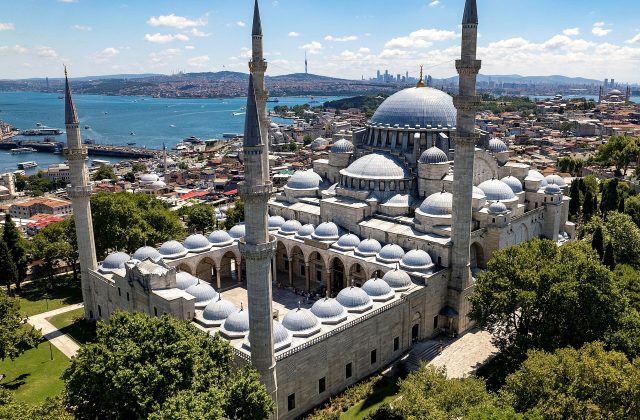
Entry to the Suleymaniye Mosque costs nothing and needs no ticket, so anything sold online for it is really a…
5 tickets & tours
Istanbul, Turkey
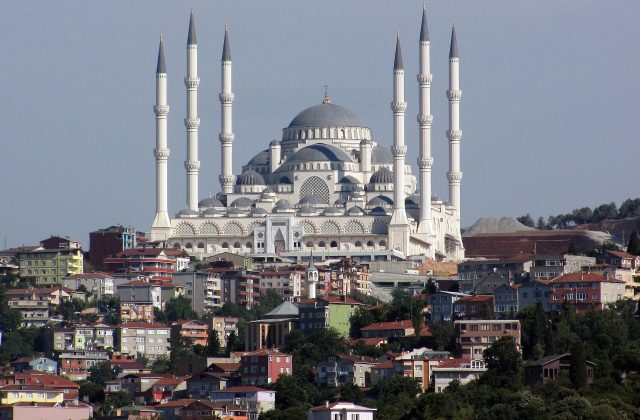
The Grand Çamlıca Mosque is a working place of worship and costs nothing to enter.
3 tickets & tours
Istanbul, Turkey
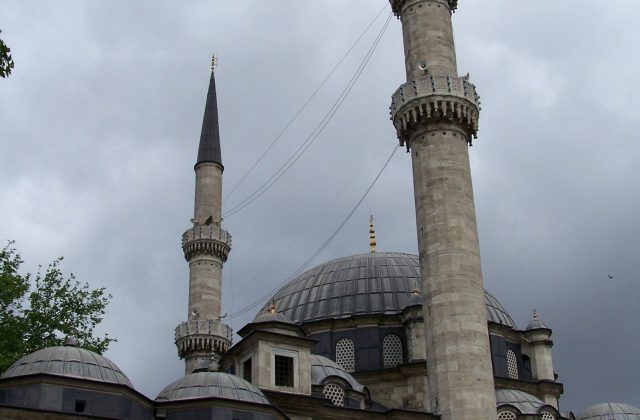
Entry to the Eyup Sultan Mosque and to the tomb of Abu Ayyub al-Ansari is free, and no ticket is needed or sold.
1 ticket or tour
Istanbul, Turkey
There is nothing to book for the Mihrimah Sultan Mosque in Üsküdar, and no ticket for it alone is sold online.
No online ticket
Istanbul, Turkey
No ticket for Neve Shalom is sold through the booking platforms, and you cannot simply walk in.
No online ticket