Hagia Sophia
Istanbul, Turkey
Since Hagia Sophia became a mosque again in 2020, the way you visit it has changed.
78 tickets & tours
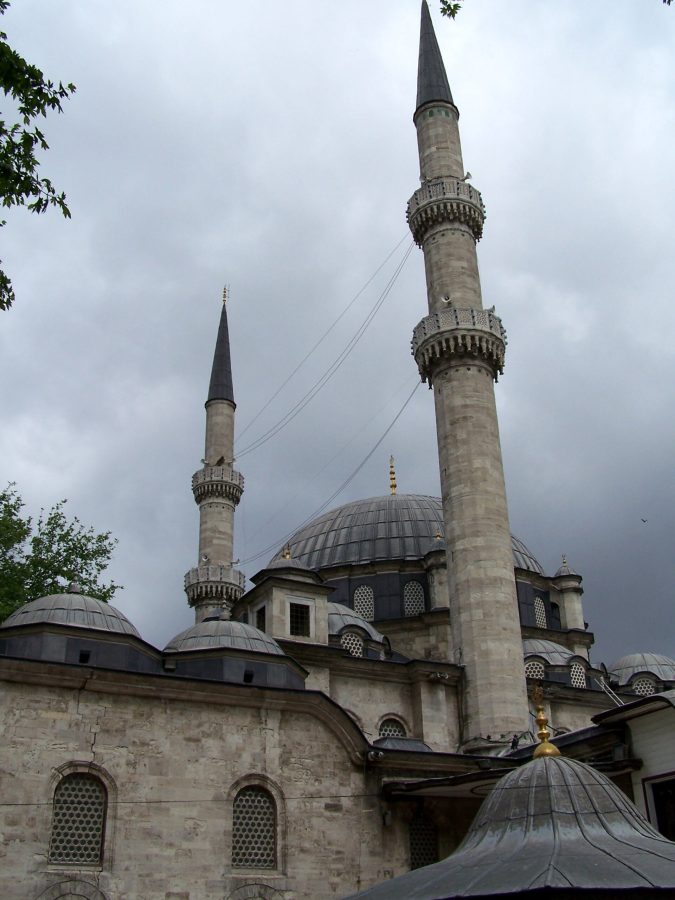
Photo: User:Darwinek, CC BY-SA 3.0
Entry to the Eyup Sultan Mosque and to the tomb of Abu Ayyub al-Ansari is free, and no ticket is needed or sold. You simply walk in through the courtyard outside prayer times, and scarves and wraps are usually available at the door for visitors who arrive without suitable clothing. The question is not whether to buy entry but how much context you want, because the district of Eyup is a pilgrimage quarter that is easy to walk past without understanding. The bookable option is a guided walk that combines the mosque with the wider Eyup district: the tombs of Ottoman viziers and royal women along the old processional road, the hillside cemetery and the viewpoint above the Golden Horn.
A guide explains the religious weight of the site, the ceremony in which new sultans were girded with a sword here, and the customs you will see, such as boys in costume before their circumcision. Such walks normally include the guide and sometimes a tea stop; the cable car up the hill and any ferry or taxi from the centre are usually paid separately. If you prefer to go independently, the trip is easy. Ferries run up the Golden Horn from Eminonu and Karakoy to the Eyup pier, and buses from the centre stop nearby; from the pier it is a short walk through the market streets to the mosque.
Live dates and prices from GetYourGuide. Free cancellation on most tickets.
The complex is entered through an outer courtyard shaded by large plane trees, with a fountain for ablutions and a constant movement of pilgrims, families and pigeons. On one side of an inner courtyard stands the prayer hall, on the other the tomb, or turbe, of Abu Ayyub al-Ansari, the standard-bearer and companion of the Prophet who is believed to have died during the Arab siege of Constantinople in the 670s. The tomb is the heart of the place: its outer wall and interior are covered with Iznik and later tiles, and pilgrims pray quietly at the silver-grilled window or inside the chamber. Inside the mosque itself, the bright, high domed interior is a fine example of late Ottoman Baroque taste. Mehmed II founded the first mosque here in 1458, five years after the conquest, when the grave was identified.
That building decayed and was largely pulled down under Selim III, and the present mosque was finished in 1800, keeping the two minarets from the early 18th century, one of which was rebuilt in 1822. Because of the saint's presence, Ottoman grandees chose to be buried nearby, and the streets around the mosque are lined with their tombs, including that of Sokollu Mehmed Pasha. Visitors are welcome outside the five daily prayers. Dress modestly, remove shoes before the prayer hall, keep away from the front rows where people are praying, and do not photograph worshippers at close range. The tomb is a place of devotion; enter quietly and move through without lingering.
The mosque is open daily from dawn until after the night prayer, but tourist visits are best avoided during the five prayer times, when the hall closes to sightseers for half an hour or so. Friday midday prayer draws very large congregations, and the whole quarter is crowded on Friday mornings and weekends; a weekday morning is the quietest time. During Ramadan the courtyards fill at sunset as families break their fast together, which is memorable to see but makes the mosque itself difficult to visit.
The two Eid holidays bring heavy crowds of pilgrims. Spring and autumn are the most pleasant seasons for the walk up through the cemetery. Allow about an hour for the mosque, the tomb and the market streets, and two to three hours if you add the climb or cable car to the Pierre Loti viewpoint and a tea overlooking the Golden Horn. The visit pairs well with a ferry ride along the Golden Horn and a stop at Balat and Fener on the way back towards the old city.
Yes. GetYourGuide lists one ticket or tour for Eyup Sultan Mosque, with live dates and prices and free cancellation on most of them.
You simply walk in through the courtyard outside prayer times, and scarves and wraps are usually available at the door for visitors who arrive without suitable clothing.
Allow about an hour for the mosque, the tomb and the market streets, and two to three hours if you add the climb or cable car to the Pierre Loti viewpoint and a tea overlooking the Golden Horn.
Friday midday prayer draws very large congregations, and the whole quarter is crowded on Friday mornings and weekends; a weekday morning is the quietest time.
Women cover hair, arms and legs; men wear long trousers; shoes off in the prayer hall.
Entry to Eyup Sultan Mosque: Free
Eyup Sultan Mosque was established in 1458.
Eyup Sultan Mosque is in Istanbul, Turkey. The map on this page shows the exact spot.
How to visit a mosque: dress, timing and manners — What to wear, when to go and how to behave in a mosque as a non-Muslim, and which mosques do not admit visitors at all.
Istanbul, Turkey
Since Hagia Sophia became a mosque again in 2020, the way you visit it has changed.
78 tickets & tours
Istanbul, Turkey
Entry to the Sultan Ahmed Mosque is free and there is no ticket to buy, so anything sold online is really a guide, a…
34 tickets & tours
Istanbul, Turkey
Entry to the Suleymaniye Mosque costs nothing and needs no ticket, so anything sold online for it is really a…
5 tickets & tours
Istanbul, Turkey
The Grand Çamlıca Mosque is a working place of worship and costs nothing to enter.
3 tickets & tours
Istanbul, Turkey
There is nothing to book for the Mihrimah Sultan Mosque in Üsküdar, and no ticket for it alone is sold online.
No online ticket
Istanbul, Turkey
No ticket for Neve Shalom is sold through the booking platforms, and you cannot simply walk in.
No online ticket