Galtaji (Monkey Temple)
4 km away
Entry to Galtaji is free, though a small fee is usually asked for cameras and phones used for photography, and priests…
17 tickets & tours
Hindu Temple · Jaipur · India
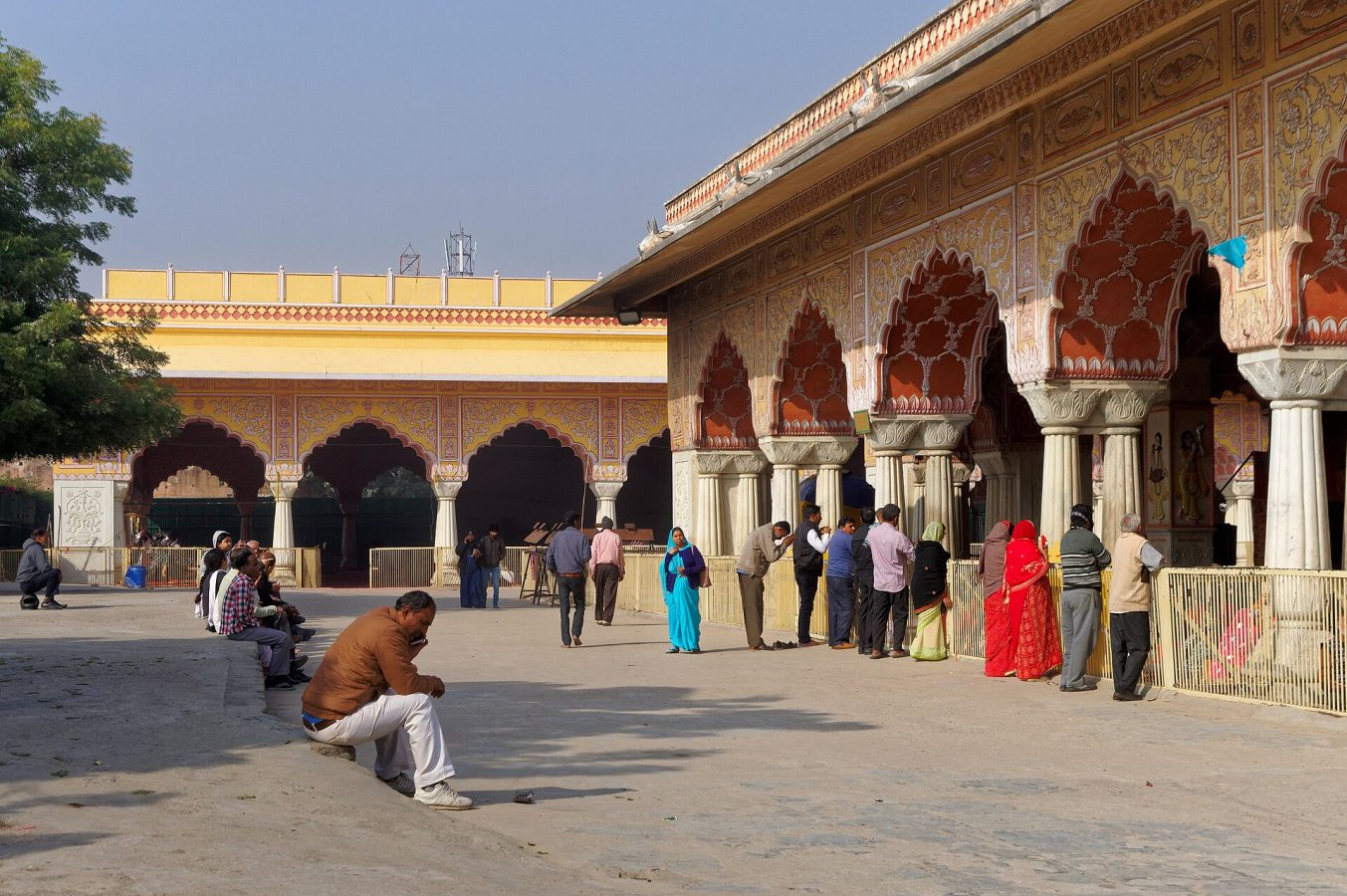
Photo: Jakub Hałun, CC BY-SA 4.0
There is no ticket to buy for the Govind Dev Ji Temple and nothing is sold online for it: this is a busy working temple and entry is free for everyone, Hindu or not. You leave your shoes at the deposit counters near the entrance, for a small tip, and join the crowd moving towards the shrine. Donations are welcome but never required, and flower and sweet offerings are sold by stalls outside if you wish to make one. Most visitors reach it on foot from the City Palace, since the temple lies within the palace grounds on the north side, in the old Jai Niwas garden, a few minutes' walk from the palace museum and Jantar Mantar.
Half-day and full-day sightseeing tours of Jaipur by car with a driver and guide often add a stop here between the palace and the Hawa Mahal, especially if you ask; the guide is useful for explaining the sequence of the daily rituals and the story of how the deity came from Vrindavan. Evening walking tours of the old city sometimes time their route for the dusk aarti, which is the liveliest moment of the day. The page lists any GetYourGuide tours whose route passes the temple. For most people, an independent visit timed to one of the darshan sessions is the best choice, combined with the City Palace ticket on the same morning.
Live prices from GetYourGuide for tickets and tours that include this temple. Free cancellation on most of them.
Govind Dev Ji is the most venerated Krishna temple in Jaipur and one of the city's busiest places of worship. The image of Krishna, worshipped here with Radha, was first enshrined in Vrindavan in the 16th century, where the followers of Chaitanya treated it as one of the principal deities of the town. When Vrindavan was attacked in 1670 the image was carried away for safety, and after decades of moves it was settled in Jaipur by Maharaja Jai Singh II, the founder of the city, in the early 18th century. The shrine was placed so that it lines up with the Chandra Mahal, allowing the ruler to see the deity from his palace windows. The building is closer to a palace pavilion than a towered North Indian temple: a long, pale hall with a flat roof leads to the sanctum, where the brightly dressed figures of Radha and Govind are revealed only at set times.
Between those moments a curtain is drawn, and the hall fills with devotees singing bhajans and waiting. When the curtain opens there is a surge of people, conch shells and bells, and the deities' clothing and jewellery change with each session and each season, which is part of the attraction for regular visitors. Behind the temple stretches the walled garden that once separated the palace from the city. Photography of the deities is usually not allowed, so keep the camera away during darshan. Expect crowds, pushing near the front and pickpockets on festival days. The temple is a short walk from the Tripolia Gate or the City Palace entrance, and auto-rickshaws drop off nearby.
The temple opens before dawn and closes late in the evening, but the inner sanctum is only revealed during seven darshan sessions spread through the day, from the early morning mangla aarti to the night-time shayan. The sanctum is closed in between, especially around midday, so check the posted timetable at the entrance or ask locally, as the times shift with the season. The morning mangla session and the evening sandhya aarti are the most atmospheric, with music and large crowds.
Mid-morning is calmer and fits well with a visit to the City Palace when it opens. October to March is the comfortable season in Jaipur; from April to June the heat is fierce. Janmashtami, the birthday of Krishna, draws enormous queues and is spectacular but very crowded, as are Holi, Diwali and Annakut. Allow 30 to 45 minutes, longer if you wait for the curtain to open. Combine it with the City Palace, Jantar Mantar and the Hawa Mahal, all within a short walk.
4 km away
Entry to Galtaji is free, though a small fee is usually asked for cameras and phones used for photography, and priests…
17 tickets & tours
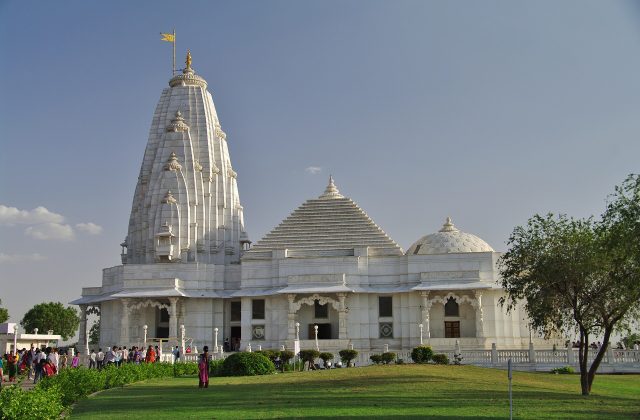
4 km away
Entry to Birla Mandir is free and there is no ticket to buy.
1 ticket or tour
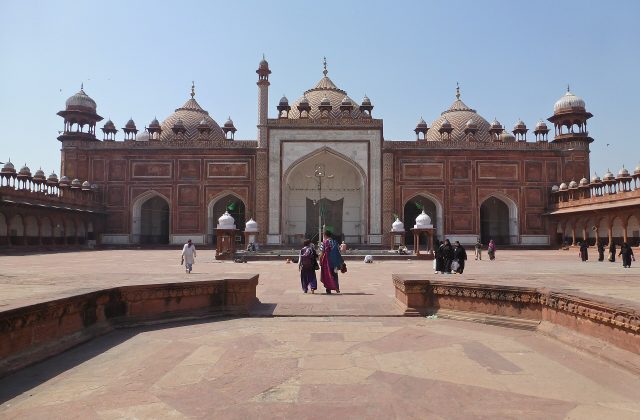
219 km away
Agra's Jama Masjid is an active congregational mosque and charges no entry: you walk up the steps, leave your…
1 ticket or tour
Yes. GetYourGuide sells tickets and guided tours whose route includes Govind Dev Ji Temple; live prices are shown on this page.
Allow 30 to 45 minutes, longer if you wait for the curtain to open.
Entry to Govind Dev Ji Temple: Free
Modest clothing covering shoulders and knees; shoes off before entering the temple grounds.
Govind Dev Ji Temple is in Jaipur, India. The map on this page shows the exact spot.
How to visit a Hindu temple: dress, shoes and access — What to wear, what to leave at the gate and where non-Hindus may go in Hindu temples in India, Nepal, Bali and South-East Asia.
Jaipur, India
Entry to Galtaji is free, though a small fee is usually asked for cameras and phones used for photography, and priests…
17 tickets & tours
Jaipur, India
Entry to Birla Mandir is free and there is no ticket to buy.
1 ticket or tour