Jama Masjid, Agra
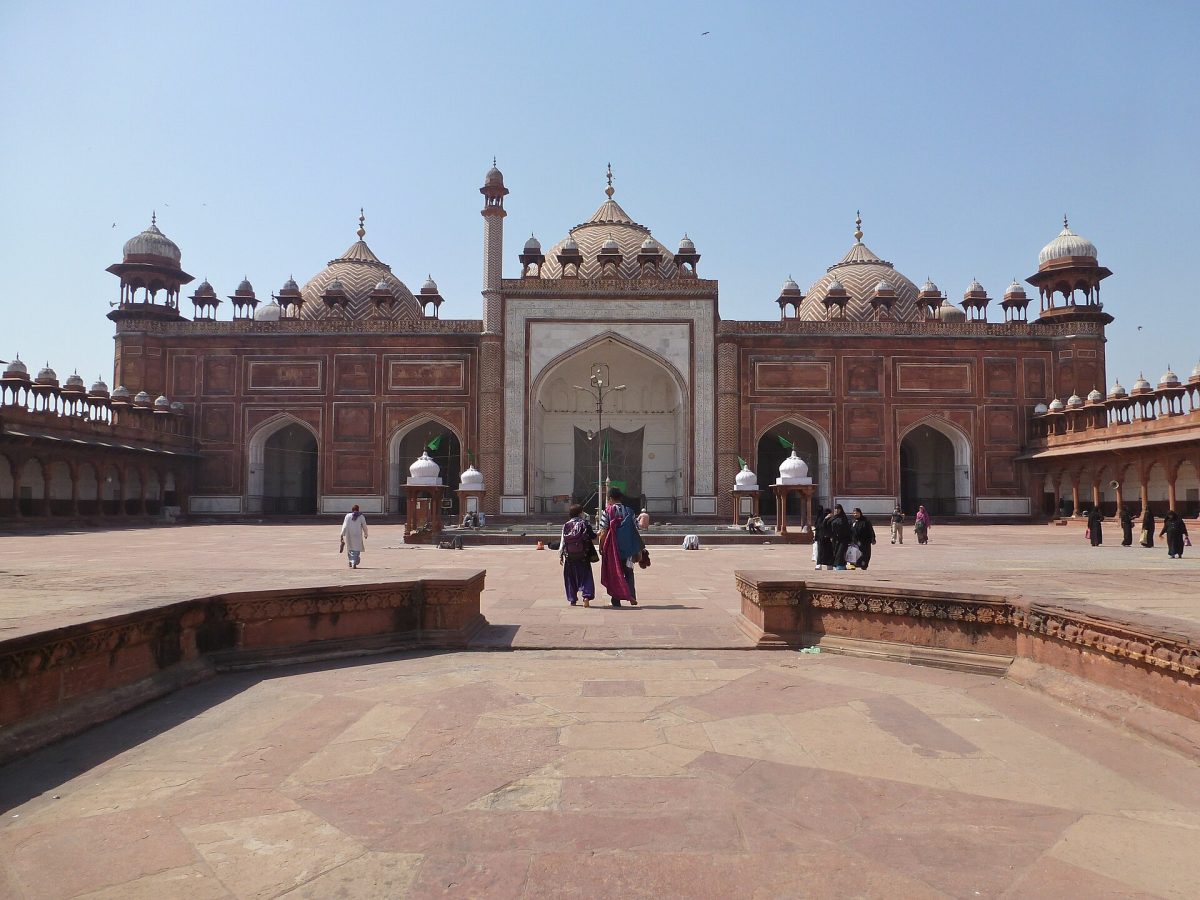
Photo: Jonathan Freundlich, CC BY-SA 3.0
- Type
- Mosque
- Religion
- Sunni Islam
- Founded
- 1648 (built 1643-1648)
- Entry
- Free
- Dress code
- Arms and legs covered; women cover their hair; shoes off at the gate.
- Tickets
- 1 ticket or tour
Jama Masjid, Agra tickets and tours: which one to book
Agra's Jama Masjid is an active congregational mosque and charges no entry: you walk up the steps, leave your shoes with the attendant, who will expect a small tip, and look around between prayers. There is no online ticket, no timed slot and no separate visitors' entrance. The mosque appears on the market mainly as the third stop of full-day or half-day Agra tours that start with the Taj Mahal and continue to Agra Fort. These packages usually include a licensed guide, a private car with driver and pick-up from your hotel or the railway station;
the Taj Mahal and fort tickets are sometimes bundled in and sometimes paid at the gates, so check what the price covers. The mosque is often fitted in quickly at the end of the day, so if it matters to you, ask the guide to allow time for it and for the bazaar behind it. Visiting independently is simple. The mosque stands just west of Agra Fort railway station, about ten minutes on foot from the fort's Amar Singh Gate, and auto-rickshaws and cycle-rickshaws drop visitors at the foot of the steps. A local guide can be hired at the fort if you want the history explained, but the building is easy to understand on your own.
Tickets and tours for Jama Masjid, Agra
Live dates and prices from GetYourGuide. Free cancellation on most tickets.
Visiting Jama Masjid, Agra: what to see and how to behave
The mosque was commissioned in 1637 by decree of Shah Jahan, the emperor who built the Taj Mahal, and was paid for by his eldest daughter, Princess Jahanara Begum. Work ran from 1643 to 1648. It was planned as the city's main congregational mosque, facing a large square in front of the fort's Delhi Gate, and it remains the principal mosque of Agra today. It stands on a raised platform above the old city. A broad stair leads to the courtyard, which is surrounded by arcades and has a pool for ablutions at its centre. On the west side is the prayer hall, with an arched central portal flanked by smaller arches and crowned by three domes. These domes are the mosque's signature: they are banded in zigzag stripes of red sandstone and white marble, a pattern rarely seen elsewhere in Mughal Agra.
Look also at the inlaid marble panels and inscriptions above the arches, and the slender kiosks along the roofline. The square in front of the mosque no longer exists. During the uprising of 1857 the British garrison in the fort demolished the main gateway and buildings on the east side to clear a field of fire, and later the square gave way to the railway station. As a result the mosque now meets the bazaar of Kinari and Johri lanes directly. Non-Muslims are welcome outside prayer times. Dress conservatively, women should bring a scarf, and do not walk in front of anyone who is praying. Photography is usually allowed in the courtyard; ask before photographing people.
Jama Masjid, Agra: opening hours, ceremonies and the best time to go
The mosque is open from early morning until after the evening prayer, but visitors should keep away during the five daily prayers and avoid Friday midday, when the courtyard fills for the main weekly service. Mid-morning or late afternoon on other days is ideal; the late afternoon light makes the red sandstone glow. October to March is the most comfortable time to be in Agra. April to June brings fierce heat and the stone becomes too hot to walk on barefoot at midday, while July to September is humid and rainy.
During Ramadan and on the two Eid festivals the mosque and the surrounding market are packed with worshippers and very lively, but tourist visits are best kept short or postponed. Allow 30 to 45 minutes for the mosque itself and another hour to wander the spice, fabric and wedding-goods lanes behind it. It combines naturally with Agra Fort next door and the Taj Mahal, about 3 km to the east.
More tours and activities in Agra
Before you go
Can I book a temple tour or ticket in Jama Masjid, Agra online?
Yes. GetYourGuide lists one ticket or tour for Jama Masjid, Agra, with live dates and prices and free cancellation on most of them.
When is Jama Masjid, Agra open?
Non-Muslims are welcome outside prayer times.
How many days do you need in Jama Masjid, Agra?
Allow 30 to 45 minutes for the mosque itself and another hour to wander the spice, fabric and wedding-goods lanes behind it.
How much is the entrance fee for Jama Masjid, Agra?
Entry to Jama Masjid, Agra: Free
What should I wear to visit Jama Masjid, Agra?
Arms and legs covered; women cover their hair; shoes off at the gate.
When was Jama Masjid, Agra founded?
Jama Masjid, Agra was established in 1648.
Where is Jama Masjid, Agra?
Jama Masjid, Agra is in Agra, India. The map on this page shows the exact spot.
How to visit a mosque: dress, timing and manners — What to wear, when to go and how to behave in a mosque as a non-Muslim, and which mosques do not admit visitors at all.