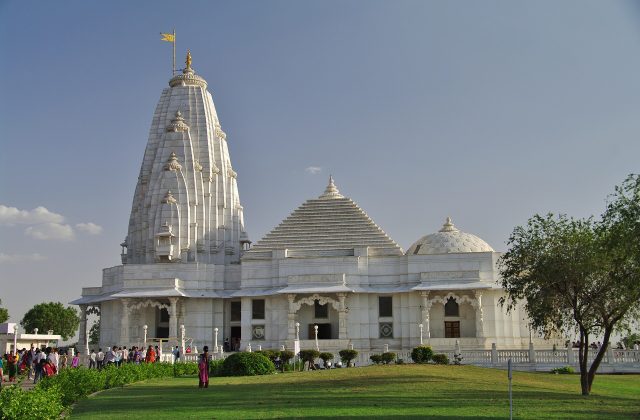
Birla Mandir (Lakshmi Narayan Temple), Jaipur
Jaipur, India
Entry to Birla Mandir is free and there is no ticket to buy.
1 ticket or tour
Hindu Temple · Jaipur · India
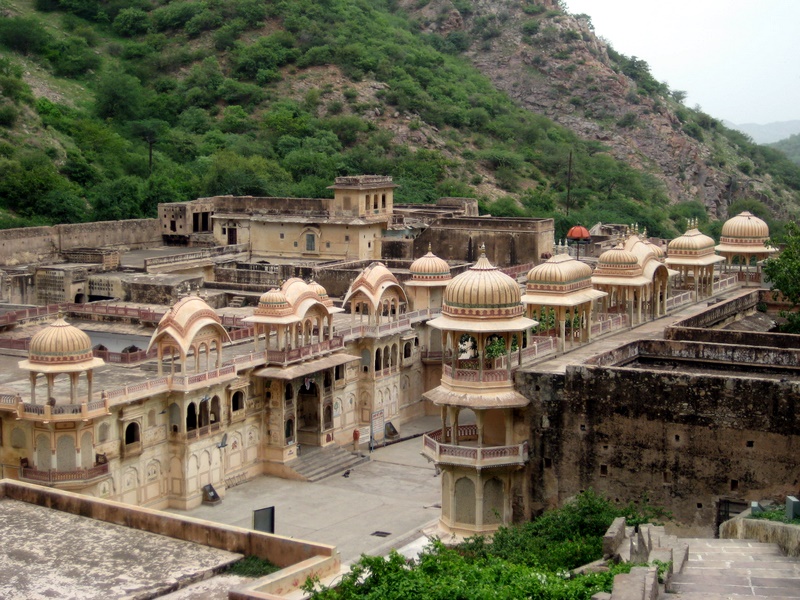
Photo: China Crisis, CC BY-SA 3.0
Entry to Galtaji is free, though a small fee is usually asked for cameras and phones used for photography, and priests and self-appointed guides may ask for donations at the shrines. The site sits in a gorge in the hills about 10 km east of central Jaipur, and the easiest way to get there independently is by auto-rickshaw or taxi, which can wait while you visit. You can also walk over the ridge from the Jaipur side via the Sun Temple, a climb of about half an hour. Almost all the tours that include Galtaji are city tours of Jaipur in which the temple is one stop.
The full-day versions cover Amber Fort, the City Palace, Jantar Mantar and Hawa Mahal and end at Galtaji, with a car, driver and guide included and monument tickets either included or paid on the day. Shorter afternoon and evening tours, by car or by tuk-tuk, are planned around sunset at the Sun Temple above the gorge, often followed by a drive through the lit-up old city. Private tours from Delhi make Galtaji part of a long day in Jaipur, and a few transfers between Delhi and Jaipur stop at it on the way. Some itineraries add a trip out to the stepwell at Abhaneri. If you only want Galtaji itself, an auto-rickshaw is far cheaper than any of these.
Live dates and prices from GetYourGuide. Free cancellation on most tickets.
Galtaji is a pilgrimage site of the Ramanandi order, a Vaishnava tradition devoted to Rama, and has been a retreat for ascetics since at least the 15th century; legend says the sage Galav meditated here. A natural spring rises high in the narrow cleft of the Aravalli hills and runs down through a chain of sacred tanks, called kunds, in which pilgrims bathe. The temples and pavilions, built mostly of pink sandstone with curved roofs, carved pillars and painted interiors, look more like a small palace than a single temple, and most of what you see dates from the 18th century, when Jaipur itself was built. From the parking area a paved lane leads into the gorge between the main temple buildings.
Look up at the frescoes on the facades and inside the halls, then follow the steps up past the largest bathing tanks, where men and women bathe in separate pools. Above them the path continues to the top of the ridge and the Surya Mandir, a small Sun Temple with a wide view west over Jaipur. The site is famous for its large troop of macaques, which is why tours call it the monkey temple. They are used to people and will snatch food, so keep bags closed and do not carry snacks openly. Remove shoes where signs ask, do not photograph bathers, and walk respectfully past ascetics at prayer. The temple is about 20 to 30 minutes by road from the old city.
The complex is open from sunrise to sunset every day. Evening aarti, the lamp ceremony at the main shrines, takes place around dusk and is worth staying for. The best time to visit is late afternoon: the heat has eased, the monkeys are active, the light warms the pink stone, and you can climb to the Sun Temple to watch the sun go down over Jaipur. Early morning is quieter and brings pilgrims coming to bathe. The most comfortable season is from October to March;
in May and June temperatures can pass 40 degrees, and after the monsoon rains in July and August the tanks are at their fullest. The biggest day is Makar Sankranti in mid January, when crowds of pilgrims come to bathe and kites fill the sky over Jaipur; Kartik Purnima in October or November also draws many bathers. Allow one to two hours. Combine the visit with an afternoon in the old city, or with Amber Fort earlier in the day.
Yes. GetYourGuide lists 17 tickets and tours for Galtaji (Monkey Temple), with live dates and prices and free cancellation on most of them.
The complex is open from sunrise to sunset every day.
Allow one to two hours.
The best time to visit is late afternoon: the heat has eased, the monkeys are active, the light warms the pink stone, and you can climb to the Sun Temple to watch the sun go down over Jaipur.
Shoulders and knees covered; shoes off at the shrines and beside the sacred tanks.
Entry to Galtaji (Monkey Temple): Free; small camera fee
Galtaji (Monkey Temple) is in Jaipur, India. The map on this page shows the exact spot.
How to visit a Hindu temple: dress, shoes and access — What to wear, what to leave at the gate and where non-Hindus may go in Hindu temples in India, Nepal, Bali and South-East Asia.
Jaipur, India
Entry to Birla Mandir is free and there is no ticket to buy.
1 ticket or tour
Jaipur, India
There is no ticket to buy for the Govind Dev Ji Temple and nothing is sold online for it: this is a busy working temple…
No online ticket
