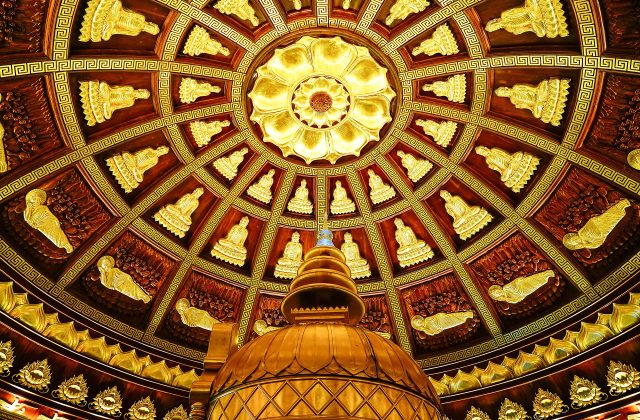
Bai Dinh Pagoda
Ninh Binh, Vietnam
Bai Dinh is a huge pilgrimage complex rather than a single building, and entry to the temple grounds is free.
3 tickets & tours
Buddhist Temple · Ninh Binh · Vietnam
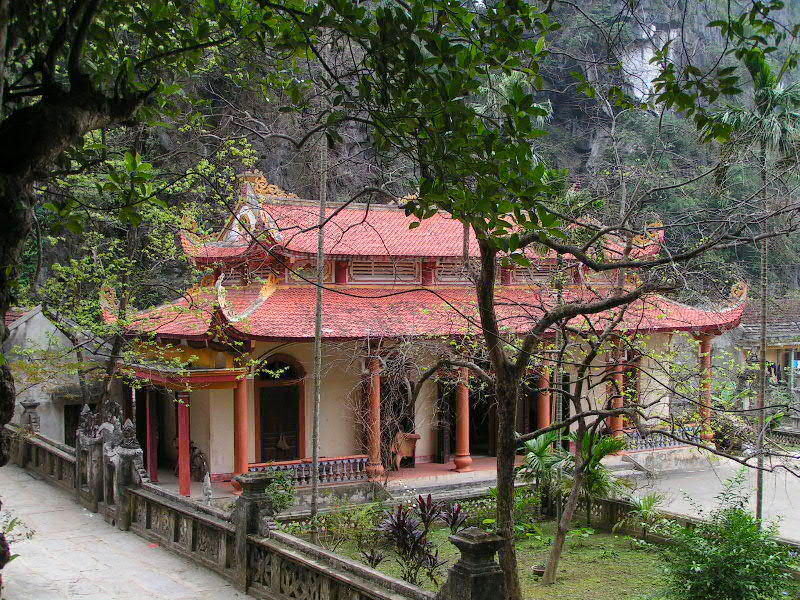
Photo: Tango7174, CC BY-SA 4.0
Bich Dong costs nothing to enter, so what is sold online is really a way of reaching it and of fitting it into a day among the limestone karsts of Ninh Binh. The tours that include it fall into a few clear types. The most common is a full day from Hanoi, about two hours away by road, which combines a sampan ride through the rice fields and caves of Tam Coc, the climb to the viewpoint at Hang Mua and a stop at the pagoda; lunch, an English-speaking guide, the boat ticket and air-conditioned transport are normally included, while drinks and tips are extra. If you are already staying in Ninh Binh or Tam Coc, there are shorter local trips that start from your hotel.
Some are guided bicycle rides along the village lanes, which suit the flat valley well; others add kayaking, a visit to the old royal capital at Hoa Lu, the bird sanctuary at Thung Nham or the stone cathedral at Phat Diem. A few private drivers also offer transfers with a stop here on the way to a waterfall or to the coast. The sensible choice depends on time. From Hanoi, a small-group day trip is the easiest option, but the pagoda often gets only half an hour. If you can spend a night in Tam Coc, rent a bicycle instead: the pagoda is a short ride from the boat wharf, and you can see it at your own pace without paying for a tour at all.
Live dates and prices from GetYourGuide. Free cancellation on most tickets.
Bich Dong is not one building but three small pagodas stacked up the side of a limestone outcrop, linked by stone steps and by a natural cave. The approach crosses a lotus pond by a stone bridge to a gate set against the cliff. From there the lower pagoda sits at the foot of the rock, the middle pagoda is built into the mouth of a grotto, and the upper pagoda perches higher still, with a view across the paddy fields and the karst towers of Tam Coc. The complex goes back to the early fifteenth century, when two monks are said to have founded a hermitage here, and it was enlarged in later centuries; the name, usually translated as Jade Grotto, was given by an eighteenth-century scholar-official who admired the setting.
What you see today is a mix of old stonework and later restoration, but the arrangement of shrine, cave and mountain has survived intact. Look for the bronze bell and the stone stele at the lower level, the altars lit by incense inside the cave of the middle pagoda, and the walk through the rock passage that leads up to the top shrine. A short path beyond continues to a further cave and viewpoint. This is an active Buddhist site: speak quietly, remove your hat in the halls, do not climb on altars or statues, and ask before photographing monks or worshippers. The steps are uneven and slippery after rain, so wear proper shoes. The pagoda lies about 2 km from the Tam Coc boat wharf, and most visitors arrive by bicycle, motorbike or with a tour van from Ninh Binh town, roughly 10 km away.
The pagoda is open daily from early morning until late afternoon; there is no fixed ticket office, so hours are informal. The best time is early in the day, before the coaches from Hanoi arrive around mid-morning, or after about 4 pm, when the light on the karsts softens and the groups have gone. Late May and early June are the favourite months for photographers, when the rice in the Tam Coc valley turns gold before the harvest.
Spring, from February to April, is mild but often grey and drizzly, and it is also the season of pilgrimage after the Lunar New Year, when the steps fill with local visitors. High summer is hot and humid, with heavy showers in the afternoon. The first and fifteenth days of each lunar month bring more worshippers and a busier atmosphere. Allow about an hour for the three levels and the cave. The pagoda combines naturally with a boat trip through Tam Coc, the viewpoint at Hang Mua and the temples of Hoa Lu, all within a short ride.
Yes. GetYourGuide lists 10 tickets and tours for Bich Dong Pagoda, with live dates and prices and free cancellation on most of them.
The pagoda is open daily from early morning until late afternoon; there is no fixed ticket office, so hours are informal.
Allow about an hour for the three levels and the cave.
The best time is early in the day, before the coaches from Hanoi arrive around mid-morning, or after about 4 pm, when the light on the karsts softens and the groups have gone.
Entry to Bich Dong Pagoda: Free; donations welcome
Shoulders and knees covered; hats off and voices low inside the shrine halls.
Bich Dong Pagoda was established in 1428.
Bich Dong Pagoda is in Ninh Binh, Vietnam. The map on this page shows the exact spot.
How to visit a Buddhist temple: shoes, dress and manners — Shoes, dress, feet, photos and offerings in Buddhist temples, from the wats of Thailand and Sri Lanka to the Zen temples of Japan.
Ninh Binh, Vietnam
Bai Dinh is a huge pilgrimage complex rather than a single building, and entry to the temple grounds is free.
3 tickets & tours
Ninh Binh, Vietnam
Thai Vi is a village temple honouring the kings of the Tran dynasty, set at the foot of limestone peaks in the Tam Coc…
2 tickets & tours
