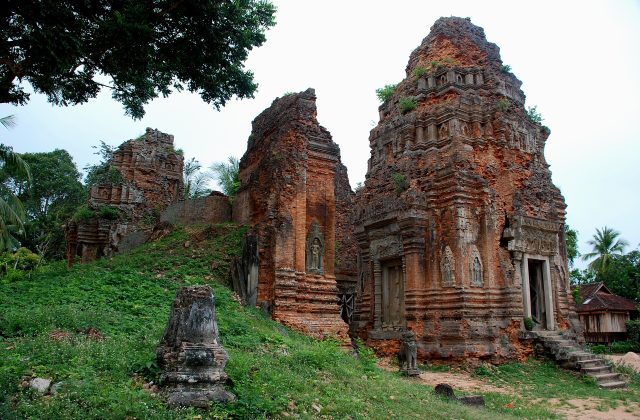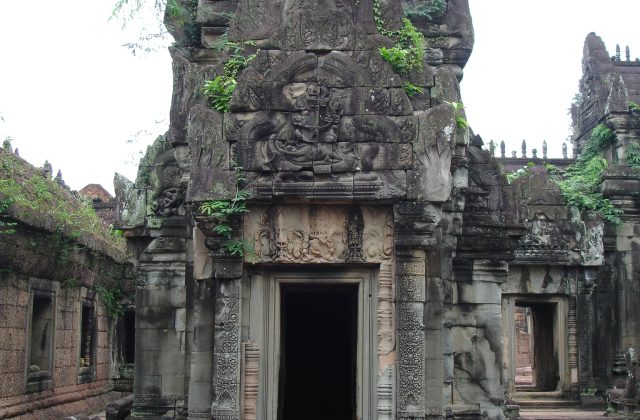
Banteay Samre
Siem Reap, Cambodia
Banteay Samre has no ticket of its own. It lies inside the protected Angkor zone, so entry is covered by the standard…
6 tickets & tours
Ancient Temple · Siem Reap · Cambodia
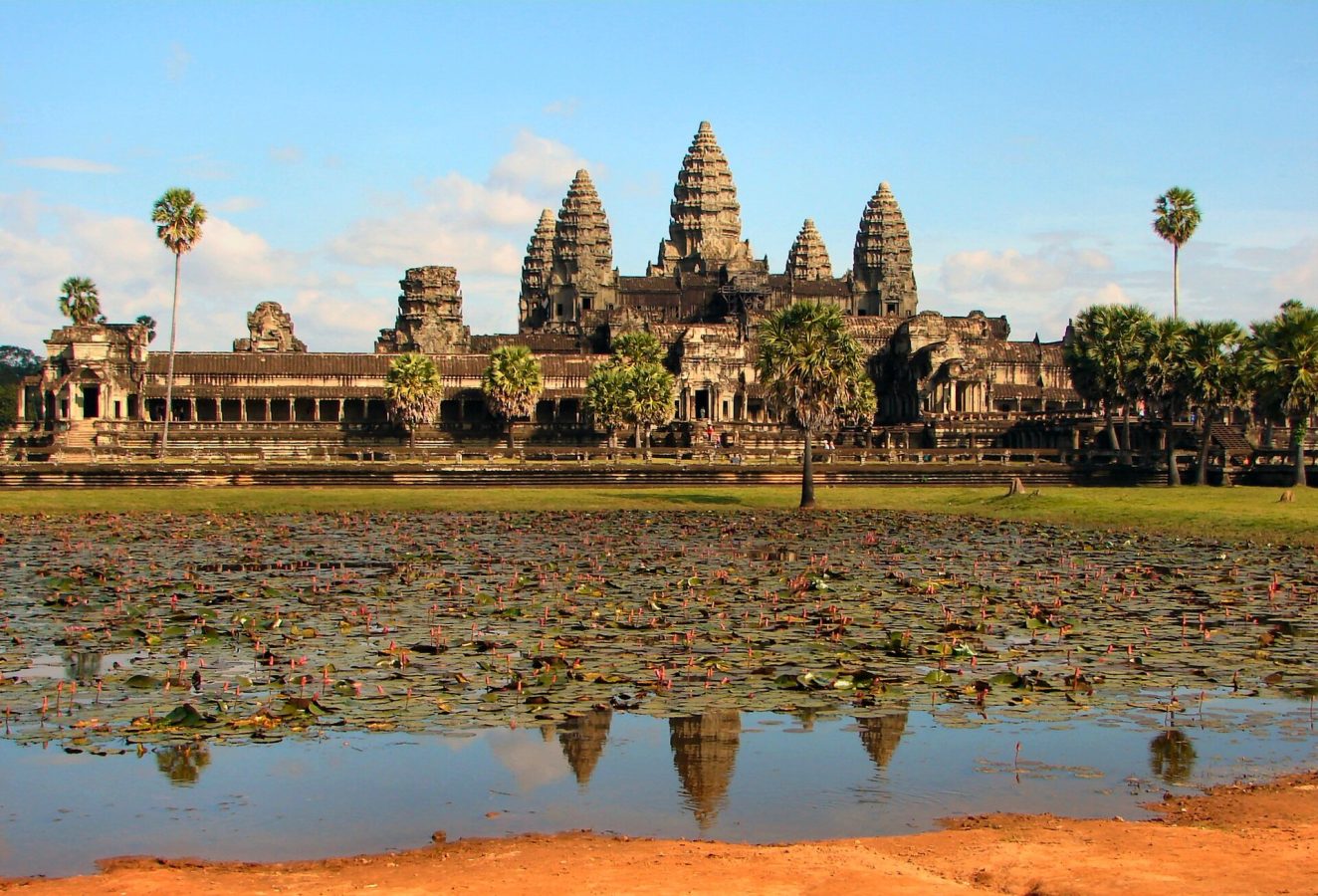
Photo: Bjørn Christian Tørrissen, CC BY-SA 4.0
Angkor Wat is not ticketed on its own. Every visitor needs an Angkor pass, which covers the whole archaeological park and is sold as a one-day, three-day or seven-day pass at the official ticket centre on the road out of Siem Reap or online. The pass carries your photo and is checked at the main temples, so keep it on you all day. Whatever tour you book, ask whether the pass is included: most tours leave it as an extra, and you then stop at the ticket centre on the way in. The bulk of what is sold online falls into a few groups. Sunrise tours collect you from your hotel around 4.30 am, take you to the western ponds for first light and then walk you through the temple before the crowds build.
Small-circuit day tours add Angkor Thom, the Bayon and Ta Prohm, while big-circuit and two- or three-day tours reach Preah Khan, Banteay Srei and the outlying temples. Sunset tours finish on a hill or a temple terrace. Transport is the main variable: tuk-tuk, air-conditioned car, bicycle, jeep or e-scooter, with a guide either riding along or meeting you at each stop. There are also evening apsara dance shows with dinner in town, and a few tours that add a Buddhist water blessing from a monk. For a first visit, a private or small-group guided day with a car or tuk-tuk is the sensible choice: the reliefs make far more sense with someone who can read them, and the distances between temples are long in the heat.
Live dates and prices from GetYourGuide. Free cancellation on most tickets.
All 543 temple tours in Siem Reap → · 14 tours from Phnom Penh →
Angkor Wat was raised in the first half of the twelfth century by the Khmer king Suryavarman II as a state temple to Vishnu and, most likely, as his own funerary monument. Over the following centuries it passed gradually to Theravada Buddhism and has never stopped being used for worship, which is one reason it survived better than its neighbours. Unusually for Angkor, it faces west. You approach across a wide moat on a causeway, pass through the long western entrance gallery and then walk a raised processional avenue towards the temple itself, with a library and a pond on either side. The ponds give the famous reflection of the five towers. The temple rises in three tiers, each enclosed by a gallery, to a central group of five lotus-bud towers that stand for the peaks of Mount Meru. Allow most of your time for the outer gallery of bas-reliefs on the first level.
Walk it anticlockwise, keeping the wall on your left, and look for the Churning of the Ocean of Milk on the east side, the great battle scenes from the Mahabharata and Ramayana, and the procession of Suryavarman's army. Hundreds of carved devatas, female divinities with elaborate headdresses, line the walls of the upper levels. The steep stairway to the top level, the Bakan, is open in limited numbers and closes on Buddhist holy days. This is still an active place of worship: dress modestly, keep your voice down near the shrines and ask before photographing monks. The temple lies about 6 km north of central Siem Reap, a 15-minute ride by tuk-tuk.
The park opens before dawn for sunrise viewing and closes in the late afternoon; Angkor Wat itself lets visitors in from about 5 am. The upper level keeps shorter hours, so check the current times on arrival. Sunrise is popular for good reason, but the ponds are packed. A smarter plan is to stay on after sunrise while the coach groups move off to breakfast, or to come back after 2 pm when the west-facing front is in full sun and the crowds thin out.
The dry, cooler months from November to February are the most comfortable and the busiest; April and May are fiercely hot, and the rains from June to October bring green moats, dramatic skies and fewer visitors. Khmer New Year in mid-April fills the temples with Cambodian families. Allow at least three hours for Angkor Wat alone. Most visitors spend a full day on the small circuit with Angkor Thom, the Bayon and Ta Prohm, and two or three days are needed for a fair look at the wider park.
Yes. GetYourGuide lists 532 tickets and tours for Angkor Wat, with live dates and prices and free cancellation on most of them.
The steep stairway to the top level, the Bakan, is open in limited numbers and closes on Buddhist holy days.
Allow most of your time for the outer gallery of bas-reliefs on the first level.
Entry to Angkor Wat: USD 37 one-day Angkor pass
Shoulders and knees covered for the whole park; hats off in the upper sanctuary.
Angkor Wat covers 1.6 km².
Angkor Wat was established in 1113.
Angkor Wat is in Siem Reap, Cambodia. The map on this page shows the exact spot.
How to visit an ancient temple: tickets, heat and rules — Tickets, hours, heat, guides, climbing rules and conservation at the ancient temples of Egypt, Greece, Italy, Angkor and the Maya world.
Siem Reap, Cambodia
Banteay Samre has no ticket of its own. It lies inside the protected Angkor zone, so entry is covered by the standard…
6 tickets & tours
Siem Reap, Cambodia
The Bayon has no separate ticket: it is covered by the Angkor pass, which is sold for one, three or seven days at the…
6 tickets & tours
Siem Reap, Cambodia
Ta Prohm lies inside the Angkor Archaeological Park, so there is no separate ticket for it: you need an Angkor pass,…
5 tickets & tours
Siem Reap, Cambodia
The Roluos temples lie inside the Angkor Archaeological Park, so entry is covered by the standard Angkor pass, which is…
4 tickets & tours
Siem Reap, Cambodia
There is no separate ticket for Banteay Kdei. Like every temple in the Angkor Archaeological Park, it is covered by the…
1 ticket or tour
Siem Reap, Cambodia
There is no ticket for Wat Bo. It is an active monastery on the east bank of the Siem Reap River, and visitors can walk…
1 ticket or tour