Wat Phra That Doi Saket
34 km away
Wat Phra That Doi Saket is a hilltop temple about 20 km north-east of central Chiang Mai, and there is no admission…
1 ticket or tour
Buddhist Temple · Chiang Mai · Thailand
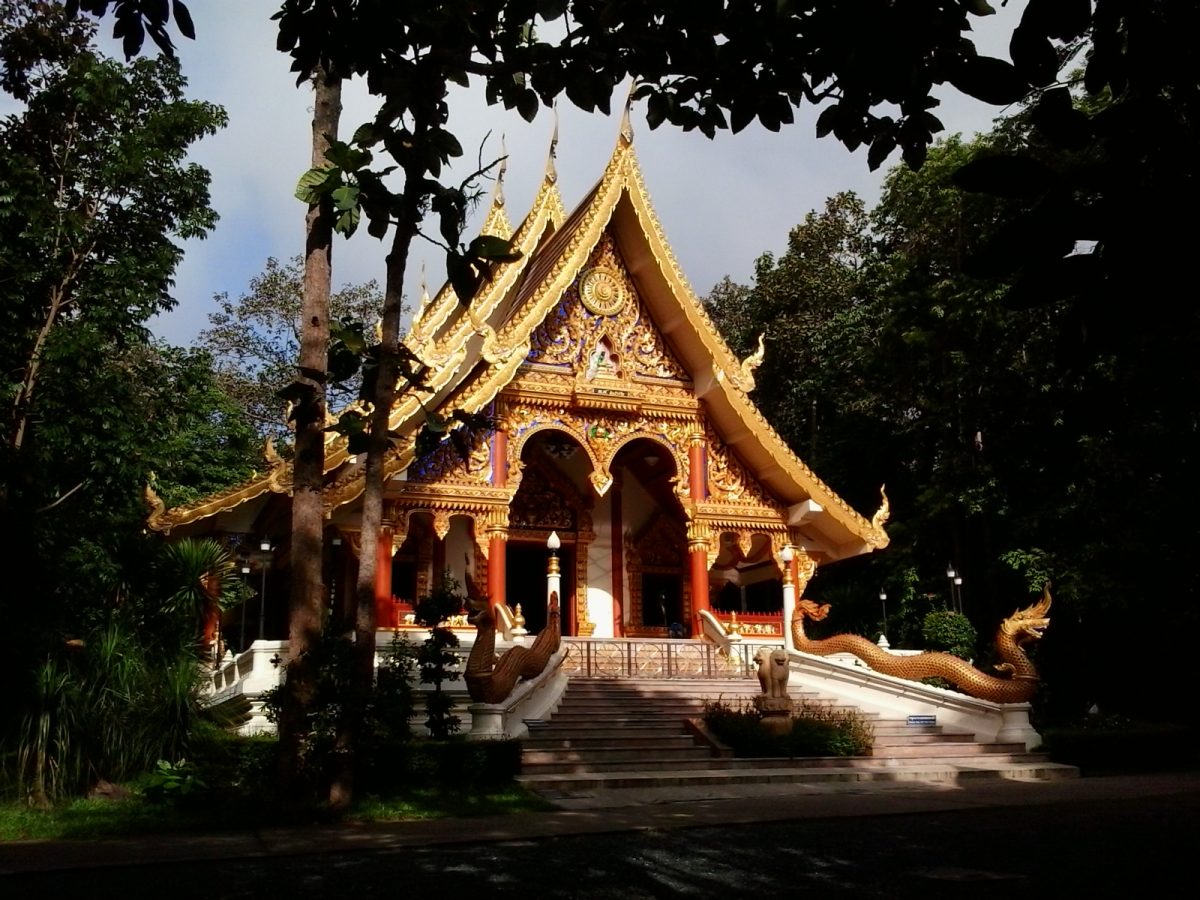
Photo: lopsura, CC BY 3.0
Wat Aranyawiwake, often called Wat Ban Pong after its village, is a forest meditation monastery rather than a sightseeing temple, and there is nothing to buy: no ticket is sold online or at the gate, and the monastery relies entirely on donations. Respectful day visitors may walk in quietly, while lay people who want to practise meditation can ask to stay for a period, which must be arranged with the monastery beforehand through its official website; staying here is free, and guests follow the daily routine of the monks. The monastery is in Inthakhin, in Mae Taeng district, about 45 km north of Chiang Mai, and lies only a couple of kilometres from the much showier Wat Ban Den.
Visitors usually come by hired car with driver, songthaew or scooter, a trip of around an hour from the city along the road towards Chiang Dao. There is no public transport to the gate. Organised tours do not normally come here, and that is part of its value. The most practical plan is to visit Wat Ban Den by car and ask the driver to continue to Ban Pong for a short, quiet walk through the forest, or to approach the monastery directly if you are interested in the forest tradition of meditation.
Live prices from GetYourGuide for tickets and tours that include this temple. Free cancellation on most of them.
The monastery belongs to the Thai Forest Tradition, the strict meditation lineage of Theravada Buddhism revived in the 20th century by Ajahn Mun Bhuridatta, who is revered across Thailand as its founding teacher. Villagers from Inthakhin who wanted a meditation master among them invited Ajahn Mun to the area; he spent several days searching the forest with his disciples for a suitable place, spent a rains retreat here and gave the site its name before moving on. Ajahn Plien Panyapatipo, a respected teacher of the lineage, has been abbot since 1966. Do not expect gilded halls. The monastery is a stretch of forest at the foot of the hills, threaded with paths that lead to scattered wooden huts where monks live and meditate alone.
The open meeting hall is used for chanting, the daily meal and talks, and there are simple structures commemorating the teachers of the lineage. The atmosphere of silence under the trees is the reason to come. Visitors should behave as guests in a place of practice. Dress in modest, loose clothes, speak softly, keep to the main paths and do not approach the huts. Shoes come off before entering any hall. Women should not touch monks or hand objects to them directly. Ask before taking photographs, and avoid photographing monks at all without permission. If you wish to offer food, the monks take a single meal in the morning, and the lay helpers in the hall will show you how to present it.
The monastery follows a monastic day rather than tourist hours. Mornings are best for a respectful visit, around the time when food is offered to the monks; avoid arriving late in the evening or during periods of formal meditation. The rains retreat, which runs for three months from about July to October, is a time of especially intensive practice, and visitors should keep their presence low. The cool, dry months from November to February are the most pleasant for the forest, with clear mornings and fewer mosquitoes.
Buddhist holy days such as Makha Bucha and Visakha Bucha bring lay supporters from the surrounding villages for chanting and candlelit walks around the main hall, a moving sight if you remain quietly at the edge. Allow 30 to 45 minutes for a day visit, or arrange a stay of several days for meditation. Combine the visit with Wat Ban Den and, further north, Chiang Dao for its caves and mountain scenery.
34 km away
Wat Phra That Doi Saket is a hilltop temple about 20 km north-east of central Chiang Mai, and there is no admission…
1 ticket or tour
37 km away
Doi Suthep sits on a mountain 15 km west of Chiang Mai, so the real choice is how to get up there.
46 tickets & tours
38 km away
Wat Pha Lat is free to enter, and most independent visitors arrive on foot.
16 tickets & tours
Yes. GetYourGuide sells tickets and guided tours whose route includes Wat Aranyawiwake (Wat Ban Pong); live prices are shown on this page.
Allow 30 to 45 minutes for a day visit, or arrange a stay of several days for meditation.
Entry to Wat Aranyawiwake (Wat Ban Pong): Free; donations welcome
Modest, loose clothing covering shoulders and knees; white is worn by retreatants.
Wat Aranyawiwake (Wat Ban Pong) is in Chiang Mai, Thailand. The map on this page shows the exact spot.
How to visit a Buddhist temple: shoes, dress and manners — Shoes, dress, feet, photos and offerings in Buddhist temples, from the wats of Thailand and Sri Lanka to the Zen temples of Japan.
Chiang Mai, Thailand
Doi Suthep sits on a mountain 15 km west of Chiang Mai, so the real choice is how to get up there.
46 tickets & tours
Chiang Mai, Thailand
Wat Pha Lat is free to enter, and most independent visitors arrive on foot.
16 tickets & tours
Chiang Mai, Thailand
Wat Umong is free to enter and there is nothing to book.
15 tickets & tours
Chiang Mai, Thailand
Wat Chedi Luang charges foreign visitors a small entry fee at the gate on Phra Pokklao Road;
1 ticket or tour
Chiang Mai, Thailand
Wat Phra That Doi Kham is a hilltop temple on the south-western edge of Chiang Mai, and there is normally nothing to…
1 ticket or tour
Chiang Mai, Thailand
Wat Phra That Doi Saket is a hilltop temple about 20 km north-east of central Chiang Mai, and there is no admission…
1 ticket or tour