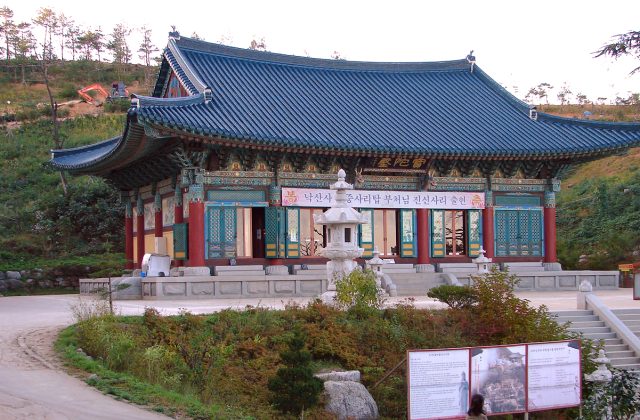
Naksansa Temple
14 km away
Naksansa does not sell tickets online, and entry is free;
1 ticket or tour
Buddhist Temple · Sokcho · South Korea
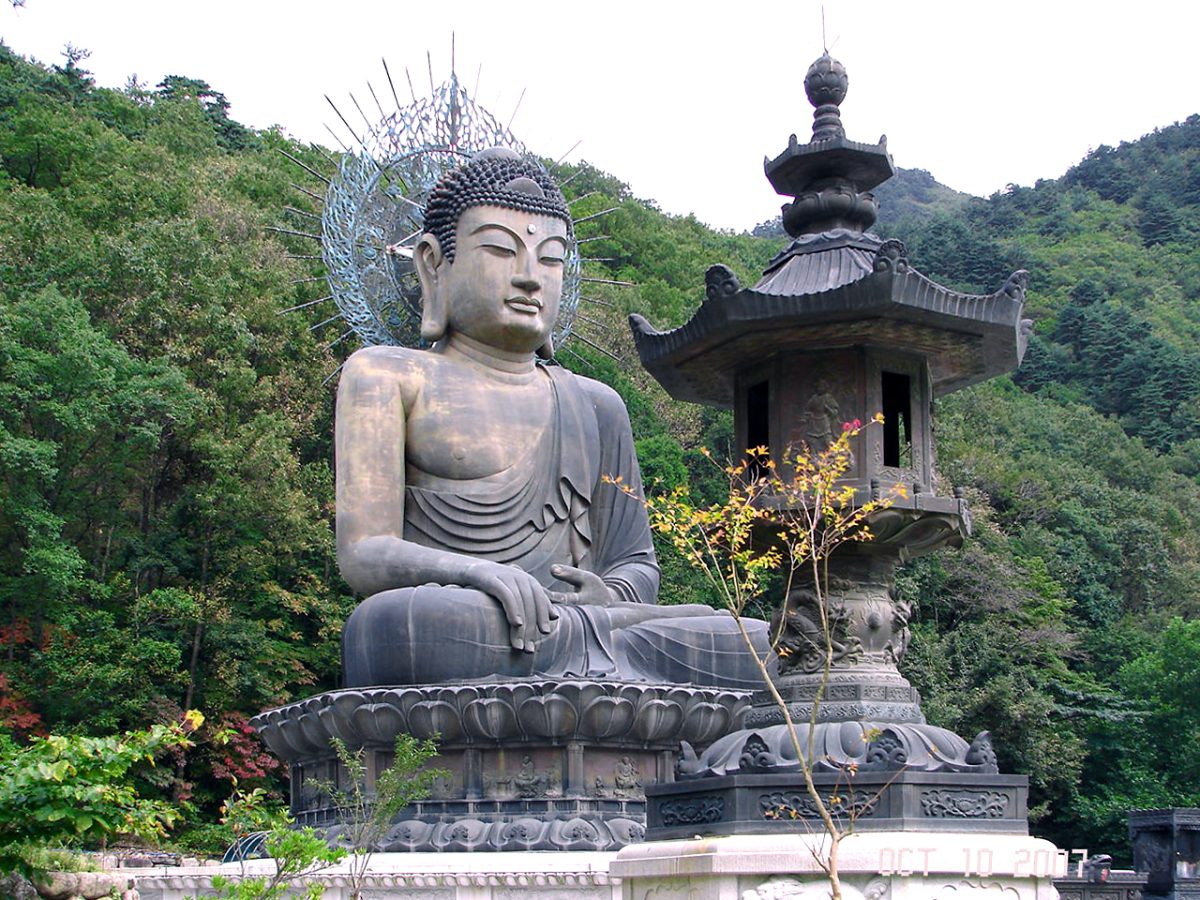
Photo: Steve46814 (talk), CC BY-SA 3.0
No ticket for Sinheungsa alone is sold online, and none is needed. The temple stands just inside the main Seorak-dong entrance of Seoraksan National Park, and since the cultural heritage fees at Korean temples were abolished in 2023, walking in is free; only the car park at the park gate charges a fee. The worship halls are open to respectful visitors, and lanterns, candles and small offerings can be bought at the temple shop. Two things are worth paying for. The cable car from the park entrance up to the rock ridge of Gwongeumseong saves a stiff climb and gives sweeping views; tickets sell out early on autumn weekends.
And Sinheungsa runs a templestay programme, an overnight stay with monastic meals, early-morning chanting, meditation and a tea ceremony with a monk, which has to be reserved in advance through the official templestay booking service. Most visitors reach the park on local buses from Sokcho, about 30 minutes to the Seorak-dong terminus, or by taxi. From Seoul, express buses run to Sokcho in under three hours. Some day trips from Seoul combine Seoraksan with Naksansa temple on the coast and the seafood markets of Sokcho; these include transport and sometimes a guide, but expect a very early start and limited time in the park. The page lists any GetYourGuide tours whose route passes the temple.
Live prices from GetYourGuide for tickets and tours that include this temple. Free cancellation on most of them.
Sinheungsa is a head temple of the Jogye Order, the largest school of Korean Buddhism, and its roots go back to the 7th century, when the monk Jajang founded a Seon, or Zen, monastery on these slopes. Fire destroyed it more than once, and the temple was rebuilt on its present site in the 17th century, from which time the main hall dates. The first thing you meet, a short walk from the park gate, is the Great Unification Buddha, a seated gilt-bronze figure about 15 m tall on a lotus pedestal, completed in the 1990s and dedicated to the hope of reunifying the Korean peninsula. Its forehead is set with jade and amber, and it contains relics donated by Myanmar.
A small shrine beneath the statue can be entered. Beyond it, cross the stream and pass through the gate with its painted guardian kings to the main courtyard. The halls are classic Joseon-era timber buildings with richly painted eaves, set against the granite peaks of Seoraksan. Look at the colourful paintings inside the main hall, and at the bell pavilion with its drum and wooden fish. Inside the halls, take off your shoes, avoid the central doorway, which is reserved for monks, and do not photograph people at prayer. Many walkers continue from the temple along the trail to the Gyejoam hermitage and the famous rocking boulder, and then up to the granite ridge of Ulsanbawi.
The temple grounds are open from early morning until about sunset, following the national park hours, which shift with the season; trail access may be restricted in bad weather or during the spring and autumn fire-risk periods. Mid-October is the peak, when the maples on Seoraksan turn red and gold; it is also when the park is most crowded, so arrive soon after opening, especially at weekends. Spring blossom in late April and the fresh green of early summer are quieter.
Winter brings snow on the peaks and very few visitors. Buddha's Birthday, on the eighth day of the fourth lunar month, usually in May, fills the courtyards with lanterns and is a lovely time to visit. Korean public holidays such as Chuseok bring heavy traffic from Seoul. Allow an hour for the temple and the bronze Buddha. Add two to three hours for the hike to the rocking boulder, or a full day for Ulsanbawi, and finish with seafood in Sokcho.
14 km away
Naksansa does not sell tickets online, and entry is free;
1 ticket or tour
147 km away
Jongmyo has an unusual entry system that shapes how you visit.
1 ticket or tour
148 km away
Jogyesa is free to enter and open around the clock, so there is no ticket to buy: you walk in from the street at the…
1 ticket or tour
Yes. GetYourGuide sells tickets and guided tours whose route includes Sinheungsa Temple, Seoraksan; live prices are shown on this page.
The worship halls are open to respectful visitors, and lanterns, candles and small offerings can be bought at the temple shop.
Allow an hour for the temple and the bronze Buddha.
Modest clothing; shoes off before entering the worship halls.
Entry to Sinheungsa Temple, Seoraksan: Free; parking charged
Sinheungsa Temple, Seoraksan was established in 653.
Sinheungsa Temple, Seoraksan is in Sokcho, South Korea. The map on this page shows the exact spot.
How to visit a Buddhist temple: shoes, dress and manners — Shoes, dress, feet, photos and offerings in Buddhist temples, from the wats of Thailand and Sri Lanka to the Zen temples of Japan.

