
Jogyesa Temple
Seoul, South Korea
Jogyesa is free to enter and open around the clock, so there is no ticket to buy: you walk in from the street at the…
1 ticket or tour
Chinese Temple · Seoul · South Korea
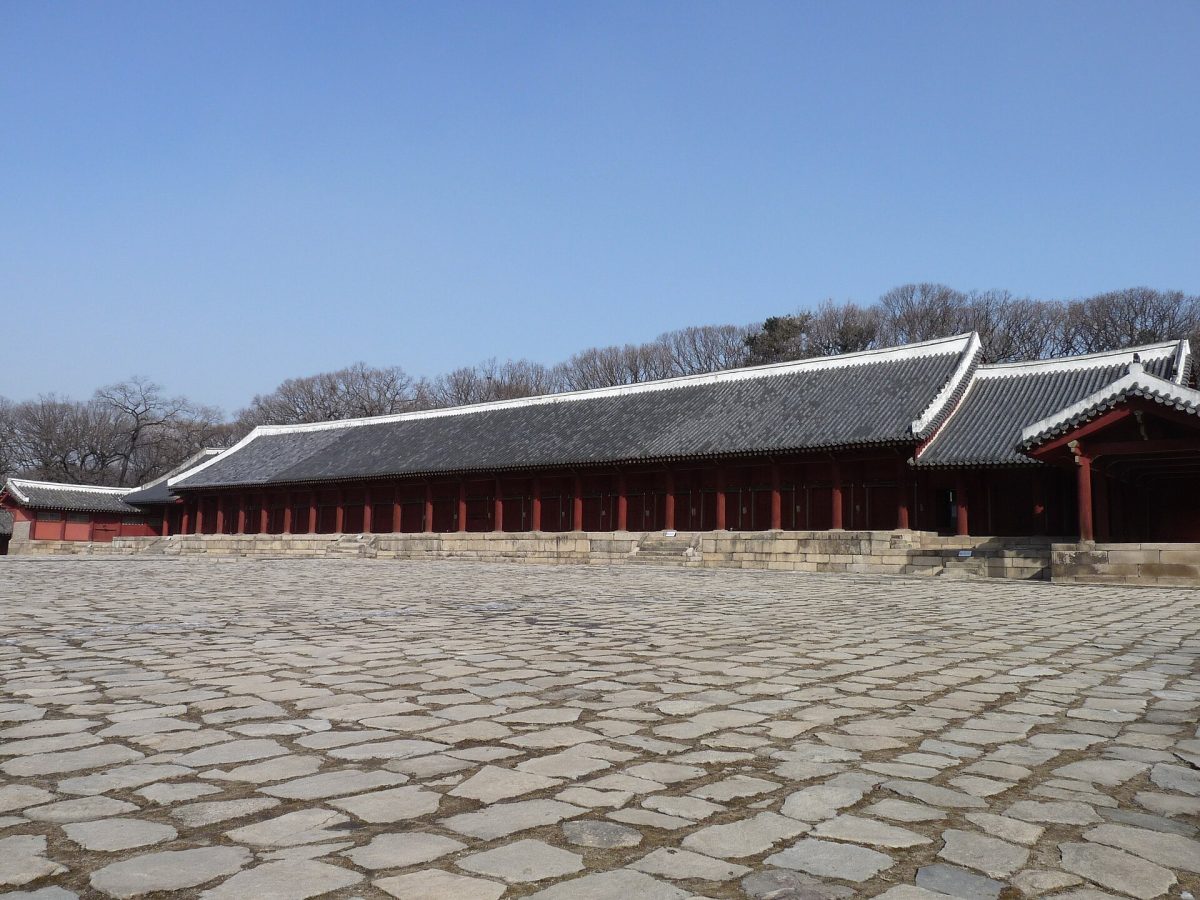
Photo: João Trindade, CC BY 2.0
Jongmyo has an unusual entry system that shapes how you visit. On most weekdays the shrine can only be seen on a guided tour that leaves the main gate at fixed times, with several departures a day in English as well as in Korean, Japanese and Chinese. On Saturdays, on the last Wednesday of each month and on some public holidays visitors may wander freely. The shrine is closed on Tuesdays. The entry ticket is cheap and is bought at the gate; the guided tour is included in the price, so on weekdays there is no reason to pay extra just to get in. What is sold online is a longer walking tour that pairs Jongmyo with Changdeokgung Palace, the royal residence immediately to the north, now joined to the shrine again by a restored path over the road tunnel.
Such tours typically include a private or small-group guide and sometimes the entry tickets, while transport and meals are extra. They suit visitors who want the Confucian rituals and the royal family's history explained in one continuous story. An integrated palace pass, sold at the ticket offices, covers several palaces and the shrine at a discount and is worth it if you plan to see the main palaces over a few days. Jongno 3-ga subway station is a few minutes from the main gate.
Live dates and prices from GetYourGuide. Free cancellation on most tickets.
Jongmyo was the ancestral shrine of the Joseon kings, the place where the spirit tablets of dead rulers and their queens were kept and honoured. The first buildings went up in 1394, when the founder of the dynasty moved the capital to Seoul. They were burned during the Japanese invasions of the 1590s and rebuilt in the early 1600s, and the present halls date largely from that time. The shrine was inscribed as a UNESCO World Heritage Site in 1995, and its rituals and court music are separately recognised as intangible heritage. The grounds cover about 19 hectares of woodland. As you walk in, notice the raised stone path down the centre of the walkways: the middle strip was for the spirits, the sides for the king and crown prince, so visitors keep to the edges.
The path leads past the pavilions where officials and musicians prepared for the rites to the Jeongjeon, the main hall. Its extraordinary length is the shrine's great sight: a single low wooden hall of 19 chambers, each holding the tablets of a king and his consorts, stretched along a wide stone terrace, more than 100 m long and almost completely unadorned. The emptiness of the courtyard is deliberate and very moving. The smaller Yeongnyeongjeon nearby houses the tablets of kings with shorter reigns and posthumously honoured ancestors. The halls are not entered; you view them from the courtyards. Photography is allowed, but keep your voice down and do not climb on the terraces. The main gate is at the southern end, facing the Jongno shopping street.
The shrine opens around 9 am and closes between about 5.30 pm and 6.30 pm depending on the season, with last entry an hour earlier; it is closed on Tuesdays. Weekday visits follow the guided tour times, so check the official site for the current English departure schedule. Early morning is the quietest time, and late afternoon light suits the long hall. The year's highlight is the Jongmyo Jerye, the royal ancestral rite performed in full court dress with traditional music and dance, held on the first Sunday of May, with a second ceremony in autumn.
Arrive very early to get a view. Autumn, when the ginkgo and maple leaves turn, and spring are the best seasons; summer is hot and humid, and winter is cold but beautifully austere, especially after snow. Allow an hour for the guided tour, or 90 minutes on a free-viewing day. Combine it with Changdeokgung Palace and its Secret Garden to the north and the Gwangjang Market food stalls to the east.
Yes. GetYourGuide lists one ticket or tour for Jongmyo Shrine, with live dates and prices and free cancellation on most of them.
The shrine is closed on Tuesdays.
Allow an hour for the guided tour, or 90 minutes on a free-viewing day.
Early morning is the quietest time, and late afternoon light suits the long hall.
Photography is allowed, but keep your voice down and do not climb on the terraces.
Entry to Jongmyo Shrine: KRW 1,000
No dress code; keep quiet and off the central stone path.
Jongmyo Shrine covers 19 ha.
Jongmyo Shrine was established in 1394.
Jongmyo Shrine is in Seoul, South Korea. The map on this page shows the exact spot.
How to visit a Chinese temple: incense, gods and manners — How to behave in Taoist, Confucian and folk temples in China, Taiwan, Hong Kong and South-East Asia: incense, thresholds and fortunes.
Seoul, South Korea
Jogyesa is free to enter and open around the clock, so there is no ticket to buy: you walk in from the street at the…
1 ticket or tour