
Jongmyo Shrine
Seoul, South Korea
Jongmyo has an unusual entry system that shapes how you visit.
1 ticket or tour
Buddhist Temple · Seoul · South Korea
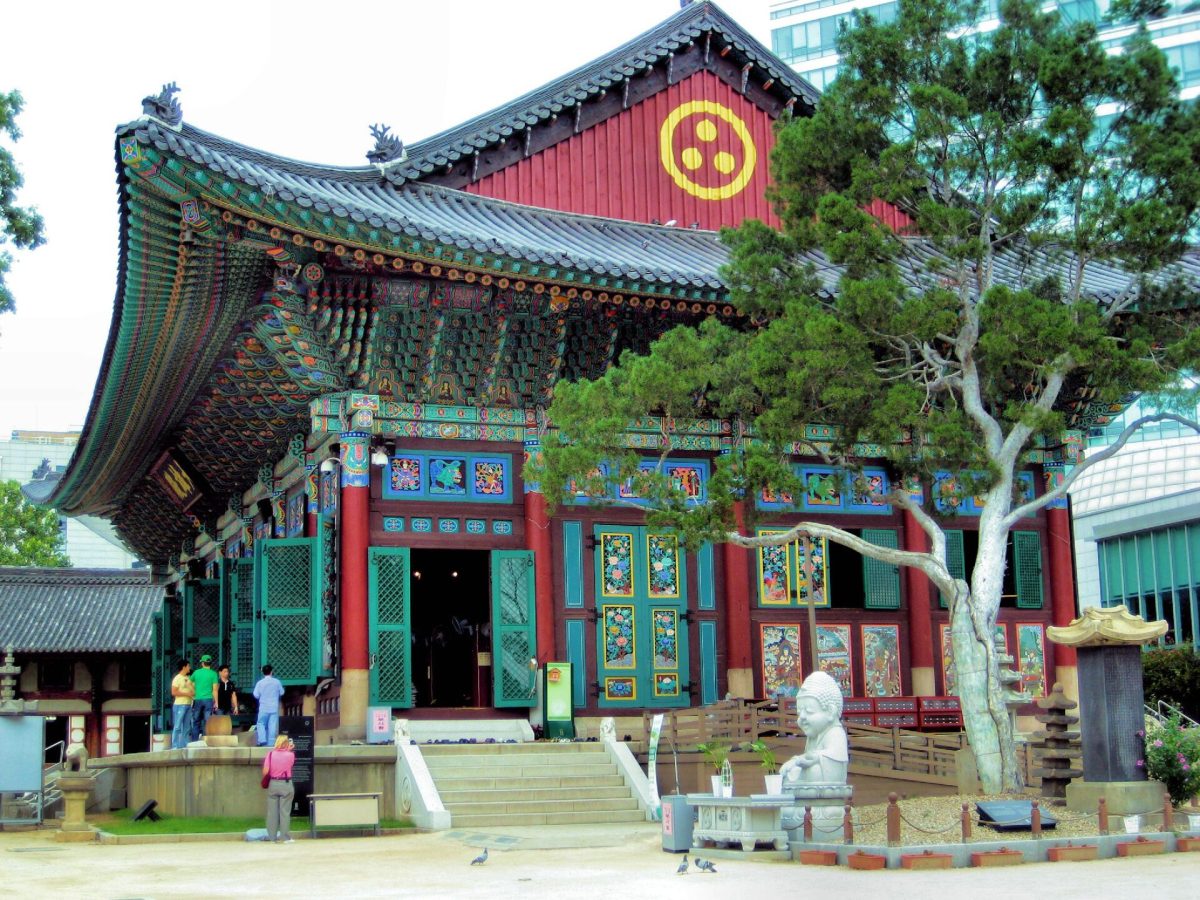
Photo: Francisco Anzola, CC BY 2.0
Jogyesa is free to enter and open around the clock, so there is no ticket to buy: you walk in from the street at the edge of Insadong, look around the courtyard and step into the main hall if you wish. There is nothing to book for a simple visit. Two kinds of experience are worth considering. The first is a guided walking tour of central Seoul that pairs the temple with Gyeongbokgung Palace and the traditional houses of Bukchon. These tours usually run half a day and include a guide and sometimes palace entry, while transport and meals are extra.
They make sense for a first trip to Seoul, because the guide explains how Korean Buddhism relates to the royal history of the palaces nearby. The second is a temple stay. Jogyesa is part of the national Templestay programme, and the information centre opposite the temple runs short sessions of an hour or two in which visitors make lotus lanterns or prayer beads, learn the ritual bows, meditate and share tea with a monk; overnight stays are offered at monasteries outside the city. These are booked through the programme's own site, and a small fee covers materials and food. If you simply want to see the temple, go on your own: it is a few minutes' walk from Anguk and Jonggak subway stations.
Live dates and prices from GetYourGuide. Free cancellation on most tickets.
Jogyesa is the head temple of the Jogye Order, the largest school of Korean Buddhism, which teaches the meditative Seon tradition. A temple was founded on the site in 1395, at the start of the Joseon dynasty, but the present complex dates from the early twentieth century. It became the order's headquarters in the 1930s, when it was a centre of resistance to Japanese attempts to control Korean Buddhism, and took its current name in 1954. The central building is the Daeungjeon, the main hall, built in 1938 of pine timber in traditional style, with a painted tiled roof and colourful dancheong decoration on the eaves. Inside sit three gilded Buddhas, the historical Buddha in the middle with the Buddha of the Western Paradise and the Medicine Buddha on either side, and the walls are lined with thousands of small Buddha figures.
Chanting goes on almost continuously, and worshippers bow on cushions on the floor. In the courtyard look for two trees about 500 years old: a rare lacebark pine with pale mottled bark, protected as a natural monument, and a Chinese scholar tree. A seven-storey stone pagoda holds relics, and the bell pavilion houses the drum, bell, wooden fish and cloud gong that are struck at dawn and dusk. The Central Buddhist Museum on the grounds displays sacred art. Visitors may enter the main hall quietly by the side doors, removing their shoes; the central door is for senior monks. Do not photograph people at prayer, and walk clockwise around the pagoda. The temple sits in the middle of Jongno, a short walk from Insadong.
The grounds never close, and the main hall is usually open from before dawn until late evening. Early morning, when monks chant and the bell is struck, and the evening, when the lanterns are lit, are the most atmospheric times. The highlight of the year comes in the weeks before Buddha's Birthday, in April or May, when thousands of coloured lanterns hang over the courtyard and the Lotus Lantern Festival brings a parade through central Seoul.
The temple is at its most photogenic then, and most crowded. In October the courtyard fills with chrysanthemum displays. Spring and autumn are the most pleasant seasons; summers are humid and winters cold, though the lanterns and chanting continue all year. Allow 30 to 45 minutes, longer if you join a Templestay session. Combine it with the tea houses and craft shops of Insadong, Gyeongbokgung Palace and Bukchon Hanok Village to the north, and Cheonggyecheon stream to the south.
Yes. GetYourGuide lists one ticket or tour for Jogyesa Temple, with live dates and prices and free cancellation on most of them.
The grounds never close, and the main hall is usually open from before dawn until late evening.
Allow 30 to 45 minutes, longer if you join a Templestay session.
Entry to Jogyesa Temple: Free
No strict code; modest clothing, shoes off inside the main hall.
Jogyesa Temple was established in 1395.
Jogyesa Temple is in Seoul, South Korea. The map on this page shows the exact spot.
How to visit a Buddhist temple: shoes, dress and manners — Shoes, dress, feet, photos and offerings in Buddhist temples, from the wats of Thailand and Sri Lanka to the Zen temples of Japan.
Seoul, South Korea
Jongmyo has an unusual entry system that shapes how you visit.
1 ticket or tour