Kandariya Mahadeva Temple, Khajuraho
140 km away
Kandariya Mahadeva stands in the fenced Western Group of temples, and a single ticket from the Archaeological Survey of…
45 tickets & tours
Hindu Temple · Orchha · India
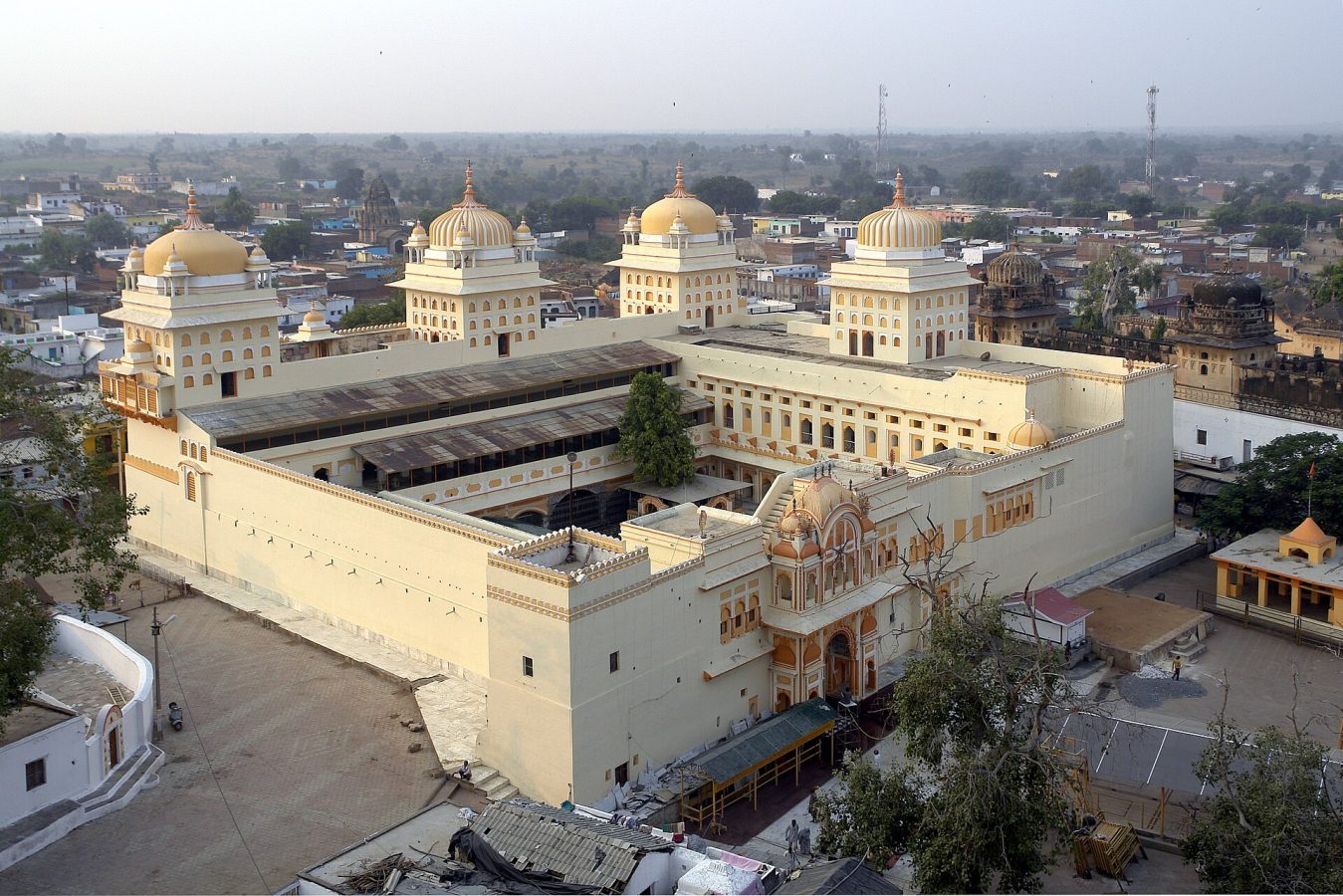
Photo: Yann (talk), CC BY-SA 4.0
There is nothing to book for the Ram Raja Temple itself. It is a working pilgrimage shrine, entry is free, and no ticket for the temple alone is sold online. You simply join the queue of devotees at the gate, leave your shoes at the stalls outside, and file past the image of Rama in the main hall during the hours when the doors are open. Offerings of flowers, sweets and coconuts are sold by the small shops that line the approach, and buying one is a courtesy rather than an obligation. What you may want to pay for is the rest of Orchha.
The palaces of the fort complex across the bridge, the Chaturbhuj Temple next door to the shrine, the Laxmi Narayan Temple on the hill and the royal cenotaphs by the Betwa river are covered by a composite monument ticket bought on site, and a licensed local guide can be hired at the fort entrance for a few hours. That is usually the sensible option: the history of the Bundela kings makes much more sense with someone to explain it. Most visitors arrive from Jhansi, about 16 km away, by auto-rickshaw or taxi, often after a train from Delhi or Agra. Some come on longer road trips that link Orchha with Khajuraho or Gwalior. The page lists any GetYourGuide tours whose route passes through the town, but a day here is easy to organise independently, since everything lies within walking distance of the temple square.
Live prices from GetYourGuide for tickets and tours that include this temple. Free cancellation on most of them.
The Ram Raja Temple is unusual in looking nothing like a temple. It is a palace, a pale, two-storeyed building with arched courtyards and domed pavilions, and that is the whole point of the story told about it. In the 16th century Queen Ganesh Kunwari, wife of the Bundela ruler Madhukar Shah, travelled on foot to Ayodhya and returned with an image of Rama, which by tradition could not be moved once it had been set down. She placed it in her own palace while a grand temple was being raised for it, the image refused to leave, and the palace became the shrine. The tall, unfinished-looking Chaturbhuj Temple next door is the building that was meant to receive it. Inside, Rama is worshipped not as a god in the usual sense but as the king of Orchha.
He sits holding a sword and a shield, flanked by Sita and Lakshmana, with Hanuman and other figures below. Because he is a king, he receives royal honours: armed police form a guard and present arms to him every day, a ceremony worth watching if your timing allows. The food offered to the deity is treated as a royal meal. Etiquette is that of any busy Hindu shrine. Remove your shoes, dress modestly, keep to the queue and do not photograph the image; phones and cameras are often checked at the entrance. The square in front of the temple is a lively market with sweet shops and stalls selling devotional items. From here the fort, the riverside cenotaphs and the Chaturbhuj Temple are all a short walk away.
The temple opens in the morning, closes for several hours in the middle of the day while the king rests, and reopens in the evening; the exact hours shift a little between summer and winter, so ask at your hotel on arrival. The evening session, when the lamps are lit and the aarti is sung, is the most atmospheric time to come, and it fits well after a day at the palaces. October to March is the best season. Summer in this part of Madhya Pradesh is fiercely hot, and the monsoon brings humidity and swollen rivers.
Crowds swell to many thousands at Ram Navami in spring and at Vivah Panchami, the celebration of the wedding of Rama and Sita in late autumn, as well as at Makar Sankranti, Shivratri and Kartik Purnima. These are exciting days to be in Orchha but expect long queues. Half an hour is enough for the darshan itself. Allow a full day, ideally with a night in town, to see the Jahangir Mahal, the Raja Mahal, the Chaturbhuj Temple and the cenotaphs at sunset.
140 km away
Kandariya Mahadeva stands in the fenced Western Group of temples, and a single ticket from the Archaeological Survey of…
45 tickets & tours
213 km away
Agra's Jama Masjid is an active congregational mosque and charges no entry: you walk up the steps, leave your…
1 ticket or tour
328 km away
Entry to Galtaji is free, though a small fee is usually asked for cameras and phones used for photography, and priests…
17 tickets & tours
Yes. GetYourGuide sells tickets and guided tours whose route includes Ram Raja Temple, Orchha; live prices are shown on this page.
You simply join the queue of devotees at the gate, leave your shoes at the stalls outside, and file past the image of Rama in the main hall during the hours when the doors are open.
Allow a full day, ideally with a night in town, to see the Jahangir Mahal, the Raja Mahal, the Chaturbhuj Temple and the cenotaphs at sunset.
October to March is the best season.
Modest clothing with shoulders and knees covered; shoes off before entering the temple courtyard.
Entry to Ram Raja Temple, Orchha: Free
Ram Raja Temple, Orchha is in Orchha, India. The map on this page shows the exact spot.
How to visit a Hindu temple: dress, shoes and access — What to wear, what to leave at the gate and where non-Hindus may go in Hindu temples in India, Nepal, Bali and South-East Asia.